Sigh of Relief
Tom Sachs in Conversation with Longtime Collaborator Mary Frey
- Interview: Mary Frey
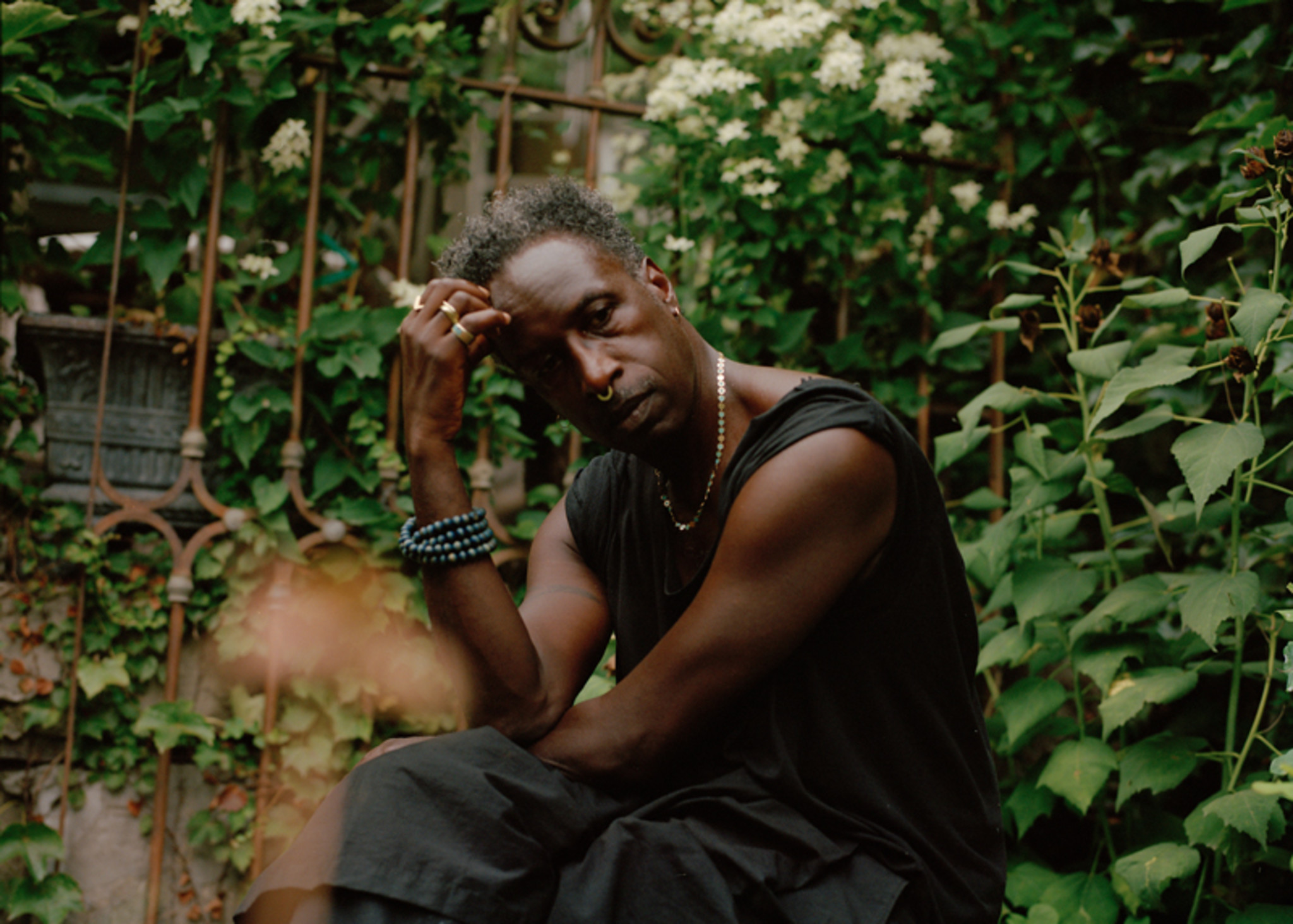
- Photography: Shaniqwa Jarvis / SN37

If you fixate on something enough, it becomes real and yours—the longer you focus, the more your subject will reveal. The familiar becomes absurd, the unknown becomes understood, and the beautiful becomes profound. Over the course of his career, Tom Sachs has embraced these dichotomies by obsessing over his perfect-imperfection. His resulting bricolage oeuvre is meticulously cobbled together and emblazoned with some of the world’s most visible luxury logos, beloved cartoon characters, and historic emblems from the United States space program.
Through the years, Sachs’ attention has turned between such ambitious scales of artistic practice and the work that sustains it. He works closely with his carefully selected and always developing studio team, chosen for their precision of skill, commitment to detail, and love of hard work. As a reward for all that labor, at the end of every major project, they party. In summer 2021, family and friends played on the sand and surfed the waves of Rockaway Beach. When it’s time to exhale a big sigh of relief, it’s best to follow with an inhale of perfectly salty sea air.

Top Image: Guy Sachs and Tom Sachs.
But then it was right back to work. Sachs’ fourth and latest iteration of his famous Space Program—a completely immersive and interactive exhibition that spans 13 years of exploration into the limits of other worlds and human potential for exploring space—will be displayed at the Deichtorhallen in Hamburg, Germany in September. His partnership with SSENSE fortifies the mission on Earth, with exclusive access to the whole spectrum of his works, and a new digital training program, the Space Program: Retail Lab, S.P.R.L.
After the beach, Sachs spoke with his friend, muse, and collaborator, Mary Frey. A fellow artist and maker, Frey has known Sachs for 30 years. In that time, their work has become as intertwined as their friendship, forming a collective known as Satan Ceramics. They share a curiosity which only seems at first glance as ordinary. Her images and her sculptures alike interrogate those everyday objects always in our cupboards or peripheral vision, her sensitivity to family dynamics and personal narratives are a touchstone of her career, whether molded in porcelain or preserved in gelatin emulsion.
In the conversation that follows, we catch a glimpse of Sachs at play. Sitting in his studio, surrounded by the structure and values defined by his 30-year practice, he relaxes into candid and easy conversation that only Frey can bring out in him. As an artist known for his deeply held ethics and highly developed codes, this is a rare view of Sachs through the lens of friendship, family, ritual, and the gift of hard work. For Sachs, speaking about work with his dearest friend is a form of rest.

Guy Sachs and Tom Sachs.

Mary Frey
Tom Sachs
I think we met in 1993 when I was 23; that means we’ve been friends for 30 years.
I was 25. It was right when I moved to New York City. You were working up the street at Liquid Sky. We would meet up in the middle of the night and go dumpster diving to find materials we could make stuff with.
We would scour the city and then haul it back to the studio and hang out all night, make shit and drink tea. After all these years I still kind of think we had a love affair, even though we’ve never kissed, we’ve never gone out. We’ve just had this intense friendship. It’s what’s so important about our relationship.
It’s how we survived. Though there were a couple of times when I thought it was going to happen.
When?!
I’m not telling, but once. I remember I was like, if this happens, we’re never going to be friends again.
Well, it never happened and we are still best friends. And now I'm in love with your wife Sarah
And your partner, Mario, is my brother. Our friendship is for life and so with that comes responsibilities. You are in charge of my Death Wish.
Yes I’m fully aware—a Viking funeral. I have to build a raft or put you in a wooden boat, float you out to sea and set you on fire while James Brown, Louis Armstrong, and Lee Scratch Perry play on a customized death march boombox. We will eat pigs in a blanket and drink champagne and watch you go up in smoke. I’m going to miss you. But what if I die first?
We have to have a plan. This isn’t equal—what do you want?
I hadn’t really thought about it. Of course you’ll make an urn in my likeness. Maybe you can burn me yourself in the kiln downstairs in the basement. That would be fun for you. Then you can drive down to New Orleans and stick me in my family tomb in St. Roch cemetery. I would love that. You can go eat crawfish and drink beer with my kids and Mario, Sarah and Guy. Meeting you when I did was really important to me, it was like I found my family; even though we came from different backgrounds (me growing up a bad New Orleans Catholic, you growing up a Connecticut Jew).
We learned from each other, we depended on each other, we went through a lot together—a lot of ex-boyfriends, ex-girlfriends, beloved animals, projects, art shows, wins and failures, Halloweens, late night resin sessions and existential talks over cutting plywood and welding.
I still can’t believe you’ve never been to my parent’s house in Connecticut. It’s crazy you haven't seen my childhood room where I grew up.
Yeah it's nuts, I can't believe I haven’t been there yet… But your mom has always come here, so there was really no reason to travel to Connecticut. She loved to visit you at the studio. I think your mother is brilliant, and I truly admire her for deciding to start her career as an artist in her 70s. It’s enormous and brave. I love that you supported her as well.
Well, she is the original.
I don’t remember exactly the first time we met and I came to your studio, but I do remember it hit me like a ton of bricks: It was as if I walked into my old man's workspace. Your organizational skills and ideals were almost identical—your interest and attention to detail was as if you were separated at birth. Rockets, screws, plywood, resin, duct-tape and rubber bands! The smell of familiarity and family was uncanny. I knew at that instance that we would be friends for life. It’s strange because my dad had just passed away before I met you. You guys would have loved each other.
Like you, my mother was a huge inspiration to me. And one of the hardest things about being an artist is listening to the quiet voice inside—understanding what you know you want to exist. Art is usually not such a great idea; it’s mostly a total waste of time. But if you can listen to what you know is important, it becomes the most valuable piece of time. You can find what only you can make, things that have a special power to transform our outlook on the world. My mother spent a lot of time figuring out the right things to make, and that’s why her art is very successful for her.


Left to Right: Ava Isabella Maria, Erum Shah, and Kanae Sawaguchi.
Myth making and good story telling—whether it's through spoken or written word drawings or needlepoint—is one of the most important gifts we can give and leave behind. She’s telling her story, her myth, her journey as a woman, a lover; and god bless her, your mother. Tom, you're a damn good storyteller too. It comes through in everything you do.
You’ve always had an incredible tranquilizing effect on me—a calming effect. And there are so many values I’ve learned from you, like how to reuse the old stuff. Not recycling as a way to bring it to the dump or melt it down, but to use what’s had a past life. Patch, repair, show the history, show your scars.
You’ve been a consultant on every single project I’ve done in these last 30 years, in magic ways. Sometimes you’ve actually put in sweat but also as a conceptual aide to get me more in touch with what I ultimately, deep down, already know. That’s what a muse does: help the artist find themselves. Sometimes it’s your words, or your ideas, and you’re making me feel like it was mine. That’s the hardest part, listening to the inner voice, but you make it easy.
I think we ground each other and we love to see each other succeed. “There is no problem because there is always a solution.” We respect and value one another which leads to how we respect and value the way we live and work on this planet. We have to reuse, repurpose, patch, and mend as much as possible. No waste, ever! We both appreciate a strong work ethic. One of the things I love about you is how generous you are with your work ethic—it’s very positive, and I see everyone that surrounds you and works for you get involved with it. That’s why I always appreciate coming to your studio because it helped me get my shit together as well. The studio is sacred for you, and also for me. It’s a place where ideas and solutions come to fruition. I find great joy and happiness in it.
That’s nice to hear, because I think it’s very important—if you can share, you gotta.
When we’re younger, as individuals, trying to conquer, we weren’t so into sharing.
We’re so desperate to pay our fucking bills and find our voice and figure it out. It’s not easy. I’ve been doing the same thing for thirty years, and I’ve just kind of gotten better at it over time. Painting and sculpture—it’s production. No one on the team has a job that doesn’t matter. The person who scoops the kitty litter is just as important to our Space Program as me, or anyone else on the team. That’s my only talent, selecting good people. But even then, I’m only right half the time.
Doing your job correctly and becoming a master at it, is key. Whether shoveling kitty litter, washing dishes, making a chawan, building a boombox are all the same thing. It’s all a discipline.
And that’s what I really love about this place. People want to do their work correctly, and it shows. Being a team player is so important. You’re a good leader. You’ve cultivated a phenomenal team throughout the years. You care about them, you take time out to teach them and you want them to grow as individuals and artists as well—but you don’t take any shit. They have become a critical part of your work and work ethic. You and your studio team have a real synchronicity.
I see it often when the work is so intense and everyone is burning the candle at both ends trying to push to get a show shipped. You always seem to balance the madness with the reward of taking a moment and reflecting when finished, by standing back and enjoying each other’s company. Whether it’s a group lunch, a surf break, or a raging Christmas party. There is always some kind of release.
And, I love the Christmas party! I mean the holiday party, where you pay homage to Noam Chomsky. [Instead of traditional celebrations the studio always celebrates “Noam Chomsky Day,” in honor of the man whose teachings have been a guiding force for Sachs throughout his career.] It’s beyond. The preparation...
It takes weeks. [Editor’s Note: Tom’s Studio Director, Erum Shah, interjects here to say “Months!”]
There’s a holiday gift, there’s a Secret Santa...
Actually, we’re producing the holiday gift now. And no one’s allowed in my studio for a week, it’s sealed off and just three of us produce it. I just don’t want people to know what it is because it’s a surprise! The best is the day of the party, because that’s when the lighting happens. It’s always at 5:59 PM, I’m on a ladder, I’m almost going to fall off and end up in the emergency room with a broken ankle...
Those parties have been developing for a really long time, they are becoming more dialed in as the years go by. It brings a real sigh of relief to everyone who has been busting their asses all year long. Especially this year when you guys were trying to work, produce, and survive during the pandemic. For the first time we had to stop and think about what we were doing and reconfigure.
It was a major reset. We were all separated, working out of our apartments, sending materials back and forth in cars without passengers. But we all worked together and now the Space Program will be at Deichtorhallen in Hamburg. This is our fourth mission: we’re going to Vesta, an asteroid in the main belt. It was once understood as a planet in the 1860s and then was declassified, like Pluto. We’re there to mine for gold because we’ve run out of it here on Earth making so many cell phones every year, that’s the mission. We’ve gone to the Moon, Mars, Europa, and now Vesta is the largest, most complex version of the Space Program that we’ve ever done, by a lot. I feel like we’re back with a vengeance.
And the whole team is going to Hamburg.
Yep, you’ll see us all there, in uniform.
I’m coming, I’m bringing the whole family. I want a uniform!
Of course, let’s get you fitted!

Left to Right Standing: Ava Isabella Maria, Gökçe Güvenç, Serena Smith, Tom Sachs, Beau Davitt, and Erum Shah. Left to Right Kneeling: Kanae Sawaguchi, Luc Hammond-Thomas, and Nancy Handelman.
I feel lucky to be a part of your madness and genius. I’m really proud of what you accomplished and where you are going. This work has purpose, drive and commitment and I'm glad to have witnessed the journey. We’ve taken what we love most and translated that into an archive of sculpture, paintings, instructional films, zines and bricolage. I can't think of a better reward. What’s your mantra? “The reward for Good work is more work.” It’s the ultimate truth.
I always like to say there are two parts to this work: there’s the art you make, and then bringing it into the world.
Right. You’ve enjoyed the process of making, and then other people can enjoy the process of digesting. I feel kind of lucky that we got to grow up when we did. We didn’t have the device to distract us. Our entire early lives were free of this vampire. We had time to think, play, blow
shit up, build forts and get into trouble. The device is eating us alive. We have become addicted to this machine. Although I do enjoy parts of it.
I’ve been thinking about how the machine—my phone—is rarely an opportunity for creativity. It’s the perfect device for consumption, and it is custom-tailored to my weakest impulses at my weakest moments. I’ve been developing rituals to combat that cycle, which I call Output Before Input, or O.B.I.—I touch clay, I draw, right now I’ve been drawing a helicopter every morning. The importance of that time is you’re most connected to your surreal dream state, where the contradictions are equally valid. Computers are ones and zeroes, but art is something that only makes sense in not making sense, just like your subconscious.
I’ve given up my email.
What? I didn’t know that. How long have you stopped?
For a while now. I got so inundated with junk mail, and I lost control of it all and I just don’t really care. I don’t need that sort of communication. All the people I associate with are people I know and trust, so we just text each other, or call. Email feels like a thread of messages to keep tabs on people, just in case something goes wrong. It’s not for me.
You're right—we don’t do a lot of emailing or texting to each other. Pictures, sometimes. Sometimes stupid shit that we like and remind us of the other person.
We do FaceTime a lot, and especially during lockdown.
That’s talking! You called me when you were having a meltdown with your Krusty piece —for narration, Mary was having a freakout because she made this incredible Krusty the Clown sugar bowl for me—
It’s not really Krusty. It’s you, as Krusty the clown. Your alter-ego. I was freaking out: should I paint it, or leave it raw porcelain? And it’s a huge dilemma because it’s for you! I’ve owed you this piece for six years!
You have to give it to me! I don’t own a single piece of yours. I have a ton of love notes and little drawings in little stash boxes.
So we basically talked it out on the phone while you were driving and I came to the conclusion to keep it clean and simple, it’s going to just be raw porcelain with a hint of McDonalds.
Perfect! That’s what I want. I’ve got just the spot for it.

This story is featured as 1 of 2 cover stories from our Fall-Winter 2021 print issue.
Mary Frey was born in New Orleans and moved to New York City at age 19, where she soon fell in love with the arts and decided to pursue her passion as a maker. Along with Tom Sachs, Patrick McCarthy, and JJ Peet, she is one of the founding artists of the collective Satan Ceramics, a collaboration of conversation, ideas, and firing clay. She met her partner, the photographer Mario Sorrenti, in 1997, and together with their son Arsun and daughter Gray the family works closely on selective creative projects.
- Interview: Mary Frey
- Photography: Shaniqwa Jarvis / SN37
- Production: Tann Production
- Special Thanks To: Ava Isabella Maria, Erum Shah, Kathy Acimovic, Necim Abiadh, Serena Smith
- Date: October 6th, 2021