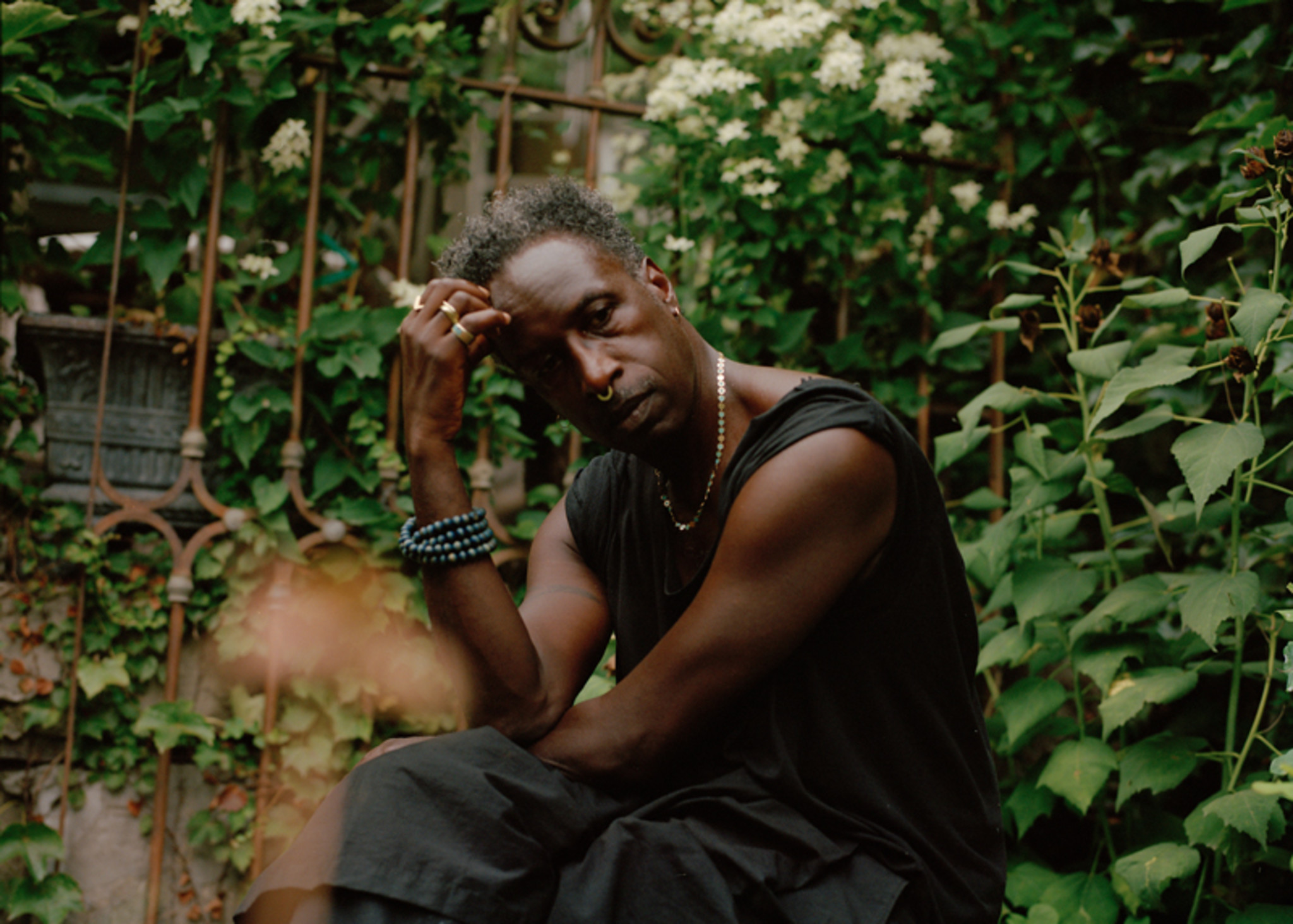
Out in the Street
with Joel Meyerowitz
The Great American Photographer on Midday Light, New York, and Jil Sander
- Interview: Hillary Weston
- Photography: Joel Meyerowitz, Courtesy Howard Greenberg Gallery

Joel Meyerowitz has spent his life in a state of creative attunement. Listen to him speak about his photography for even a few moments, and you understand the intensity of his perception, the pleasure that radiates from his desire to make the “humble everyday gesture turn into the sublime”, as he notes in the new edition of his 1983 book Wild Flowers. Turning the everyday into the sublime — it's a succinct but perfect summation of his artistic ethos, and it’s also the gift he gives to those who immerse themselves in his work. To be taken in by Meyerowitz, whether it’s through his kinetic early 35mm street photography, his gentle large-format seascapes and elegiac Provincetown portraits, or his observational snapshots of life in motion, is to not only inhabit an ephemeral moment, but to, like the artist himself, become more observant and open to the details and sensations in the world around you.
It’s how I felt when first encountering his images of vacant motel swimming pools at daybreak or Manhattan streets punctured by midday light and congested with bygone life. Through his lens, my experience with those spaces thereafter was distinctly altered, charged with a new sense of awareness. The more time I spent with Wild Flowers — a playful and romantic assemblage of photographs from 1965 through 2020 in which he uses the motif of flowers as a through line to connect disparate moments of beauty, ritual, and connection—the more I found myself noticing the presence of flowers around me, especially in an urban environment.
Born in 1938, Meyerowitz grew up in the Bronx and studied painting and art history before becoming an art director for an advertising agency in the early 60s. But it was when an assignment gave him the chance to observe Robert Frank at work that he swiftly and instinctually decided to pick up a camera and go find himself out on the street. Six decades on, Meyerowitz remains one of the most celebrated photographers in the world, a pioneer of both street and color photography whose images helped elevate the medium to the pantheon of fine art. His influence has seeped into the visual lexicon of contemporary culture, whether it’s on cinema screens or iPhones, and has become a touchstone for everyone from filmmakers to fashion designers.
Now at eighty-three, his creative impulses continue to bloom, forever in pursuit of what sparks his curiosity and challenges new ways of engaging with his craft. Most recently, Meyerowitz collaborated with the creative director couple Luke and Lucie Meier and art director Heiko Keinath on Jil Sander’s Fall/Winter 2021 campaign, creating a gorgeous and playfully elegant collection of photographs that feel at home in his body of work. Shot in Tuscany, where Meyerowtiz has a home with his wife Maggie Barrett, the campaign was made over an energetic few days spent discovering locations and crafting the atmosphere of intimacy and spontaneity that Meyerowitz loves to work in.
This summer, Meyerowitz generously took some time for a couple of unhurried phone calls — he in Tuscany and me in Brooklyn—about the awakenings that have fueled his career and the brushes with fate that guided him.
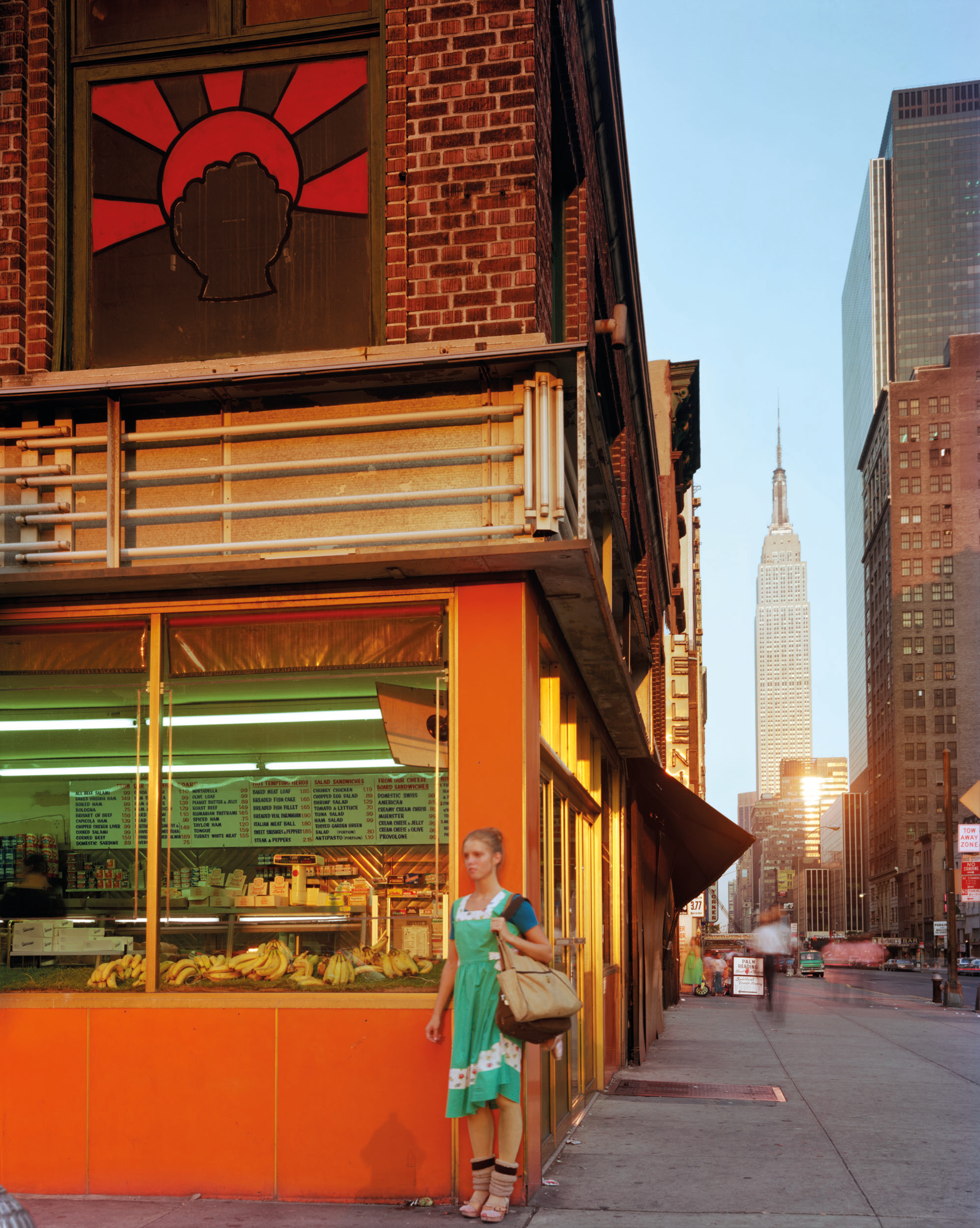
Joel Meyerowitz, New York City, 1978. Courtesy Howard Greenberg Gallery. Top Image: Joel Meyerowitz, New York City, 1965 . Courtesy Howard Greenberg Gallery.
Hillary Weston
Joel Meyerowitz
I associate your photographs so closely with variations in light—I’m curious if there’s a particular time of day when you feel most connected to yourself and the world around you?
For the period when I came alive to the fact that photography was the form that really called to me, the time of day that was most exciting was midday, when the light in New York City is scintillatingly hard, bouncing off granite and concrete and stainless steel and glass. That splintering light, with its hard shadows and bright highlights, excited me like jazz. It was sonic. It etched things into a hard-edged quality and made them seem important; even insignificant little details suddenly hardened into a powerful visual form. I was never taken in by the seductions of late hours or the morning hours, although I made pictures if I was up and out then. But the really jazzy syncopation of the midday light on the street is what got me.
One of my favorite photographs of yours is of the young dancer standing on the street corner in midtown Manhattan, which was part of your Empire State series. I look at it, and the light is so spectacular and so consuming that it feels as though I can touch the heat of it. What time of day was that taken?
It was the end of the day. Thirty-fourth Street over on Tenth Avenue, which was getting the blast of late afternoon on a summer day. I was working on that series—my practice was to use the Empire State building as if it were Mount Fuji and move around it in ever-closer circles starting at the river and working my way around the city freely—and I saw that young dancer just standing there, probably waiting for another dancer to come along. I saw the orange façade of this convenience store and the Empire State Building pulsing in the light. I stood there and set my 8x10 camera on legs, but I could see that the dancer was uncertain, that she was going to go away, so I called out and said, “Just stay there! I’m making a picture of everything and you’re part of it.” It was just one of those moments of rightness when everything comes together.
You’ve talked about the immediate, seismic effect of watching Robert Frank at work and how that ignited your interest in photography. But was there a moment or particular revelation that led you to understand your own style and the kind of photographs you wanted to make?
In 1964 I bought myself an old Volkswagen bread truck and reconditioned it to be like a camping van, and my wife at the time and I took a trip around America. I found myself, particularly out west, making photographs of things that were far away. Coming off the streets of New York, where everything was about eight or ten feet away, to suddenly be working at great distances meant I had to trust that a small object in the frame wouldn’t necessarily be boring to look at. If you were a real reader of photographs you would enter the space. So I was making those kinds of pictures, and when I came back to New York I printed out tons of work and showed Garry [Winograd] these pictures of things far away, and he kind of shrugged it off.
Then I had a meeting with John Szarkowski, who was the director of photography at MoMA. There’s never been anyone like him in photography. He was a real polymath who had vision and understood risk and the boundaries of the medium, and he was a photographer himself. So I brought 50-100 pictures to him in a box, and as he was looking at them slowly, he set aside two or three of these far away pictures. I thought, oh no, he’s going to shit on them also. But then I told him that I showed some of these to Garry and he thought they were nothing, and John said to me, with that particular smile he would put on, “Garry doesn’t know everything about photography.” He said, “Joel, one of the first things that shows a step towards maturity, photographically, is the ability to step back. . .I see young photographers’ work week after week after week and everybody’s in your face. They push the camera as close to people as they can get, they make these lunges at people. That’s a sign of wanting to prove that you’ve got something in the frame.” He said, “I look at these pictures that you’ve made, and I see that you’re willing to step back and look at the whole thing and that you’re taking a risk.” And that’s exactly how I felt.
So much of your life has been spent walking, in motion and out on the street, allowing you to feel the pulse of a city in a very particular way. It’s a physical act, but also a meditative one. I’m curious to know more about your connection to it.
I’ve always been a flâneur, as they call it in France, a boulevardier. I like to go out and walk. It happened because, when I was an art director and saw how Robert Frank shot pictures, I realized I hated being in an office. I enjoyed being an art director because it was playful and engaging while being a way to make a living and still staying in a painterly/graphic game, but it wasn’t satisfying. I would look out the window of the skyscraper I was working in and down onto the street and think, I just want to be there, and every time I would go out for lunch, I just wanted to stay on the street. I always wondered how one could do that; you have to be wealthy not to work and I wasn’t. But once I liberated myself through photography, I was out on the street just walking up and down the city. Looking, looking, looking. Being 24 years old, I didn’t really have any kind of strong identity at that point, but I found that photography gave me bits of pieces that identified me to myself. Oh, I like clusters of women; oh, I like the energy and physicality of the street. . .
I’d love to know about your relationship to fate and chance. Does that bleed into other aspects of your life?
Absolutely. I’ll give you an example. In 1990, after my marriage had ended, I was on the cape working on Bystander: A History of Street Photography, and one day I was writing and suddenly noticed it was six o’clock. This was in September, so the sun was already starting to go down early. I was a long distance biker in those days, so I thought I’d get out of the house since I’d been sitting there all day. I got my gear on and exited the garden and stood on the street, where there were two ways to go: I could bike left and go through Provincetown or I could go right and get out on the highway and do twenty miles on the open road. My impulse was that the season was over, and I could go through town and have a look at it while on my way to the highway. So I went, and as I left town heading toward the dunes, I was biking into the light and saw that on the other side of the road was a slender figure with very tight cropped blonde hair. She was lit up by the sun like a dandelion, and as I biked by, I looked out from under my helmet and caught sight of this extraordinarily beautiful woman. It so shocked me that I almost fell off my bike, because it was sandy along the margins and I’d taken my eyes off the road. But I righted myself and kept going. I had this thought that she was a spirit like me, heading out at the end of the day—and that was it, I forgot about it. I’d planned to go back home and make dinner for myself, but suddenly it was getting late and I decided to make my way into town and eat at a friend’s restaurant. And as I came back, I saw that same woman again. As I passed her, I stopped and got off my bike..and we’ve been together ever since.

Joel Meyerowitz, 1978. Courtesy Howard Greenberg Gallery.
Oh, that’s so beautiful. It leads me to wonder about how being a photographer has altered your perception and presence in the world. You leave the house with a camera around your neck or on your wrist and you anticipate that at any moment you might find yourself moved enough to capture something. It turns everything, even a simple walk to the deli or a bike ride, into an active creative experience.
Of course the old cameras were always ready, you didn’t have to turn them on, but I always changed the f-stop and the focus. As soon as I walked onto 5th Ave and it was sunny, it was 250th of a second at f/5.6, but if I walked on the shady side of the street, it was at f/3.5. I was always adjusting it so that I could be fluid in my reaction for anything that happened, rather than having to adjust at the last second and miss the primary peak of a moment. Whenever my feelings rose up with curiosity about what was in front of me, the camera was already up at my eye. Even with digital cameras, I keep my camera on all the time with my finger on the button. Every 30 seconds I just give it a tap so that it doesn’t go to sleep.

Left Image: Joel Meyerowitz, New York City, 1977. Courtesy Howard Greenberg Gallery. Right Image: Joel Meyerowitz, Easter Parade, New York City, 1964. Courtesy Howard Greenberg Gallery.
In a book like Wild Flowers, the subtleties of color are eminently present in the smallest details. Can you talk about your relationship to color?
It's not something that I actually think about, but I recognize momentary associations. There’s a picture of a guy standing at a hotdog stand, and it must have been St. Patrick’s Day because there’s a bouquet of carnations there that somebody sprayed green. Just seeing it explode in the light, and this guy standing there looking at the stand the way you stare into the refrigerator wondering, what do I want here, the flower was the one beautiful thing in the frame, the wild card. It’s about instant recognition rather than any kind of planning. I look at these things as sudden gifts that the world throws my way.
I read that someone contacted you and said that the woman on the cover of Wild Flowers was their mother! Does that happen often?
It's happened a few times. But in this case, which was about 20 years ago when we were at an art fair in New York, there was a photographer from California who came up to me and said, “You know that picture you have of a woman in the Easter parade? That’s my mother.” It was so exciting to finally know who she was. When I went home, I made a print of the photograph and gave it to him to give to her.

Jil Sander Fall Winter 2021 Campaign. Photography By Joel Meyerowitz.

Left and Right Images: Jil Sander Fall Winter 2021 Campaign. Photography By Joel Meyerowitz.

I’d love to talk about your new campaign for Jil Sander and how that collaboration began?
Heiko Keinath, a terrific young art director living and working in Paris, had dummied up a campaign using pictures of mine that he found in books and on the internet. He shaped the feeling of something portrait-like but in spaces that had graphic resonance and power, and he wanted to shoot it in Tuscany because I’m here and it wasn’t an area that they’d filmed in before. He had chosen pictures of mine that I love — oddly, two or three of them were of my daughter, just the kind of casual photographs one makes towards someone you love. It caught a spirit that he liked.
Once I met him and saw the campaigns that he had done I was pleased to see the spirit he was able to bring to them. He’s given photographers a lot of freedom, and so the ads made more sense to me because he’s taking a risk and is unafraid to let photographers loose. A lot of times art directors and fashion designers want you to toe the line and make things that fit in with a certain standard that they want their clothes to fulfill. Every piece of the Jil Sander clothing was exquisitely made. I was just blown away by the characteristics of their fabrics. I talked to Luke and Lucie about it, and very high in their criteria of what fashion should be is the feeling of the clothes — how you put them on, the closures they use, the seaming. . .all the details are really like old-world craftsmanship, but they’re two people who are young, and they’re very easy-natured, calm, kind people. So it really was a pleasure being with them. No attitude, no angst.
Do you find that your mindset or approach behind the camera changes in this environment? I’m curious because, much like your personal work, these photographs have a cinematic quality to them, as if there’s an entire story floating around the image and we’re just catching a glimpse of it going by.
I believe in the moment, so I don’t want to be too static. I often set the models in motion and then I move around them so that I’m circling them. I talk to them as I’m moving so that I’m directing them as much as I’m urging them to move counter to me so that things have a feeling of emerging as a fraction of a second of observation or have something that’s caught rather than static. Even though I’m a still photographer, the cinematic sense of life and movement in the real world is part of what I thrive on.
I’m wondering what it is that sustains your passion for photography after all these years? Are there other visual mediums you return to, such as painting, for inspiration?
Painting was a big part of my life and still is, but photography has this evanescence of appearing and disappearing in the fraction of a second, which is different from painting. So it’s kept me enthralled all of my life. Although I have had seven different turning points in the course of my photography that have challenged me and made me want to investigate other aspects of the medium that I hadn’t paid attention to before. Last year it was all self-portraits. I made self-portraits every single day for a year starting January 1, 2020 all the way through the pandemic. That’s all I did. And they were challenging! They weren’t just selfie self-portraits; they were made with real cameras on tripods with timers and strategies. I’m putting together that work and hopefully will make it into a book because I feel like it challenges our notion of what a self-portrait can be. But as far as paintings go, Philip Guston has played a big part in my later life. I’d like to be able to make work as rude and energetic and crazy as he was able to do once he left the effete world of abstract expressionism. He once said, “When I look at abstract expressionist painting now, I smell mink coats.” It’s all decorative.
Hillary Weston is the social media director for the Criterion Collection, as well as a staff writer for their online publication, The Current. Her work has appeared in Film Quarterly, BOMB, Interview, The Brooklyn Rail, and BlackBook.
- Interview: Hillary Weston
- Photography: Joel Meyerowitz, Courtesy Howard Greenberg Gallery
- Date: September 3rd, 2021