Janie Korn’s
Candle-Copia
The Artist on Impermanence,
Wax, and the Perfect Knife
- Photography: Molly Matalon / Jones MGMT

Candles have a lot to teach us about impermanence. It’s through depleting themselves that they give us light, through nearly disappearing that their remnants can be melted into something new, like little wax martyrs…
Well-acquainted with the life cycle of a candle, artist and candlemaker Janie Korn plays god in the world of wax. In her apartment-turned-studio, the artist brings to life intricately detailed wax candles, carved, wicked, dipped, sculpted, and painted by hand. An emporium of dreamed up waxy figurines, Korn’s oeuvre includes olives, Paul Smith, a dollhouse, Evan Mock, scented Mary Janes, even Chucky. Fluffy festooning cake candles, blooming flower candles, cute cartoon candles, all created from layers upon layers of delicately painted wax. “I wipe my dirty brushes on my chest and arms,” she says, “so my work clothes end up looking like topographical maps.”
Each waxy smear and swipe suggests where one candle ended and another began, at once a eulogy and birthday. Candles show us what happens when one flies too close to the sun. A flame is what gives a candle its purpose—but must fire always be feared? A candle says, no. Here, Korn shares her recipe for the perfect candle.
How to Make a Candle
1.
Using the double boiler method, melt down your choice of wax in a pour pot. You can use soy, paraffin, beeswax, etc. There are hundreds of subgenres, so just choose what works best for you. Beeswax will fill your studio with the most exquisite scent.
2.
Cool wax back down and build it onto the wick.
3.
Building the wax up and then carving it back down are repeated over and over again until the shape is perfect. It can feel Sisyphean but you eventually get to the other side.
4.
Paint the candle with wax pigment. Never, ever use acrylic paint on candles. This is plastic and toxic to burn!
5.
Carve it back down if you're not liking the colors and repeat step four. It's a blissfully forgiving art.
6.
Light your candle, use it as a sculpture, a ceremony, illumination, or a special gift.

1. This tableau contains my single most important tool: my X-Acto knife, stolen from an ex boyfriend five years ago. It is the only knife I can use to carve my pieces. My hands have adjusted to its curvatures and the blade is dulled to perfection. I've traveled across the country with it. If there was a flood, I'd save it first. I'm hopelessly devoted to it.

2. My favorite part in the process is when the shape and the colors are still sort of rough but the picture starts to come together. At this point my instincts take over and my mind can turn off. I've become incredibly comfortable with wax—how it needs to be treated, what temperatures make it bend or shatter or curdle; my hands will take it to completion very naturally.
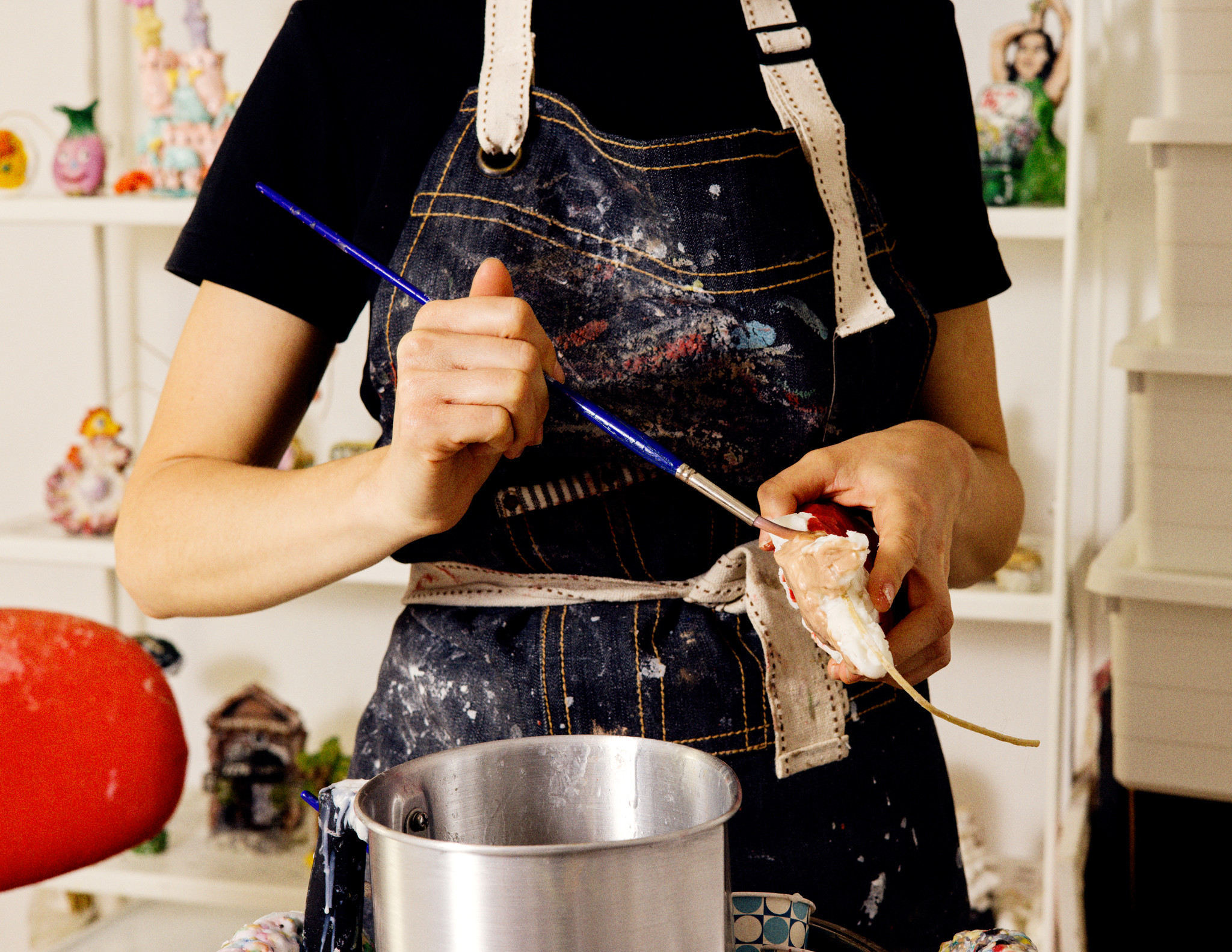
3. Wax is a forgiving art, but not a clean one. My workday involves peeling my apron off, shaking my body out like a dog so the shards can fall, and then scraping the hardened bits from my table and floor.
4. Here I'm giving the rabbit some color, some life! My apron is new and therefore relatively clean (for me).
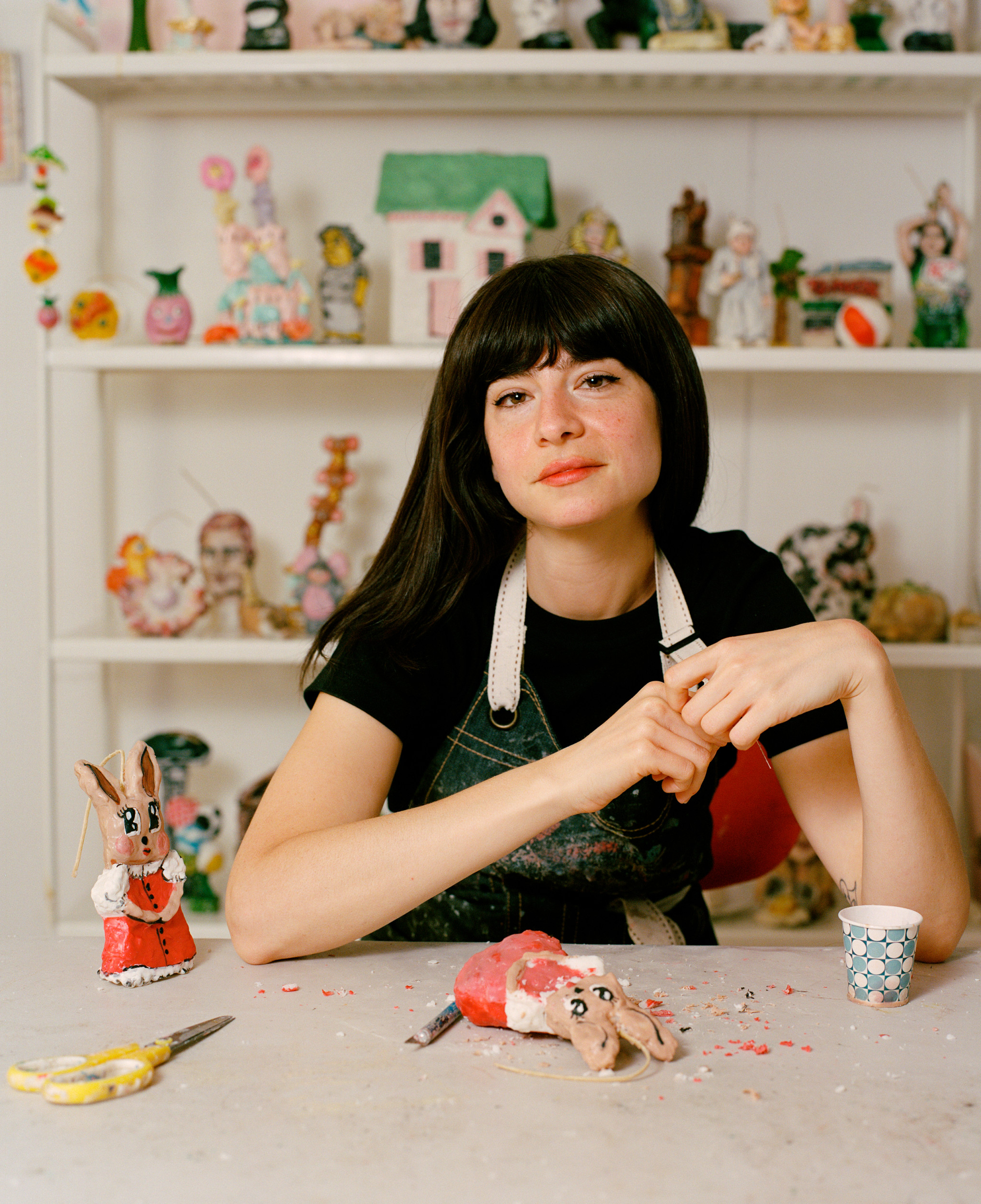
5. I moved my studio to my apartment right before the pandemic, so it's been almost three years of living amongst my work. It bleeds into my dreams, but I love it. Sometimes I'll wake up and wander over to my display shelf and create little vignettes with them, so I'm able to see different dynamics of my work, how it can play together and what themes are emerging.

6. This bunny will have multiples in the series, all created by hand.

7. This piece is among a new collection of mine inspired by 1930s American cartoons. I watched a lot of Fleischer Studios compilations as a kid and that was super formative to me and my aesthetic.

8. Wax buildup on my pour pot.

9. I love weird little creatures. I think they make life magical.
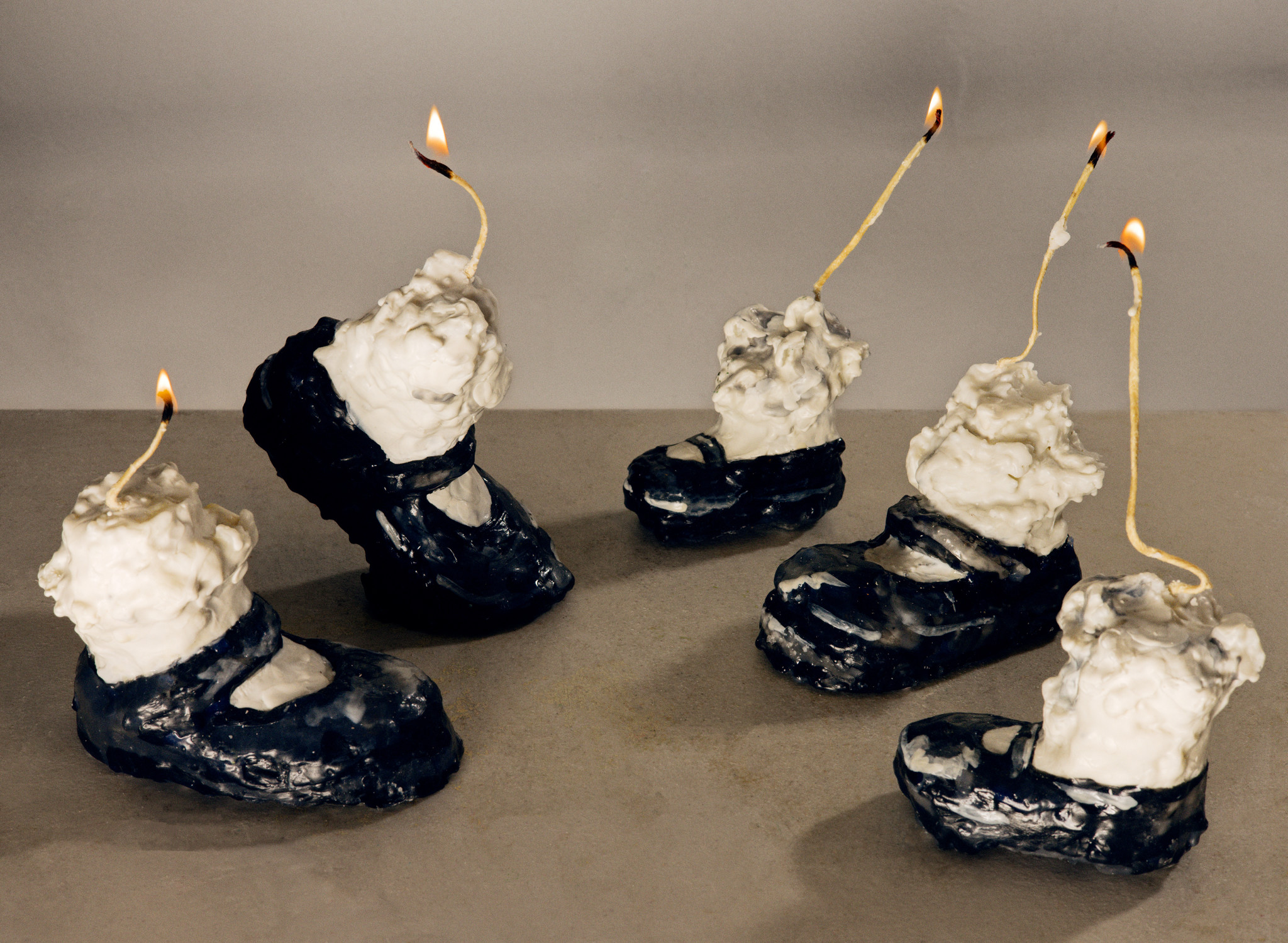
10. I use a lot of demure, chaste themes in my work. Cartoons, childhood memories, toys, and here, the Mary Jane shoe. When put to flame, it makes me reflect on the fragility of these concepts and what concepts could be underpinning them. These shoes were scented by perfumer Marissa Zappas featuring notes of leather and powder.

11. Most of this is my permanent collection, i.e. pieces I'm pretty unwilling to part with. Among my favorites, the life-sized candle dollhouse, the bread bowl stuffed with cheddar broccoli soup candle, and my portrait of the Safdie brothers.
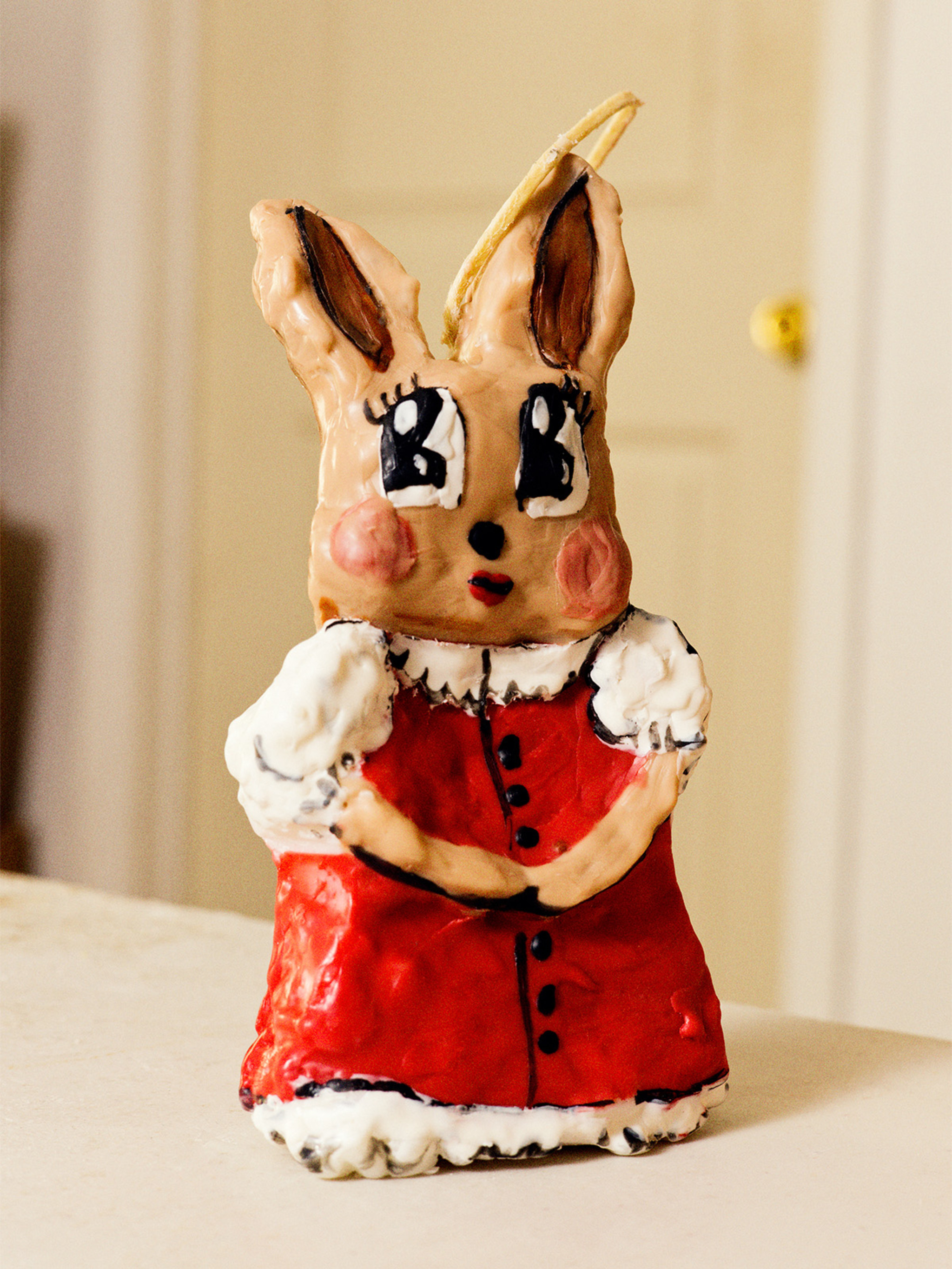
12. My dream is to one day bring all my pieces to a gallery and stage a mass immolation of my work, perhaps set up like an altar. Candles are impermanent and that's part of their beauty. They are fleeting, just like life. I create them to exist only until they don't.
- Photography: Molly Matalon / Jones MGMT
- Date: August 18, 2022