Inside the
Colpa Press Party
Flyer Archive
The San Francisco Publisher Documents Yesterday’s Raves
- Interview: Maddie Klett
- Images/Photos Courtesy Of: Colpa Press

For Luca Antonucci and David Kasprzak, the San Francisco-based publishers behind Colpa Press, every rave flyer book they release is an opportunity to share a first-person account. The duo’s projects span art, music, design, and VHS collecting (their Mission-neighborhood studio is lined with tapes), but they’re perhaps best known for their pocket-size, neon-colored rave flyer books, stocked at independent bookstores from LA to Tokyo. Beginning in 2016 with a compilation of party flyers from their hometown, Luca and David have published the personal flyer collections of partygoers and enthusiasts in volumes dedicated to the early 1990s rave scenes in New York, Los Angeles, and London. Colpa’s latest release, La Ruta del Bakalao: Museo del Remember (1985-2012), chronicles the club culture in coastal Spain that emerged after the fall of Franco, from the late 1970s to the 90s.
The collectors Luca and David work gathered flyers and merchandise because raving was an important part of their teenage lives and, even if they didn’t realize it, for posterity: those underground scenes had lifespans—made explicit in the tombstone-like ranges on each cover (1990-1996; 1991-1993, etc.). In the conversation below, we spoke about cease and desist orders, the uncoolness of fandom, and partying like a multi-course meal.
Maddie Klett
Luca Antonucci & David Kasprzak
What was the first rave flyer book? How did you come across that collection?
Luca: The first was San Francisco Rave Flyers 1991-1993, which came from a flyer collection on a Flickr page. We were really excited about it because we were interested in expanding our publishing to cultural ephemera that told a local history. We contacted the person who ran the Flickr, he went by Sioen Roux and has since passed away; we asked him if we could use his flyers to tell his personal experience of going to parties. That first one informed how we approached all the books—each focuses on one person's collection.
David: At the beginning of each book, you'll see it is dedicated to the collector.
How do you collaborate with collectors? Who decides what goes in the book and the order?
David: We take everything they have. When we put out the first SF book, a few people contacted us, saying they had a bunch of flyers from LA or New York. We would connect with them, see what they had, and show them the format of the books. All are 84 pages. In terms of sequencing and layout, that's all on us. We send it back to them to see what they think. And most everybody has been like, “I don't know what to do with it. It’s been sitting in a box under my bed for 25 years, do whatever.”
Luca: It also depends on the person. People like DB Burkeman, who had the New York Volume 2 collection, those are all flyers that he designed or parties he threw.
David: We randomly met him at the New York Art Book Fair. He walked by our table and picked up New York Volume 1 and chuckled. He said “I made all these flyers,'' and kept jokingly being like, “Don't worry, I'm not going to send you a cease and desist.” And then for a while, all of his emails to us were titled CEASE AND DESIST.
Luca: It would be different if we were making books with photos and flyers and stories. Then you get into a historical description of a scene, which is something we never wanted to do. We want to show examples of design during a really interesting time in the early 90s, with the emergence of desktop publishing and designing at your computer.
David: That's why the aesthetic of a lot of these early flyers is funny, campy. And those design languages are coming back, people are seeking out those fonts again.
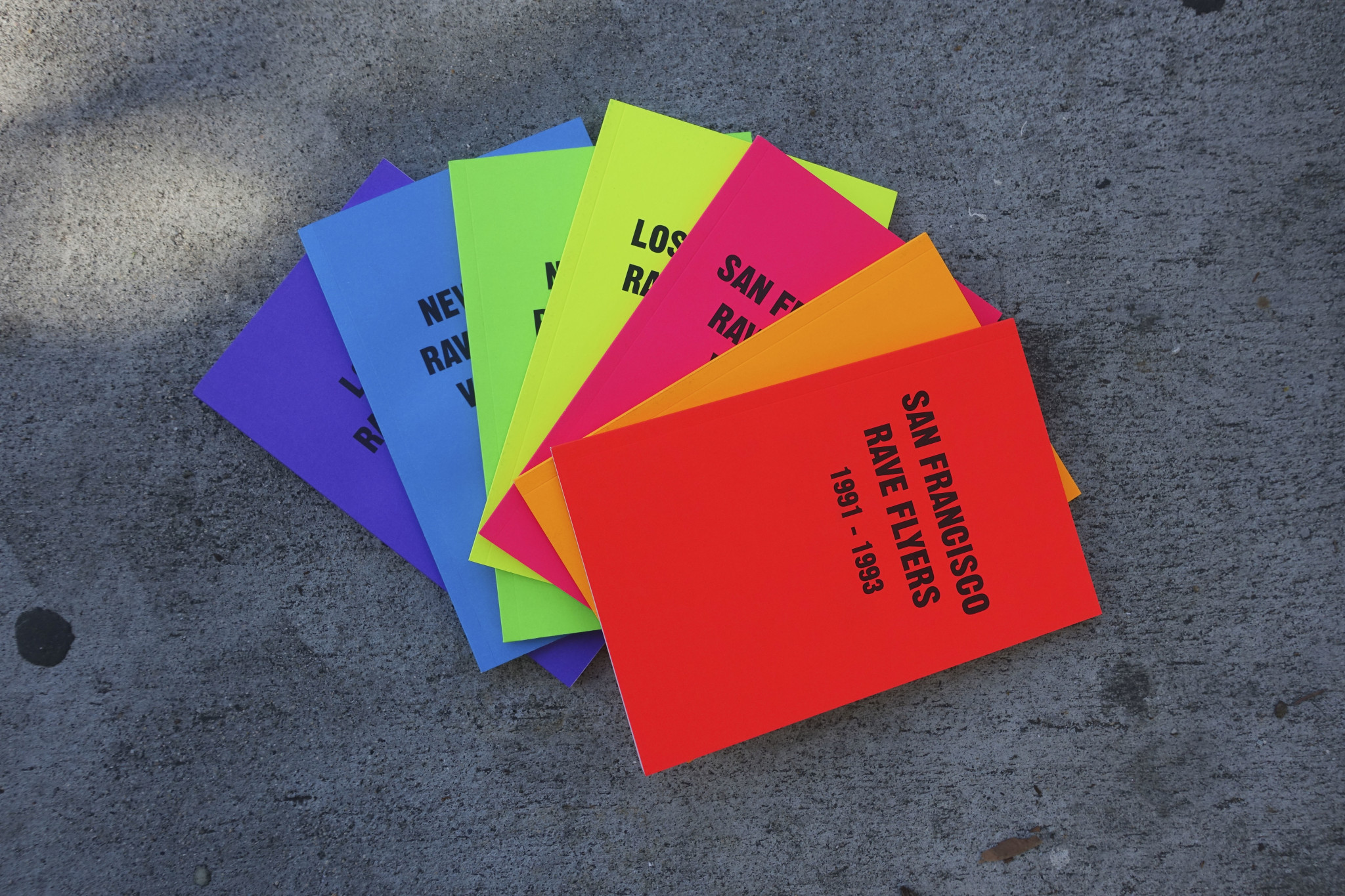
Courtesy of Colpa Press. Top Image: Spread from NY Rave Flyers Vol. 2 1990-1995, Courtesy of Colpa Press and DB Burkeman.
You’re not primarily interested in historicizing these scenes, but do you see affinities between them? The conditions of a time and place that allowed for a party culture to emerge?
Luca: The scenes in San Francisco, New York, and LA could only emerge illegally. In the US, we didn’t have the underage spaces for dancing like places in Europe. In SF, in my experience growing up here and going to raves and DJing, the scene came out of this necessity for young people who were into this type of music to exercise their interest. For us, that meets the necessity of the design, since the movement was created out of a need for young people to be able to dance all night, and all the things that come along with that.
David: With the rave scene in the 90s, these kids weren't old enough to get into the capital “C” clubs or bars, so they had to find other venues where they could play the music they were making, or music from outside of the country. The New York scene was a little bit different because it came about when disco and funk started to die down. People started taking over venues that were going under because there was no longer a disco scene. DB Burkeman moved here from the U.K. and was playing drum and bass music, which was huge there but didn’t really get played here. He threw these parties based on that style of music and people liked it because they hadn't heard it before. It gradually became more and more about the music and really specific genres within the electronic scene. And that informs the design…if it's jungle music, there's often this jungle theme to the flyers, or if it's drum and bass, it’s more metal and industrial looking.
With your new book, La Ruta del Bakalao, you’re breaking your previous format and including historical context: an interview with the collector, archival photographs, and an essay by the collective Vista Oral. These offer incredible detail about a party scene in Valencia, Spain. What prompted this shift?
David: We were approached by a friend, Maite Muñoz, who is a writer and artist. And she told us about this guy in Valencia named Rubén Hernández, who runs a museum out of his house dedicated to this rave scene called La Ruta, with thousands of flyers, objects, and all kinds of stuff. This movement came with this whole bigger political history because it began in the late 70s, just after the fall of Franco. There weren't many zoning laws in place and these parties could continue all night long. A lot of them also took place in rural areas. When one club would close, there would be another just opening and ready to go. People were going from club to club, so the scene became more about the route than any specific party.
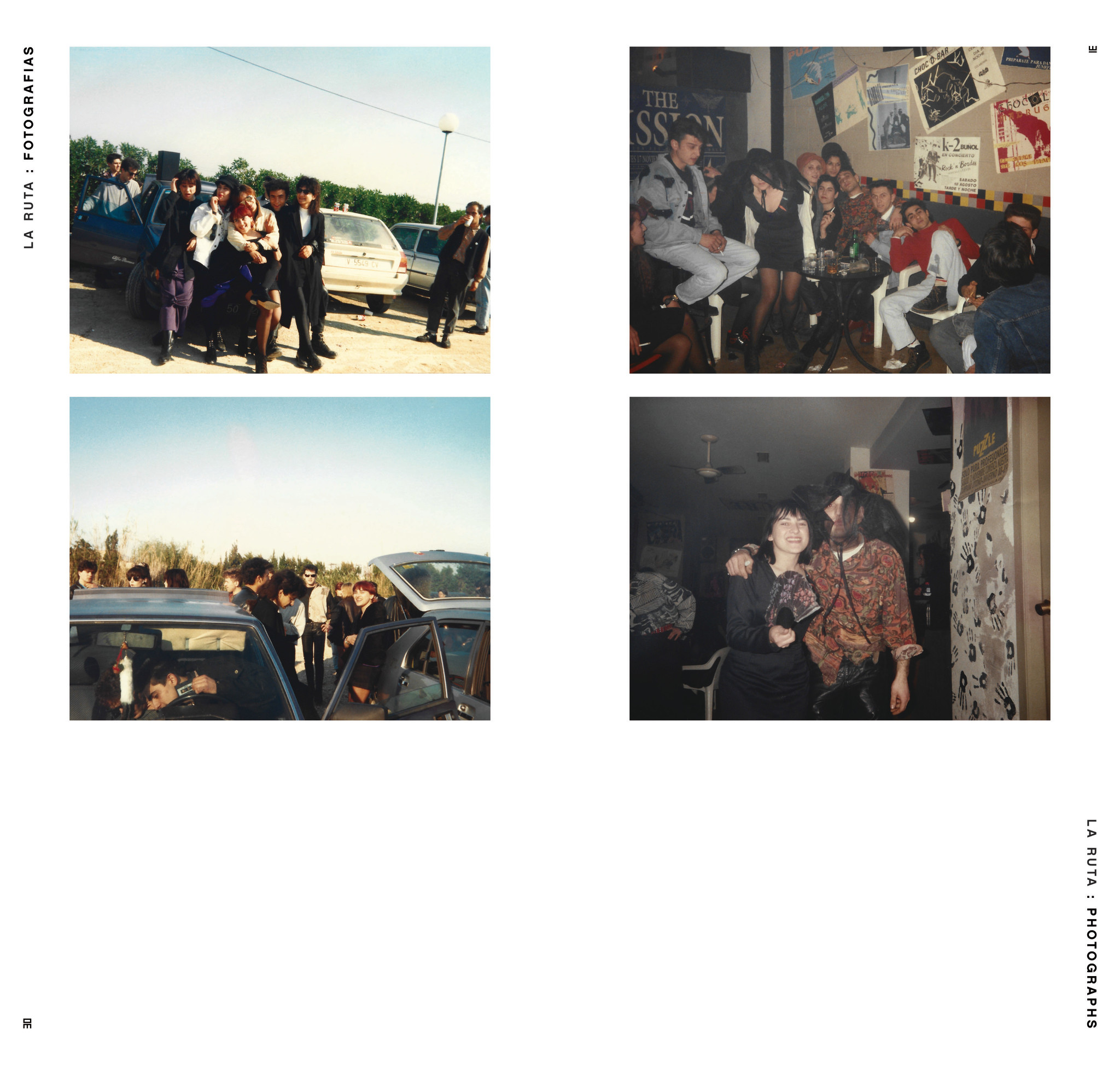
Spread from La Ruta del Bakalao: Museo del Remember 1985-2012, Courtesy of Colpa Press and Susana Oliva.
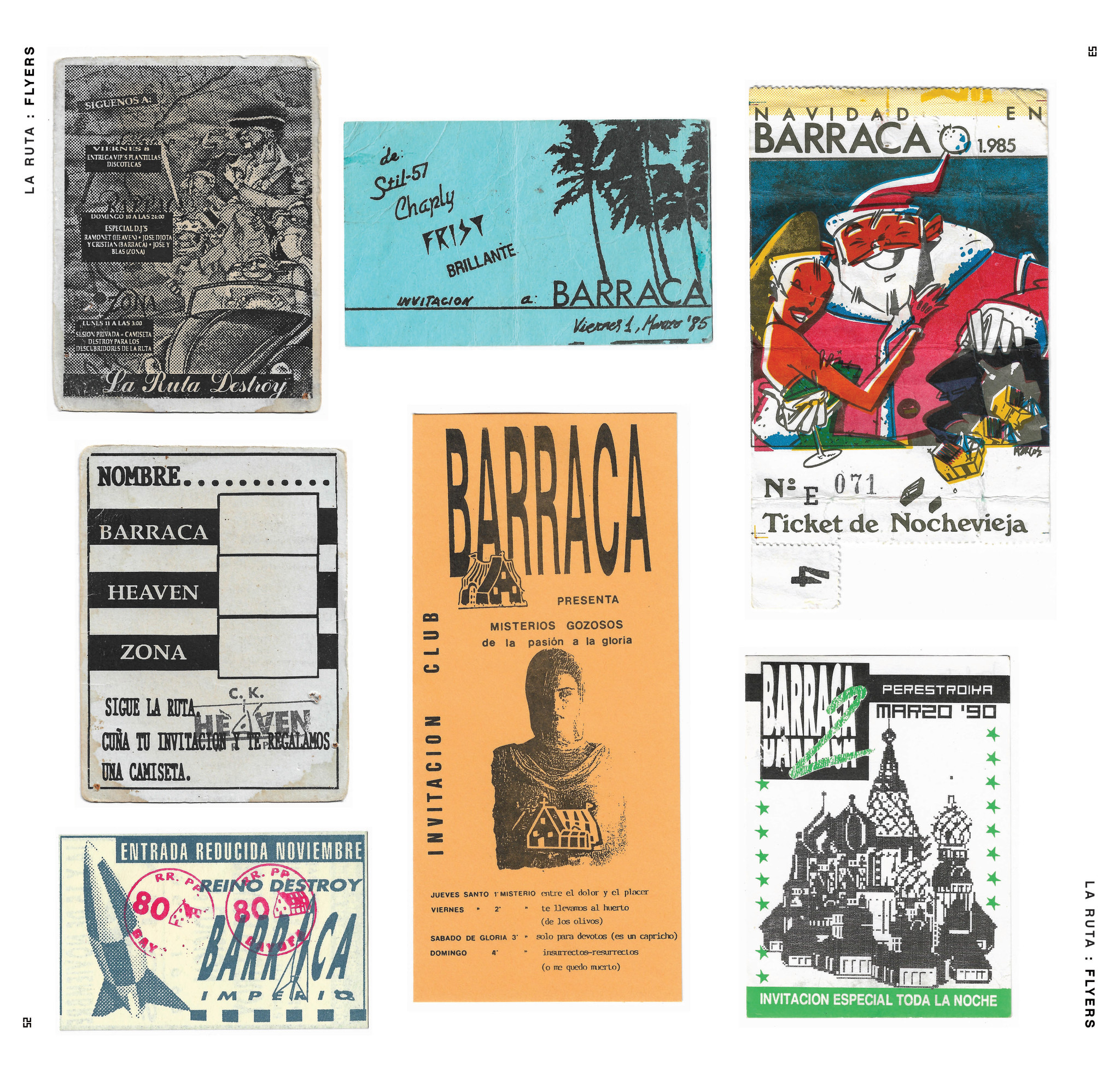
Spread from La Ruta del Bakalao: Museo del Remember 1985-2012, Courtesy of Colpa Press and Rubén Hernández.
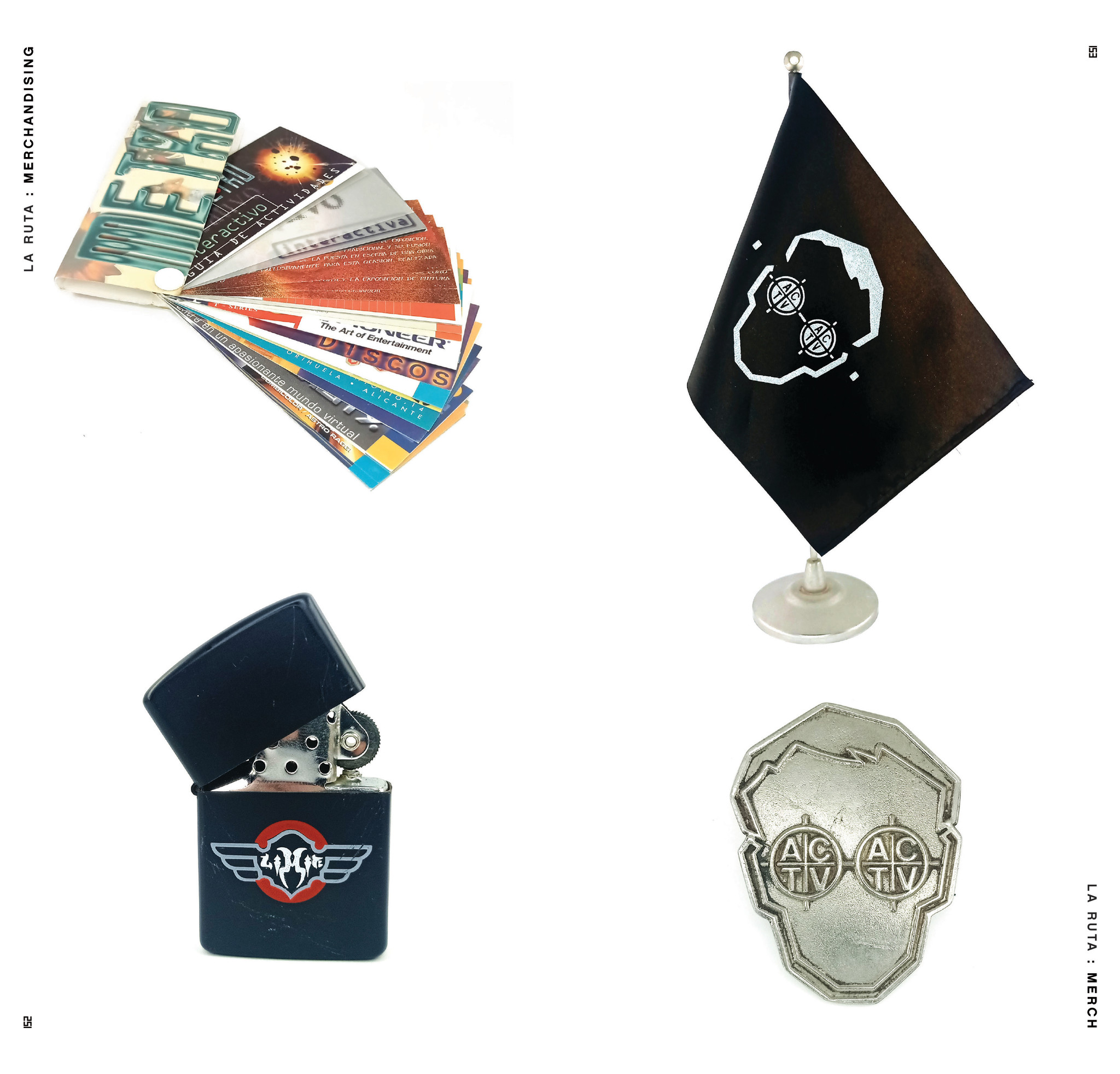
Spread from La Ruta del Bakalao: Museo del Remember 1985-2012, Courtesy of Colpa Press and Rubén Hernández.
I like how Rubén describes the experience like courses in a meal.
David: It seemed like genre wasn't as important. People would go to a goth club and then a place playing a different kind of electronic music. Like Rubén said, it was like tasting different things throughout a weekend. It’s different in the US, where people often were like “I only go to house shows,” etc. [In Spain] they embraced different styles.
And each club had its own identity.
David: Yeah, Chocolate was the goth club. Which you think the club called Spook would have been…
Luca: What emerged were these parking lot parties, and because people would club-bounce the culture became the travel. Everyone started souping up their cars and having these amazing sound systems and they would party in the parking lot, waiting for the next club to open.
David: Like a mobile party, which is kind of beautiful coming on the tail end of fascism, when no one was allowed to do much.
Rubén recalls collecting these flyers at 13 because he didn't have a car and couldn't go to the parties, but was seeking out the flyers. Rubén’s experience seems to speak to something behind all of these party scenes, that they emerge from a need during adolescence to glom onto something bigger than yourself.
Luca: I think that people often forget that. I don't think that's exclusive to rave music. You see it in a lot of subcultures. But it really starts as major fandom. You glom on to these things because you feel like you don't see yourself represented in your immediate community. You see something you feel connected to, and are like, “I'm going to be a part of it, whether they want me or not.” And that's really everyone in the group. Rubén is a perfect example of that.
David: And I think it's hometown pride too. He still lives in that area, rather than moving to Madrid or Barcelona. This is a cultural movement that is unique to his home.
Luca: The people who we want to work with are fans. They're not archivists, historians, curators, someone who's going to try and contextualize the stuff in history. We're more interested in how the story is told from the perspective of the fans. And that's essentially all of our books. Even when we work with visual artists, we want to be the fanzine of their work. There's a place for analysis, to interpret what is happening around us. But we realized at the very beginning that with the limited resources we have, and how small our operation is, it makes sense to tell these first-person stories.
David: Our big responsibility with publishing is always: how do we faithfully represent the subject matter that we're interested in? And I think we're in a unique position, because we're not a large-scale publisher that has specific agendas, which makes us more approachable.
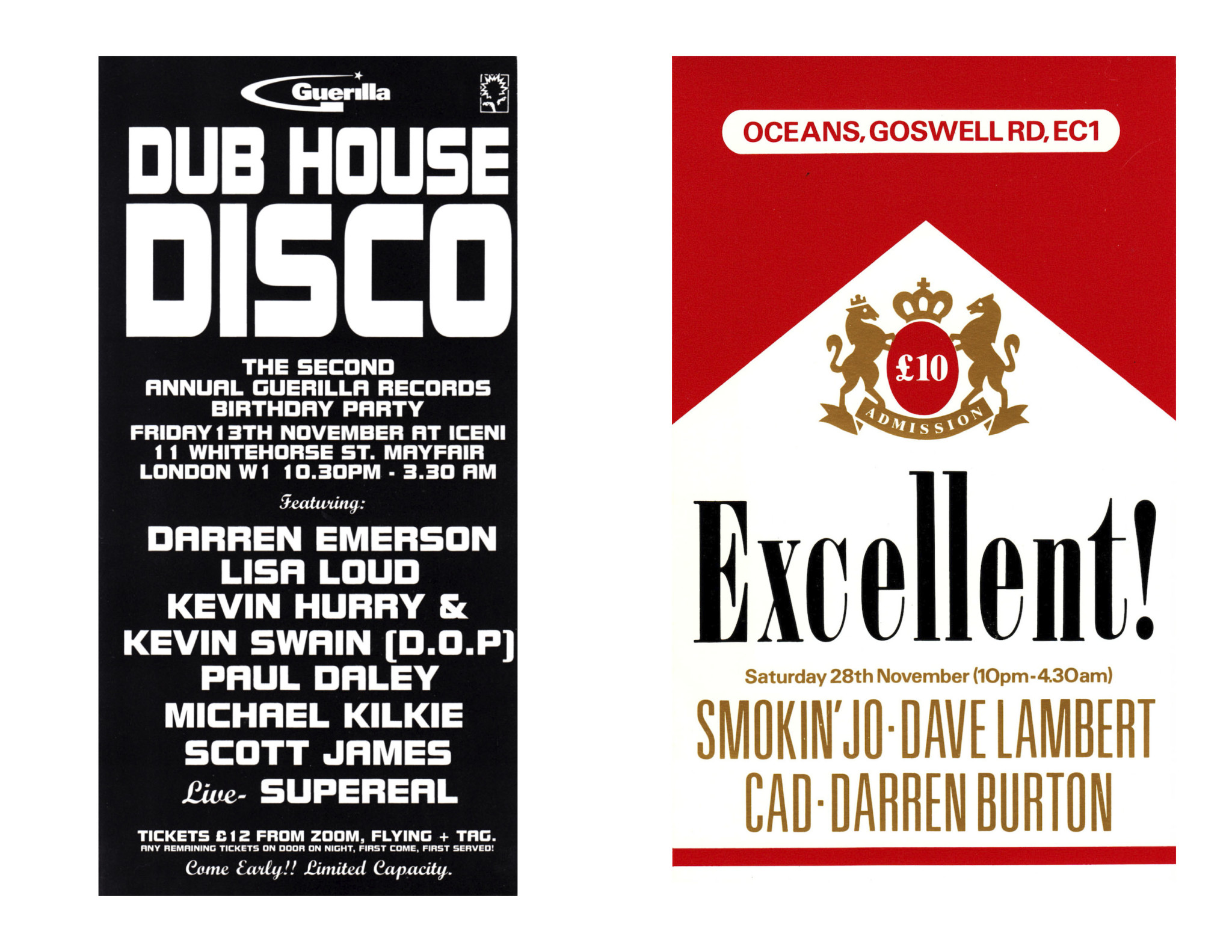
Spread from London Rave Flyers 1990-1996, Courtesy of Colpa Press and Matt Acornley.
What’s your favorite piece of ephemera from the book?
Luca: I mean, how can you not like some of the merchandise?
The accordion fans are so iconically Spanish! But also so useful in a club.
David: Right? And you'll notice everything on the left-hand side of the book is in Spanish, and that section in Spanish is titled merchandising. Which is weird and grammatically incorrect. But it's something they refer to as a false Anglicism. It's like using an English word in their own way. But they've always referred to this stuff as merchandising, so for them to call it anything else doesn't make sense. It’s the term Rubén uses.
Luca: I love seeing this stuff from an amateur lens, and when I say that, I mean it in the most positive way. The reason the San Francisco book is my favorite is because I see all of these things from my local cultural vocabulary represented. I see the film or rock poster, or the 70s style of San Francisco dress, all morphing into this weird aesthetic that is somewhere in between it all. With the Ruta you see the Spanish influence, and how they interpret dance music visually in their own way.
David: The fans are my favorite because they came out of a necessity, like the lighters and ashtrays—everybody smoked. It’s coastal Spain. It's hot. You're outside in these parking lots. Why make a t-shirt when you can make something that alleviates the situation?
Maddie Klett is an art writer and researcher living in the U.S.A.
- Interview: Maddie Klett
- Images/Photos Courtesy Of: Colpa Press
- Date: March 2, 2022

