How We Got the Puffer Jacket So Wrong
With designers like CHENPENG, ERL, and POST ARCHIVE FACTION (PAF) rewriting the rules, the idea that puffer jackets are ugly and boringly practical has never felt so outdated.
- Text: Alek Rose

Every year when winter rolls around, an unwarranted campaign against the puffer jacket comes with it. Warmer than any other option on the market, often with a waterproof shell to boot, light enough to make your wool overcoat feel like a workout, and possible to pack down into the size of a pocket, puffer jackets tick every box for winter outerwear. So, why are they so divisive?

Emily Ratajkowski in New York City. Photo by Ignat/Bauer-Griffin/GC Images. Top Image: C.P. Company and Stone Island presents Sergio Perrero’ artwork in Zona Tortona, Italy. Photo by Vittorio Zunino Celotto/Getty Images.

Irina Shayk in New York City. Photo by Ignat/Bauer-Griffin/GC Images.
Before attempting to answer that question, some useful context. I love puffer jackets. The proportions of them, the warmth, the weight (or lack thereof); they present the perfect combination of striking visuals and utility, an opinion shared by celebs ranging from Ian Wright—whose enormous puffer jacket laughs in the face of “boring practicality”—to Emily Ratajkowski with a cropped pink The North Face Nuptse, or Irina Shayk and her sleek all-black look. In a recent conversation with a friend who’s equally puffer-pilled, I made the lofty statement that I could never get bored of puffer jackets. I could buy one after the other and, with the kind of quality and detailing that brands like Ten c or C.P. Company offer, each new jacket would bring me as much joy as the first.

Ian Wright and Katie McCabe at Meadow Park, England. Photo by Alex Burstow/Arsenal FC via Getty Images.
So what was the first? Roll the clock back to 2006. I was at school in the North of England—summer doesn’t exist and winters are cold, dark, and very wet. This kind of “character-building” weather meant that I followed in the footsteps of countless other young Northern lads in cultivating an all-consuming obsession with brands like Berghaus, which promised warmth, waterproofing, and subcultural style in equal measure. For the uninitiated, Berghaus is a case of hometown hero for much of Northern England—a mountaineering brand made locally that was easily accessible and authentic. What a North Face puffer is to a New Yorker, a Berghaus puffer is to a Northerner. As such, my first Berghaus waterproof and puffer jacket were canon events, opening my eyes to a world where clothing genuinely improves the quality of life. In 2021, I invested in a down jacket from the IYKYK powerhouse Ten c and the floodgates opened: High-end down jackets became an infatuation. Last year I finally gave in to the allure of the Italian cult-favorite C.P. Company D.D. Shell Down Jacket and, once again, raised my expectations of what a down jacket—and clothing as a whole—could offer. The garment-dyed nylon shell is almost transparent but for an acidic yellow tint; the lightweight feather insulation, even the rubberized toggles to the hood—every detail is considered and perfected. It’s how it can, and should be.
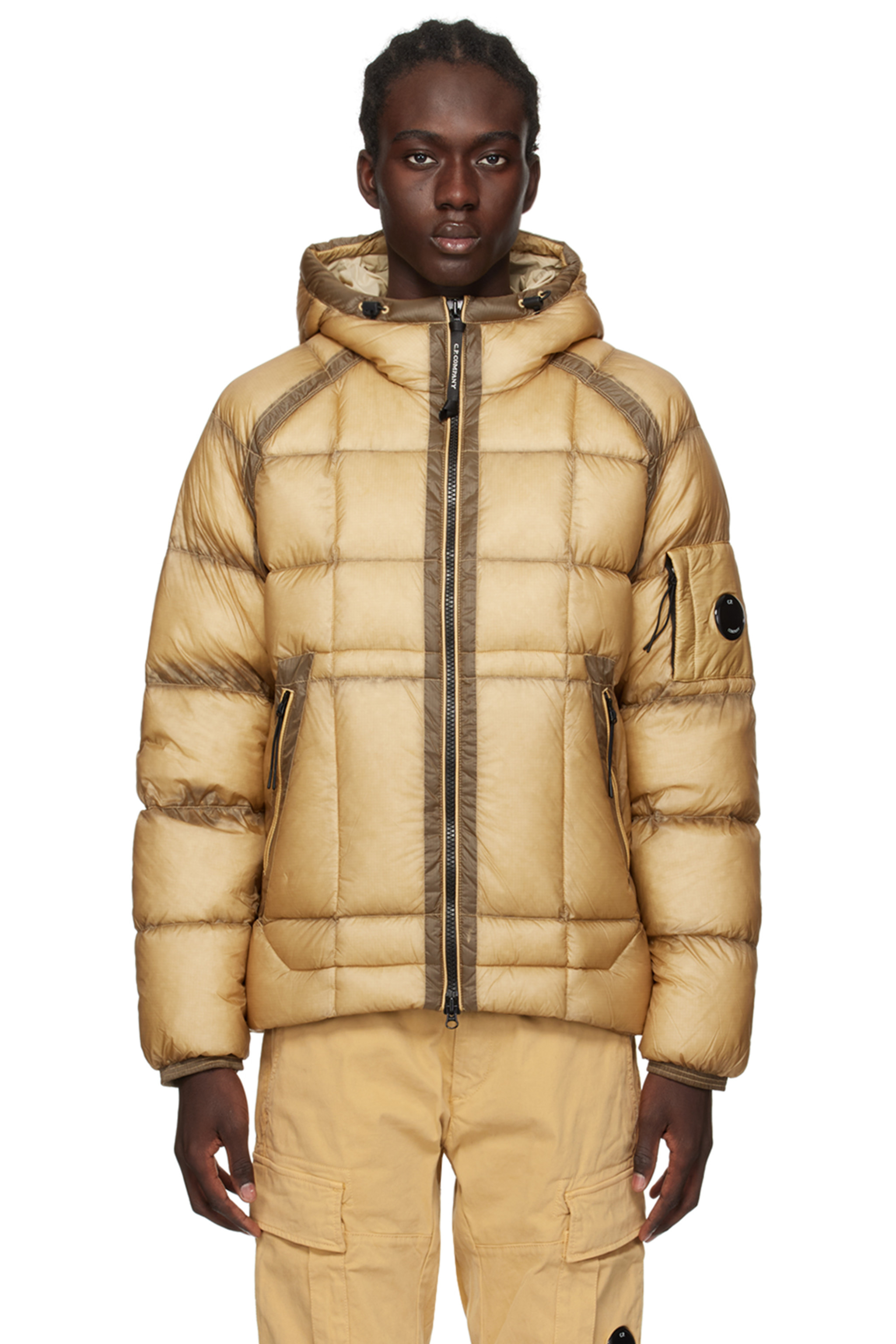
Featured In This Image: C.P. Company jacket.
This kind of considered design stems from necessity. The first down jacket was developed in 1922 by George Finch, an Australian scientist and mountaineer—the ideal combination of hobbies for outerwear development—but the style was first mass-produced and patented by iconic American workwear specialist Eddie Bauer after suffering near-fatal hypothermia on a fishing trip in 1923. Down jackets represent life-saving, solution-based design at its best, and that’s as strong a platform as any for a style to flourish. Throughout the twentieth century, the core tenets of down jackets were reshaped by brands like Moncler and Pyrenex, and were subsequently adopted by subcultures ranging from rave to hip-hop. The effect of this storied legacy is that in 2024, the sliding scale of puffer jackets appears unending in either direction. From the ultrapractical to the wildly conceptual, they come in all forms. Surely such a broad category would be safe from the hungry jaws of the trend cycle.
Unfortunately, the trend cycle eats whether we like it or not. But instead of blindly obeying opinion pieces claiming that the puffer’s ugly practicality has no space in fashion, we can take the radical step of forming our own opinions backed by our experiences and informed by the designers who are using puffer jackets as their canvas for experimentation. With the undebatable functionality of down jackets as their starting point, there’s a new guard of brands pushing the boundaries of the style. Breaking the mold with experimental quilting, structural explorations, or striking prints and dyeing techniques, these labels suggest that the puffer jacket can be as visually exciting as Rei Kawakubo’s avant-garde tailoring or as delicate and ethereal as a LEMAIRE overcoat.

Featured In This Image: ERL jacket.

Featured In This Image: ERL jacket.
Take Eli Russel Linnetz’s ERL imprint, for example. The Los Angeles–based brand has seen a dizzying rise to prominence since it was founded in 2018, thanks in no small part to a handful of signature designs that put it on the map. One such design is the puffer jacket, which returns each season with new, equally eye-catching personality. Early ERL puffers played with the quilting of the design, featuring sewn-in camouflage patterns, ombré sunsets, or bold checkerboards. For FW23, bright florals take precedence.
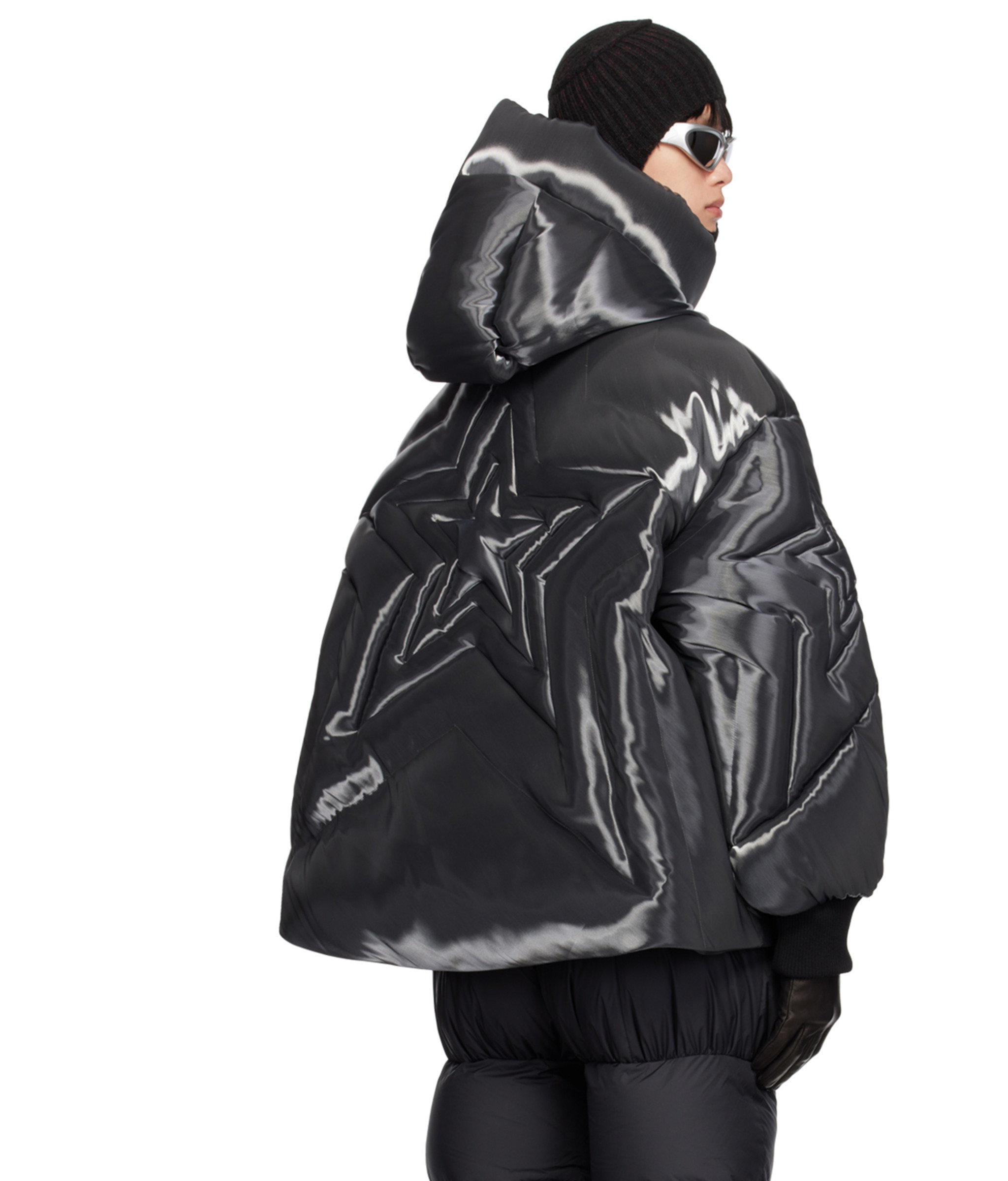
Featured In This Image: CHENPENG jacket.

Featured In This Image: CHENPENG jacket.
In similar style, CHENPENG’s unbridled creativity shines in the arena of outerwear. Founder and designer Peng Chen harnesses the bulkiness of down padding to give his designs wild proportions. “For my graduate collection at London College of Fashion, the topic that I was working on was the distribution of fat in the human body and I found out goose down is the perfect material to show how fat is distributed,” Chen tells SSENSE, explaining what drew him to the world of insulated outerwear. “Down material is light and it can create different volumes. Puffer jackets also provide warmth and healing power.” Ballooning shoulders and exaggerated arms cut dramatic silhouettes that are amplified by psychedelic printed fabrics—a scroll through the collection is enough to debase any blanket statements about puffer jackets being boring.

Featured In This Image: POST ARCHIVE FACTION (PAF) jacket.

Featured In This Image: POST ARCHIVE FACTION (PAF) jacket.
But not all puffer jackets need bold colors to excite. POST ARCHIVE FACTION (PAF) is a Korean label that warrants mention in any conversation about the state of puffers. Combining the kind of technical specifications one might find in an advanced performance down jacket with experimental cuts, the brand seeks to make the familiar foreign. Arguably most impressive among its designs are the coats, which feature offset zip fastenings, gathered fabric, and ethereal, feather-like overlays to make an impact without the need for bold color palettes. Eschewing color for texture and twists on silhouettes, PAF offers a pure vision of the structural and conceptual possibilities of down jackets. “Puffer jackets offer functional beauty, conceptual silhouettes, and structural complexity,” the brand tells SSENSE. “We want to elevate the experience of clothing with warmth and style at the same time, this kind of functionality is what makes people want to wear a garment every day.”
Behind these burgeoning, experimental brands reshaping the way we view puffer jackets is a long line of predecessors that paved the way. Take Stone Island, Ten c, ROA, Goldwin, or the host of other brands that consistently surprise with newly developed fabrics and details. They may not be as bold or experimental as CHENPENG, ERL, or PAF, but shift the balance more in favor of performance. Even further along that scale exist the many brands dedicated to the pursuit of warmer insulation, more effective waterproofing, and lighter weights. Arc’teryx, Haglöfs, Klättermusen, The North Face, Moncler—the list goes on. These brands have extensive legacies, outfitting historical explorations, scientific expeditions, and life in the cold for decades, facilitating human experiences in places that might never have seen it otherwise. To overlook this as one of the most significant aspects of clothing is to completely miss the point. In this arena, beauty comes in the form of longevity and functionality: the way water beads on the fabric, ergonomic quilting leaves room to move comfortably, or an elasticated storm cuff locks in heat.

Quavo at SS24 Paris Fashion Week. Photo by Edward Berthelot/Getty Images.
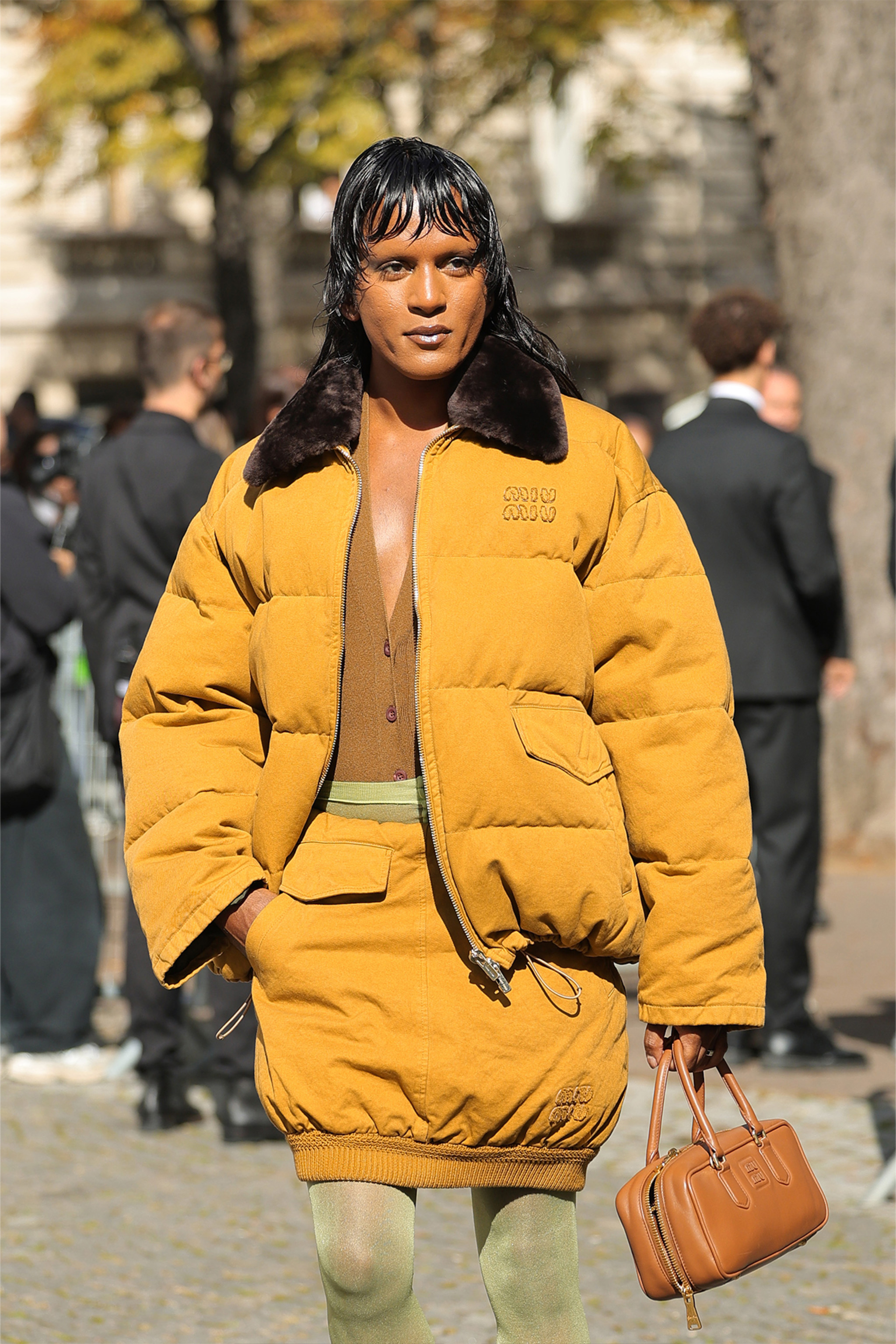
Richie Shazam at SS24 Paris Fashion Week. Photo by Jacopo Raule/Getty Images.
These imitations of the real thing miss the mark on the fundamentals and simultaneously lack any sense of the creativity that puffer jackets allow for. Like anything, judging an entire category by its lowest form is a mistake.
The divisiveness of the puffer jacket can teach us a great deal of style lessons worth carrying into the coming seasons. First, to pay attention to which pieces of clothing bring us joy instead of obeying abstract projections about what’s not hot this season. If puffer jackets warm up a cold winter day better than a “must-have” wool overcoat, then wear one. Second, there’s beauty in functionality. To consider the two to be mutually exclusive doubles down on many of fashion’s ills that lead to overconsumption and waste. Third, that fast-fashion imitations should not be grouped together with the considered, expertly designed products from any of the labels mentioned in this article. There’s a wealth of exciting puffer jackets out there, from the technologically cutting-edge to the conceptually wild—it’s an arena that’s constantly evolving in terms of style and functionality, so why would we limit ourselves from enjoying the fruits of such a compelling world?
- Text: Alek Rose
- Date: January 18, 2023