Speakers and The Love Below
with Devon Turnbull
The Founder of Ojas is Fine-Tuning Audio Perfection
- Text: Arthur Bray
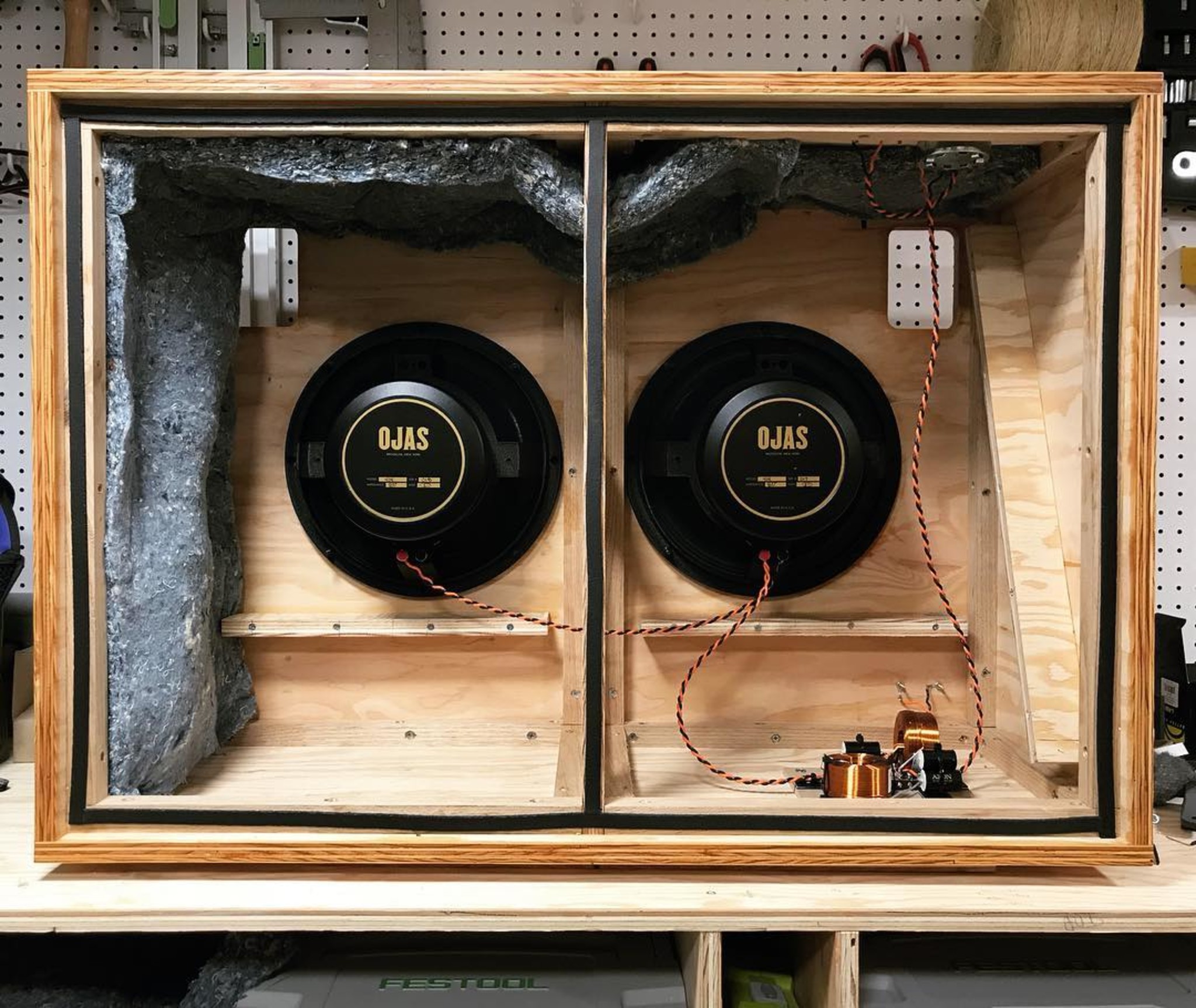
For Devon Turnbull, the founder of hi-fi imprint Ojas, building audio equipment is his way of teaming up with DJs, musicians, and everyday music lovers: “Every time a record is played on a soundsystem I’ve designed, I get a chance to collaborate.”
Going beyond the regular offering of straightforward sound systems, Turnbull’s speakers are equally functional and sculptural, as good to look at as they are to listen to. The audio engineering student turned streetwear designer knows how to hold form and function in balance; his minimal, vintage-inspired speakers and amplifiers satisfy a timeless aesthetic, while the technology endeavours to bridge the gap between old and new. “People have never heard satisfying deep bass and beautiful mid-range at the same time. This has become my signature,” says Turnbull.
In conversation, references to New York graffiti crews are strung into stories from Japan hi-fi pilgrimages, and projects with creative wonder boys like Angelo Baque and Virgil Abloh. The synergy that Turnbull has built—which connects the worlds of design, fashion, and music—is an impressive feat, one that took decades to cultivate. The 2000s marked the birth of Turnbull’s cult imprint Nom de Guerre, a t-shirt label-turned-fashion brand which formed the same DIY aesthetics he would apply 15+ years later in his audio practice. While his impressive list of clients—from Supreme to Ace Hotel—continues to grow, high quality and individual attention to detail remain central in Turnbull’s unique process of reconstruction. Building out custom, flawless sound is Turnbull’s passion, and each speaker that leaves his workshop is stamped with his fingerprints. I spoke with Turnbull on a Zoom call, from a studio outfitted with his sound system at Hong Kong radio station FM BELOWGROUND, to discuss the Ojas sound, mid-range frequencies, and building your own system at home.
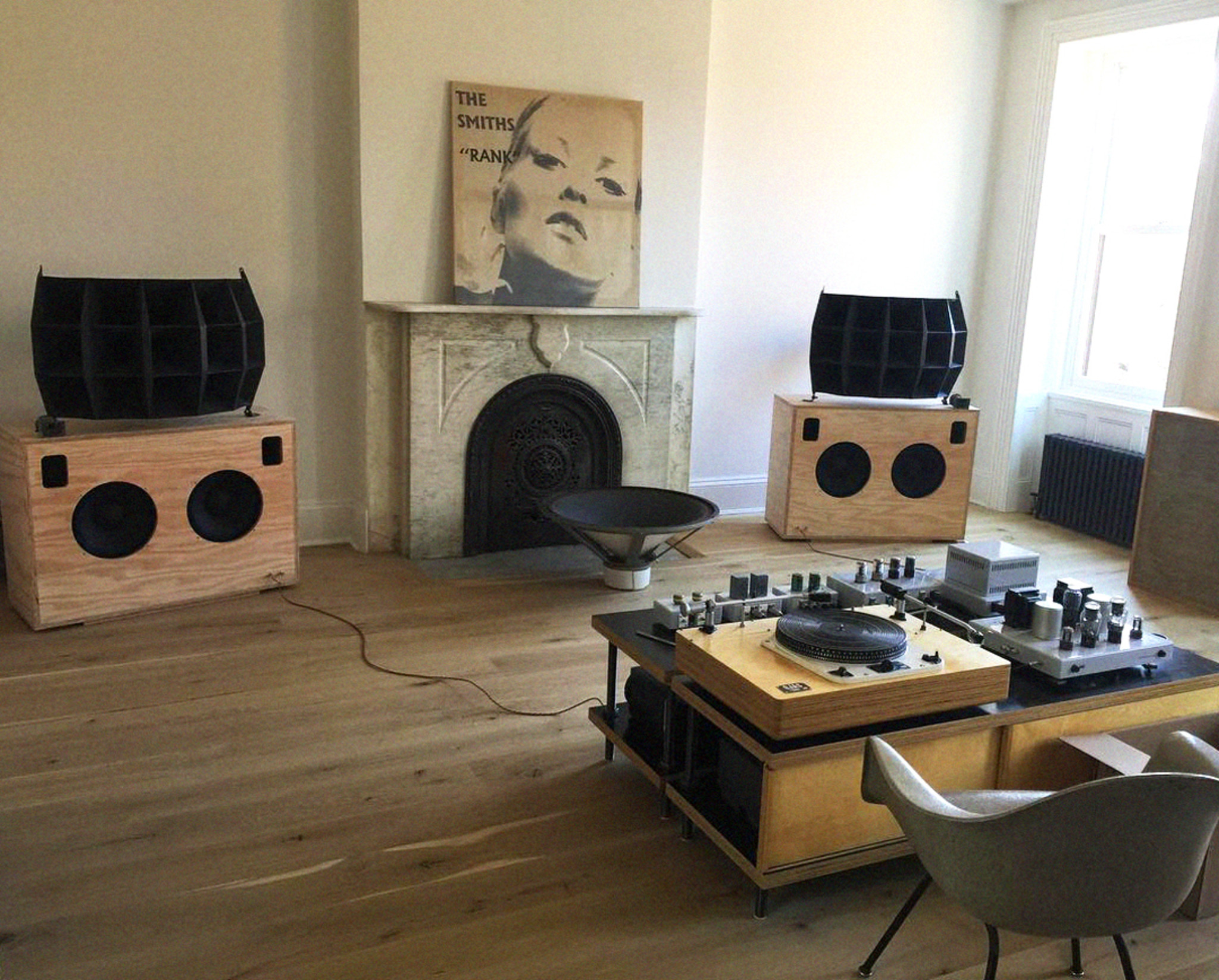
How did your start in fashion and street culture inform what you do now in the audio world?
In 2000, I started making clothes under the name Ojas and I was writing graffiti. This streetwear brand grew into Nom de Guerre in 2003. We were super young, pretty naive in a lot of ways, and very untechnical. I was the only partner that was coming from a design perspective. None of us were garmentos by any means. We started trying to make clothes in New York—a place that’s difficult for the garment industry. So I had this idea to go to Japan and try to find people who could help us make clothes, low quantity and high quality. Through doing production in Japan, I was exposed to the hi-fi scene, which has been extremely inspirational for me.
What goes into the “perfect retail sound system?”
For the Supreme stores I did, I knew that these systems were going to play every kind of music at pretty high levels and play it all day, and all night. So I started applying a lot of what I had learned from my trips to Japan and the importance of tonality.
How does tonality affect one’s listening experience?
When I got really into hi-fi building, my listening habits changed for the better. The range of music I was listening to broadened in a positive way. You realize when you start trying to make audio components in realistic natural sounds, you tend to use music that has natural realistic instrumentations.
What I really want out of a system, when I sit down, is not to feel like I’m looking at an accurate representation of the music, but rather that I’m in the music. The music is so present—it’s not like I’m sitting in front of the stage, I’m on the stage.
Does this mean your music taste has changed due to your appreciation for different frequencies?
I never stopped liking electronic music, but it’s important to not lose sight of that beautiful mid-range where tonality and texture lives. When you want to listen to music with sub-bass—such as music from the 90s onwards—you really need to reproduce down to at least 30 Hz, in order to have satisfying results. A lot of these vintage-type systems that I’m really passionate about don’t do that. They do acoustic music really beautifully, and you put on something with deep sub-bass, and it doesn’t translate.
My thing is to supplement subwoofers that are designed to match the upper harmonics of the rest of the system, and not to augment the speakers that play beautiful frequencies. One way is to redesign the system so they play lower frequencies, but I prefer to bring in another speaker, so you can listen to hip-hop, dance music, and bass music, but you still get to react to this lifelike mid-range.
Tell us a bit about your team—what’s the network that makes up the Ojas?
I built an amazing network that I definitely can’t do this without. A lot of that is finding older engineers who have mid-century audio technologies. I’m fascinated by Asia soundsystem technology from the 60s through to the 90s. A big part of my operation is my relationship with this guy from Fukushima named Koji Wakabayashi. I made a pilgrimage 13 years ago to his vintage audio museum—he has the biggest collection of neurophonic audio equipment in the world. It is the holy grail of audio. Our friendship dates back 20 years.
It’s interesting how sound system culture can transcend generational barriers, proving its stronghold in culture.
There’s a gap in this lineage, where a lot of skilled hi-fi hobbyists in their 50s are aging out of the scene, and people in their 30s are very interested in this hi-fi culture again. A big part of what keeps me going is preservation.

When COVID-19 hit, you pivoted and launched the Ojas DIY Kit. Was it always the plan to make home audio speakers?
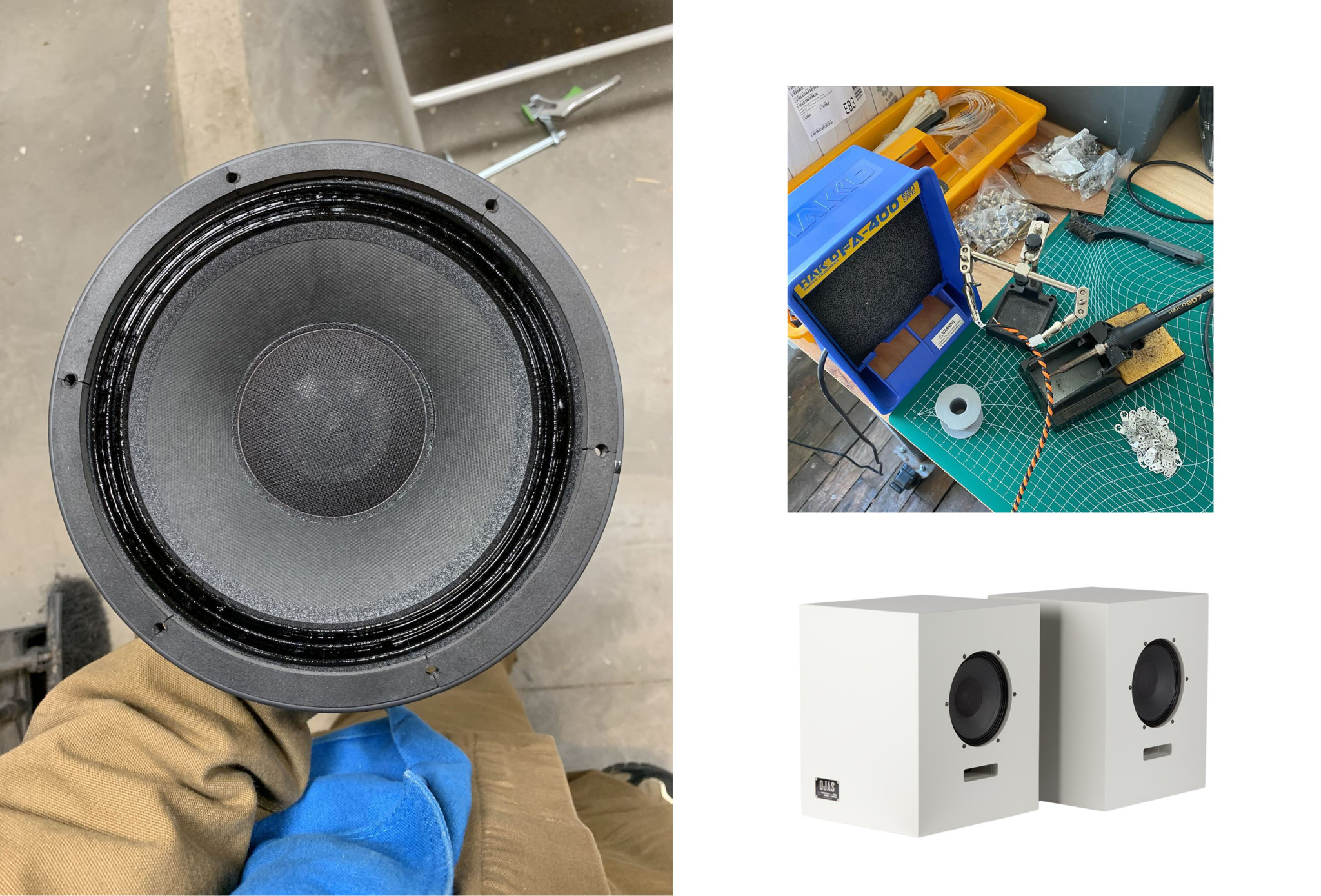
Home audio has always been my passion. I'm very fortunate that it happens to be my main interest. I didn't have to pivot. As for the DIY Kit, it was like week one of the pandemic and Virgil called me saying, “Now is your time. Right now is the time when people are going to be receptive to the work you're doing in home audio.” I started thinking, “What could I offer people right now?” I spoke with my cabinet maker and we started putting our heads together, designing the system for how we could produce these flat-pack kits that people could put together at home.
I thought, at best five to 10 people may be into this. I voiced out this idea on Instagram, within like a few hours, I had 350 customers putting in orders. I have never run e-commerce before, so Virgil offered to build a page for me on his e-commerce site, Canary Yellow. He has some of the best and brightest working with him. Before we announced it, it was sold out. I sold out of all the drivers that were accessible in the US. We restocked them and again sold out in a day or two.
I guess the pandemic has made everyone more creative at home?
Exactly, it’s this “homebody movement.” Like, “Yeah, I'm thinking about getting into baking bread” or other trending hobbies. But people really miss going out and listening to music, so something affordable and fun to build fills that void.
What’s the perfect sound to you?
What sounds good to your ears? What makes you want to sit down and just intentionally listen to music? There's no such thing as “good,” “best,” and “better” sound to me. It's about crafting something which is unique and personal and finding your sound.
Arthur Bray specializes in cultural stories about fashion and music. He's the former Managing Editor at HYPEBEAST and contributing editor at THE NEW ORDER magazine. His work has also appeared in 032c, FACT Mag, and Highsnobiety.
- Text: Arthur Bray
- Date: March 12TH, 2021