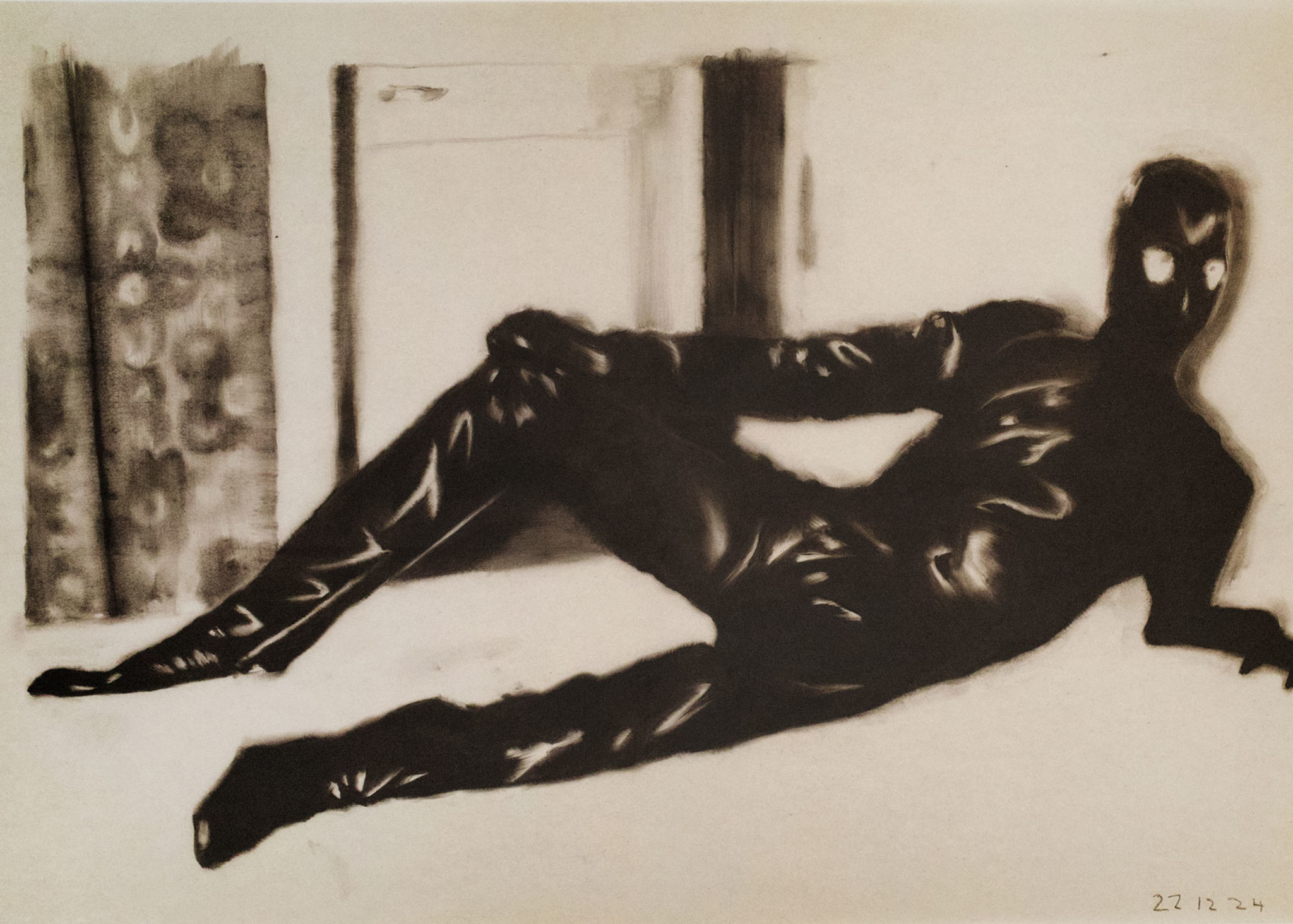
Martin Parr and the Art of the Vaguely Plausible
For decades, the British photographer has documented fashion with good humor and a taste for the surreal. To create his elaborate images, his philosophy is strikingly simple.
- Text: Max Lakin
- Images/Photos Courtesy Of: Phaidon Pres

Here are a few places Martin Parr has elected to locate fashion shoots: dentist’s office; coach bus; supermarket deli counter; a McDonald’s; a bus stand. He’s partial to making models pump gas, and has shot Vivienne Westwood in a public lavatory.
So it can come as some surprise to hear Parr say he doesn’t think of himself as a fashion photographer. Never mind the editorial spreads for various international editions of Vogue, or Le Bon Marché, or Grazia, or the multiple Gucci campaigns, or the recently released Phaidon book Fashion Faux Parr, cataloging the last 25 years of them. Parr will tell you he’s a documentary photographer. Born in Epsom, Surrey, and educated at Manchester Polytechnic, Parr’s real subject is people, specifically the British, whom he’s photographed since the 1970s, registering the social peccadilloes of the laboring class in the long shadow of Thatcher’s England with trenchant wit and an affection for the weirder bits of life.
In his fashion work, Parr is able to exercise parallel interests: the leisure pursuits of the Western world and what its denizens consume, neatly graphing their overlap with good humor. Parr has a clear eye for bathos: a woman holding a handbag with a plaque spelling out “FETISH;” a spangly spiked heel slung from an IV pole; a bijou Blumarine handbag plunged into the buttercream of a grocery store cake—putting things where they don’t belong (high jewelry on pastries; eveningwear on the examination table) being an effective way to tease out the absurdity of the whole thing.
His penchant for juicy, candy-colored palettes and full-tilt kitsch softens fashion’s self-seriousness, making it, in the end, more humane. Models still scowl, but their insouciance looks silly with the frame expanded to reveal the rest of humanity passing by on the sidewalk, going about their day.
To hear Parr tell it, the fashion stuff is like that, easy as pie: real life, no subterfuge, no tricks of light, no Photoshop. “You’ve basically got these clothes or bags or hats or whatever, and you’ve got to take interesting pictures of people wearing them. It’s that simple, really.”

Paris, France, 2007. Commissioned by Stiletto. Top Image: Versailles, France, 2023. Commissioned by Jacquemus. Picture credit: © Martin Parr / Magnum Photos (pages 280-281)

London, UK, 2023. Commissioned by CR Fashion Book.
Max Lakin
Martin Parr
Do you remember your first fashion shoot?
It was with Amica magazine [in 1999]. Italian magazine. They asked me to do this shoot in Rimini. And it turned out quite well and I thought, well, this is interesting. Maybe I should do more.
Does your approach differ in a commercial shoot compared to a documentary project?
The big difference is with fashion you can put people where you want to put them, while as if I’m doing a documentary shoot, it’s me that has to move to try and make an interesting shot. So here I have the leisure and the pleasure of moving people into the places where I want them to go.
I did notice, at least in selections in the book, there’s no studio.
No. I haven’t really done fashion in a studio. I leave that to other people. I like working outside. I like being in the real world.
The real world is an interesting idea, because the fashion world is very much apart—about artifice, and the absence of the real world. I wonder, is there a different consideration?
Well, I put in the real world. If that’s different then that’s fair enough. I agree with that, yeah. I like using the real world. I like making things look vaguely plausible.
Things do look vaguely plausible in your pictures, even when they’re pictures of implausibly expensive things. Still, as much as you resist the fashion world, it insists itself upon your images. Particularly the Gucci work, where Alessandro Michele’s taste, let’s say—his penchant for maximalism—lends itself to your own.
He wanted to go back to something more authentic—that’s the word that they used. And I was able to step in quite effectively. They had lots of extras, so I would do what’s called a lookbook: 90 people you’ve got to photograph. And in between I would have models at my disposal, and I’d place them.
I was struck by one juxtaposition in particular [pointing to a spread of old ladies wearing jewelry].
Old ladies wearing jewelry.
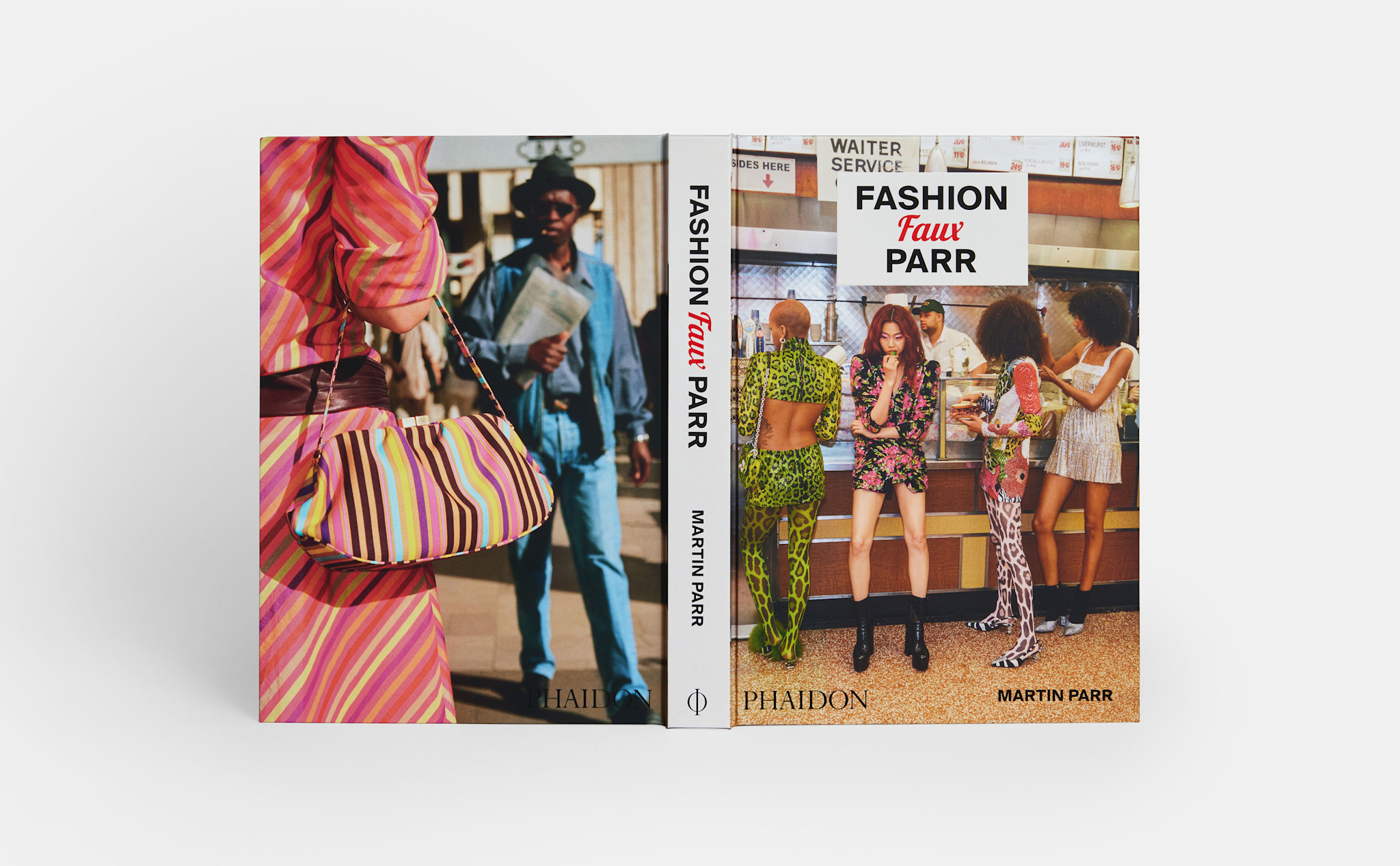
Fashion Faux Parr. Martin Parr. With essays by Patrick Grant and Tabitha Simmons. Phaidon

France, 1991. Commissioned by CitizenK.

France, 1991. Commissioned by CitizenK.
Which, I assume, is why they’re laid out that way. But they’re about 20 years apart—Citizen K, France, 1991, and Vanity Fair, London, 2020.
I’m surprised, I thought they were the same shoot. I didn’t even know that. Obviously my ideas are consistent, if nothing else. I just like the idea of old women wearing jewelry rather than young, beautiful models. If anyone’s going to be able to afford this stuff it’s going to be older people.
You rarely seem interested in celebrities. There are a few famous designers but even they are really only known within their industry—as you say, real people.
I thought the pictures would be corrupted by famous people. I mean, apparently some of the models I’ve photographed are very famous, but I wouldn’t know.
There are different levels of fame. But you don't seem to have much interest in any of them.
Not really, no. Stephen Shore is in there, which is funny. He came into the shoot when we did Andy Warhol at The Whitney. And he worked with Warhol of course. And there’s an old woman in a bath, she's “The Girl From Ipanema,” if you remember the song. Fifty years later. She’s made a whole living by being “The Girl From Ipanema.”
Tabitha Simmons talks about commissioning you for a Vogue shoot, and you choose as the location the car boot sale at Shepton Mallet. A car boot sale is already so hectic. And you decide to lay a fashion shoot, which is its own form of hectic, on top of it.
It was good fun. We have this sort of bag full of stuff, and shoot away. I think it worked out fine, to see the two worlds come together. I try to have a concept. Last time we did tourists in London and before that I did men in a gym. So there’s something that’s the basic theme.

Katz’s Delicatessen, New York, USA, 2018. Commissioned by Vogue USA. Picture credit: © Martin Parr / Magnum Photos (pages 258-259)

London, UK, 2023. Commissioned by Amina Muaddi. Picture credit: © Martin Parr / Magnum Photos (pages 138-139)
In your documentary work, even when you’re shooting ordinary folk, pensioners, or families on holiday, or pub-goers, there is a recognition of personal style, of fashion. Perhaps that’s not your primary or even secondary concern, but it does present itself.
In a sense it is a fashion shot, isn’t it? In years to come all this will become more interesting. The clothes that you see in fashion shoots aren’t really worn by most people. They’re too silly and expensive. I think people just got bored with the glamour, or fed up with the unreality being shoved down their throats.
You do get more into a documentary mode when you’re shooting behind the scenes at runway shows. The Jacquemus show at Versailles, for instance.
There are always interesting scenes going on behind the scenes. There are lots of other photographers there normally. You have to fight your way around all of them. I think the trouble is we’re all so familiar with the behind-the-scenes scenes, it’s tough to get something new, really. I don’t know, really. I think there are a few.
You know what they are, but if you didn’t, they could easily pass as something staged. And that’s your ability to load a lot of visual information into one frame. So I think your images straddle the incredulity of everyday life. Something most people miss as they’re living it.
That’s always a good topic for me. It’s just what happens naturally, really. And it is the need for a bit of a reality check. And many photographers—pretty good documentary ones—make a living through fashion. You’ve got to be able to translate a specific style of image-making into something that makes them want to employ you in the first place. I like this idea of solving a problem with photography. You’ve basically got these clothes or bags or hats or whatever, and you’ve got to take interesting pictures of people wearing them. It’s that simple really.
That does sound simple. Can you say more?
No, because that’s it. They say go and shoot, and I do. Bob’s your uncle. No mystery here.

Cannes, France, 2018. Commissioned by Gucci. Picture credit: © Martin Parr / Magnum Photos (pages 16-17)
Max Lakin is a writer in New York City.
- Text: Max Lakin
- Images/Photos Courtesy Of: Phaidon Pres
- Date: June 28, 2024