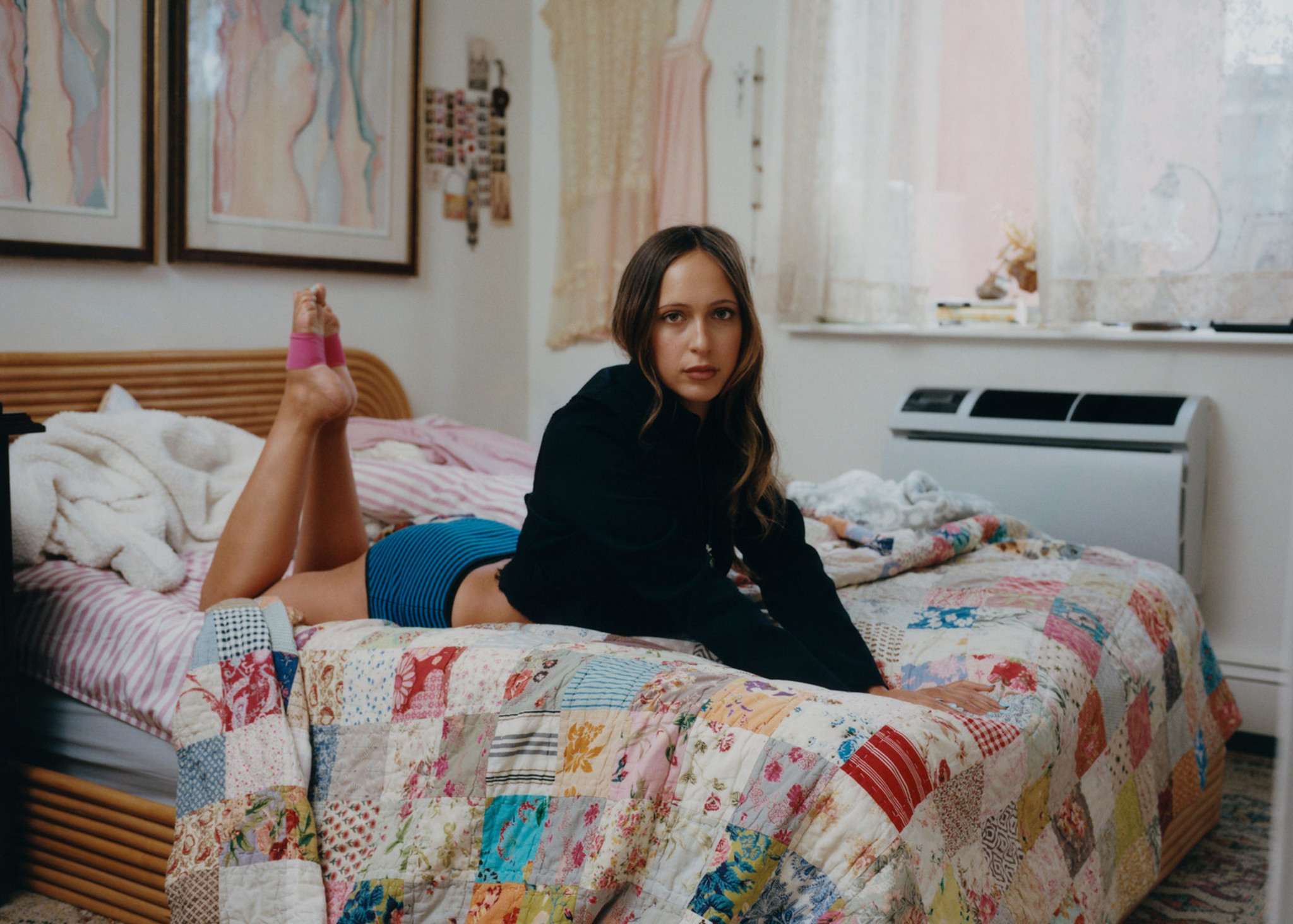
Dressing Up for Life with Sandy Liang
On the occasion of her new Rizzoli monograph, ‘Dressing Up: Sandy Liang,’ the designer reflects on building her brand and the future of the “Sandy Girl.”
- Written by: Delia Cai

It takes a lot of work to make fantasies come true, but that’s what New York designer Sandy Liang has been doing every season for her fellow apostles of girlishness for over a decade. Her eponymous label, launched in 2014 following Liang’s graduation from Parsons, has since become known less as a downtown purveyor of ultra-feminine clothing — often adorned with pleats, rosettes, and yes, bows — than as fashion shorthand for the eruption of princessy-pink girliness that has taken over current visual culture.
And these days, while looking like a Sandy girl doesn’t necessarily require donning one of her Mary Jane flats in ballet satin, or clipping a set of faille recital ribbons on above curtain bangs, it’s impossible to overstate the influence that Liang and her business have had on the state of millennial and Gen Z style. Next month, just as New York’s It-girls dust off their pleats and knits for Fashion Week, Liang will be issuing a 276-page monograph from Rizzoli: Dressing Up: Sandy Liang, an intimate look inside the past decade of the designer’s life and work.
When I meet Liang at her basement-level studio on Rivington Street, the 35-year-old designer is wearing one of her white Mott dress pinafores, dotted with elephants who are wearing bows themselves, along with Birkenstocks and a pair of stick-on gems under her eyes. We’re surrounded by the predictable fracas of pre-NYFW preparation, and it’s sort of like a cross between being in a doll’s closet and a top-secret laboratory. There is quite literally no place to sit; Liang conducts this entire interview standing up.
She conducts herself with a sort of unflappable professionalism: no fidgeting, full eye contact, completely in-tune with her environment. When I fire up my Voice Memo app to begin recording our conversation, Liang immediately clocks the name of Lena Dunham (“Lena Dunham!” she says), who I’d recently interviewed. I thought not only must she have amazing eyesight but no detail goes unnoticed.
Dressing Up is an inarguable testament to Liang’s nearly nonstop 12 years of work. We’re taken through all of the brand’s major milestones, including the introduction of her viral fleeces in 2019, the opening of her Orchard Street flagship in 2020, the debut of her bridal and footwear lines in 2022, and the launch of her instant-grail-making collabs with Salomon and Baggu in 2023, and with Gap in 2025. The book treats us not only to a tour of the brand’s shoots and shows, but also iPhone candids, backstage memorabilia, and snaps from Liang’s own life as she’s grown up and become a mother herself.
At one point in the conversation, when I asked Liang which milestone gave her the biggest sensation of “We did it!”, Liang insisted she still hasn’t really felt it — at least, not until she started putting Dressing Up together. “Maybe one of the only times I did feel that way was looking at the first draft,” Liang says. “I felt very accomplished and tired in a good way. Like, ‘Oh my God, I really did do a lot.’”
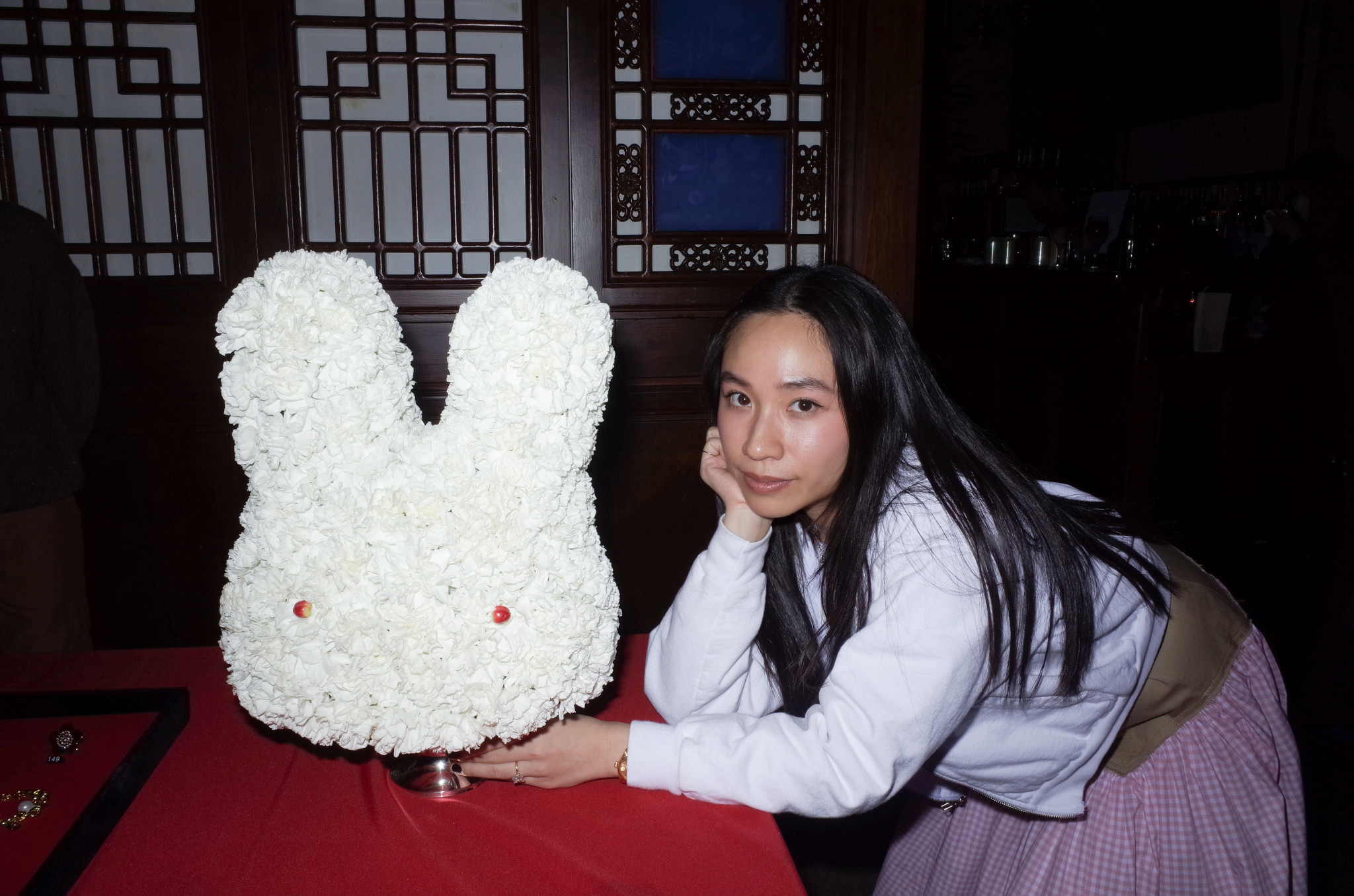
Photo by Maya Spangler. Above photo by Phoenix Johnson.
Delia Cai
Sandy Liang
Do you still remember when you had the first inkling that you wanted to be a fashion designer?
I think that it had to do with my Barbies. I didn’t have extra clothes for them; they just had that one outfit. And my grandma is a sewer who worked at one of those factories in Chinatown, and they actually used to do Victoria’s Secret stuff. She brought me to work one day, and I just had this idea of like, “Oh, I can make dresses.“ That mixed with the fantasy of watching Sailor Moon and honestly, just growing up in the era of MTV and red carpets.
If there was one moment, it would be the time when I was in middle school, and my mom finally let me buy my first Vogue issue in line at the supermarket. She only let me buy it because it was a bargain. It was a September issue, and she saw how thick it was, and she was like, “Fine, you can have this one.” It was 2003, so I was in middle school. I remember it was Nicole Kidman on the cover. And then I was like, “What if I worked in fashion one day?” Everything else is so boring.
This monograph really captures the DIY feel of the first years of the label, back when you were even doing your own wheatpasting. What do you miss about those early days?
I miss that fashion world. It wasn’t a time when you could put something on Instagram, a celebrity could wear it, and then you had a brand. There was just a different way of going about it. Not that there’s anything wrong with how it’s done now. If anything, it’s more open now, which is nice because it was really hard in the beginning to even put on a show.
We’re still scrappy, but I’m the kind of creative who really craves guardrails. And when I was younger, the guardrails were set in place because I only knew what I knew. With each year passing, I’d learn more, but it created more work. It’s a cycle in itself. So I miss being naive, I guess, or having the excuse of being naive.
What was the hardest part of getting the label off the ground?
It was stressful trying to make a creatively successful collection, but also trying to please buyers, to just run a business and make cash flow work. One of my first accounts was Opening Ceremony, and they had asked me for a line sheet. And I was like, “I don’t know what that is.” I had the collection made, but then I didn’t know how to price it.
Thankfully, after I brought my first collection to Paris, on my flight back, there was a woman sitting next to me. I had asked her if we could change seats, because she was in the aisle, and I had my period. I was like, “I don’t want to bother you, because I’m going to be going back and forth to the bathroom.“ And she said, “No, I don’t mind getting up.” And then she asked me, “What were you in Paris for?” So we talked about fashion. She worked at a showroom, then she wound up introducing me to Christine Park, who ended up being my mentor for a while. She used to work for Steven Alan. She taught me the ropes and was really just generous with her time. She showed me, “Look, this is how you cost a collection. This is how you handle your factories.”

Photo by Phoenix Johnson

Photo by Steven Yatsko
Since, has there been a single moment when you had the sense of like, “Okay, yes. This business is going to work. It’s going to be big?”
It still hasn’t hit. I think having the validation of other companies being like, “I’d love to collaborate with you” feels really good. I’m just the type of person who never feels satisfied. I think it’s something with how I was raised; there was never a moment for celebration. It’s just always onto the next thing, which in a way really fuels this whole thing because it just makes sense for the nature of fashion.
Maybe when I really do think about it, it was on that first flight in 2014 from Paris back to New York after my first collection showing. I remember there was turbulence on the flight, and I was like, “If this plane goes down, hey, I can say that I had a collection and people saw it!”
Looking back over the years, do you have a favorite collection?
Part of why making the book was so special — well, I just told you I never feel satisfied, but maybe one of the only times I did feel that way was looking at the first draft. I felt very accomplished and tired in a good way. Like, “Oh my God, I really did do a lot.”
The first lookbook, Resort ‘17, was shot on my childhood block. We went to Bayside, to the house where I grew up. That’s a very special lookbook to me. I would say the Spring ‘23 collection, because that was the first time it felt like I had a real runway show. That was the first time I really closely collaborated with Dean DiCriscio, my stylist, to make a little world and not just do what I did because of budget.
You’ve been working with Dean since 2021. How did your relationship come to be?
I was looking at Petra Collins’ Instagram one day, and Dean had been tagged because he had worked on something with her. I was looking for a stylist for either my next lookbook shoot or a runway show, and I was like, “Would you want to work together?” And he said, “I’m down.” He was based in New York then.
I’m a very la-dee-dah person. I like being a dreamer. But then I have this other side of me that’s very like, “I don’t want to fuck around. This is serious.” And so when I met Dean, he also had this sort of la-dee-dah dreamy side. But then in creating the looks, he was so serious and was like, “Sandy, I couldn’t sleep because I was just thinking about what if she wore this bag instead of that bag?” I just had this aha moment where I felt like I met my match.
Any least favorite collections?
There were a lot of earlier collections where, if a buyer came in the door and they would give me feedback, I would really take it to heart. You kind of forget what you learned in school or you forget about “being creative” when you’re just struggling to survive, because you’re like, “I just want to make enough money to make the next collection.” And then you fall into this trap of listening to the buyers, but the buyers are just talking about commercial viability. I do think there was part of me that leaned into what they were saying a little bit too much. Nowadays, of course I still want to sell things — at its heart, this is a business. But I have a higher standard for what can go out.

Photo by Simon Rasmussen.
How do you think about the “Sandy girl” changing over time? Do you see her as this one entity who is growing up, or is she more like a set of different girls?
I think of her as me, but the dream version of myself. People are always like, “Who’s your customer? Who are you designing for?” And the truth of it is, it’s just me and you. What do you like? What do I like? And that’s really what it is.
Even from the very early days of the brand, I always knew it was going to be cool to see “her” grow up because it was me growing up. And maybe Sandy Liang still exists when she’s 45. What does that look like? Maybe she still exists when she’s 60. And what does that look like? Is she aspirationally wanting this? [Points to a blue be-ribboned panty nearby] Maybe! Or maybe she’s totally different. Maybe she doesn’t care about fashion anymore and then it’s time to say goodbye. It’s fun because it is this personal journey. Every collection is just reflective of where I’m at in life at that time. It’s all I can do. It’s all I know.
When you and I first met a couple of years ago, at an Anna Sui dinner, you had just given birth to your son, Rainer. We talked a little about how you didn’t really take much time off in terms of maternity leave. I’ve been wondering about how you feel about your relationship with the business since then.
I’m just trying to be a lot kinder to myself nowadays. Before having a baby, I just didn’t know that you truly can’t, or shouldn’t, go back to work until you feel ready. I think I put this pressure on myself because I was like, “It’s my brand and I have to,” or “How can you do a fitting when I’m not there?” You have these experiences and then you grow and then you learn. In the beginning I was like, “Why did I do that?” And now I’m just like, “I did it, and next time I won’t.”
Has being a mother changed the way you think about childhood and nostalgia?
It’s bringing back a lot. In raising this toddler, I’m thinking about my own childhood and the really precious parts. Seeing him just be happy, not caring about how anyone else feels, not worried about being judged or anything like that is so special and inspiring.
Would you ever make children’s clothing?
I think that would be so cool. I’m just very realistic with my bandwidth, and I know that making kids’ clothes is its own thing. There are all these regulations. One day I would love to do that.

Photo by Daria Rich.


In the book, it’s charming to see photos from your life — your travels, your wedding, your pregnancy — intermingled with images from the collections and the Sandy Liang business at the time. The label is such an autobiographical project, clearly. But in this day and age in 2026, do you ever feel ambivalent about sort of sharing that part of your life as part of the brand?
No. If anything, it informs the brand, because that's really how my brain is working: When I was pregnant, I thought about this. When I was getting ready to get married, I was thinking about this. That sort of thing has always come naturally to me.
And your family has always been part of the story and the image of the brand — down to your grandmother famously appearing in your campaigns. So they always understood the dream?
Oh yes. I went to a very math and science-y high school, and even then I was like, “Oh, I want to be a fashion designer, but that's not a real job. So I'm going to be an architect because I can't do math, but I love drawing.“ But when I made the switch, literally after one semester at RISD, and I wasn’t even in architecture yet. I was really sad to leave New York for the first time. I was very homesick. I remember Teen Vogue came out with a book, The Teen Vogue Handbook: An Insider’s Guide to Careers in Fashion, and I remember ordering it and being like, “Oh I really want to be in the world of fashion.” So I came home one weekend and told my dad, “I’m so unhappy in Providence. I want to come back. I want to intern. I want to just see where this goes.” And he was like, “Okay.” I've been grateful for that.
I want to ask about your influence on our culture’s current aesthetics. What has it been like to be one of, if not the main driver of this explosion in girly “coquette-core”? Does it make you salty to see the bows, the “I’m just the girl” femininity going mainstream?
I honestly feel flattered that people would even associate me with that. I’ve seen memes where it's like, a lizard with a bow on it, and people call it a Sandy Liang lizard. Even my own friends will be like, “You should do a collaboration with this toilet brand. Just put a pink bow on it.”
I guess the saltiness would just be that: “Oh, you think it's just literally putting a pink bow on something?” And that's fine, if that's what culture wants to make of it. But for me, I'm not really thinking about how to stay on trend or ahead of the trends. When I made the Mary Jane pointe shoe, that was something I had worked on for so long. I knew my first shoe had to be made in Italy, so I found people who helped me find a factory in Italy, and we worked on developing the toe shape for two years. When we switched factories and finally got the first production in-house, “balletcore” just happened to coincide. I think I was credited with it or associated with it, but I was just like, “I've been working on this for two years.”
The bow thing for me comes, again, from this childhood want of being a princess, and the childhood elements of drawing a cloud, a flower, a heart, a star, a bow. That was just what I drew and fantasized about. And what if I do bows, but then they're not trendy anymore? That's also fine with me, too. Or maybe I'll be not as into them, and they take a backseat.

That’s something I've been wondering — what happens when this bow stuff moves on?
I think it's the energy behind a bow, and it's not literally the bow itself.
Earlier this year I noticed you signed with a talent agency. What does that mean for you?
I wasn't really seeking anything out. I think another agency had reached out, so I took a meeting and I was like, “Oh, is this what happens?” I truly didn't know what anything in that world looked like other than what I've seen on TV on Entourage, which is not a great example. And then I met with the people whom I'm working with now. I was like, “I have only ever done my own deals, and I'm at a point in my life where I can do it all but not do it well, or I can ask for help.”
The duality of how you talk about the business is so fascinating. That’s Sandy Liang, in a nutshell: fanciful yet practical.
It’s like my mom growing up. She always wore the grossest, most comfortable outfits. And I would always be like, “Ugh, I wish I had a cool mom who wore lipstick and dressed up.” And I've come to appreciate that sensibility of like, “I'm comfortable, but I can also wear a dress.” I've always said I love this idea of wearing a dress, but be able to do anything in it. Why would wearing a dress stop you from doing anything? I love this idea of dressing up just for life. I love movies and one day, I would love to do costume design or just even learn about that. So this idea of dressing up for the movie of your life, or the episode of your life, is very aspirational to me.
Delia Cai is a writer and editor living in New York. She writes the media and culture newsletter, Deez Links.
- Written by: Delia Cai
- Images/Photos Courtesy Of: Rizzoli
- Date: August 27, 2026