Role Playing With Chloë Sevigny
Decades Into Her Career, the Peerless Icon of Cool Has Much to Share About Staying True to Your Taste, Crying at the Oscars, and When It’s Not Worth It to Argue With Werner Herzog.
- Interview: Thora Siemsen
- Photography: Brianna Capozzi / REP
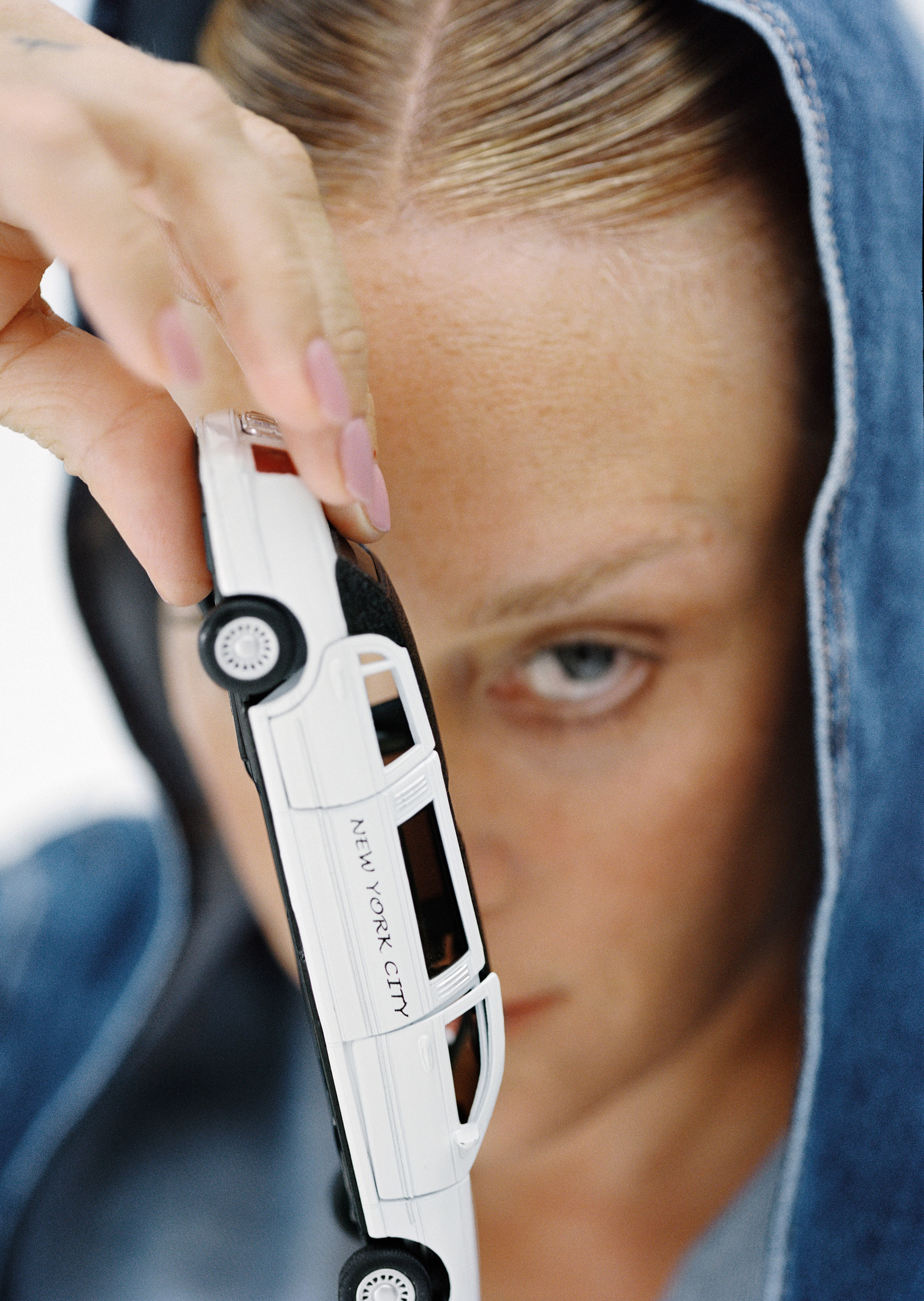
Chloë Sevigny used to say she wanted to start a family before she turned 30. At the time the actress was busy playing characters that would worry most parents: Jennie, an HIV-positive teenager in her debut Kids; a schoolgirl going home with Steve Buscemi (five years before Ghost World) in 1996’s Trees Lounge; the true-life ex-girlfriend of a slain stealth trans man in her Academy Award nominated turn in Boys Don’t Cry. At 25, she played her first mother on film—a troubled young woman whose son accuses the school nurse of child abuse—in 1999’s A Map of the World opposite Sigourney Weaver. It wasn’t until Sevigny was 45 that she had her first child, son Vanja, with art director husband Siniša Mačković. “It’s funny that she has a baby now,” her longtime best friend, Natasha Lyonne, told The New York Times’ T Magazine last year, “because she’s so maternal. People probably don’t realize it, but that’s what she does for a lot of our friends.” The two actresses became close back when Sevigny was filming A Map of the World. On the second season of Russian Doll, the series Lyonne cocreated and stars in, Sevigny appears by way of flashbacks as Lyonne’s mother.
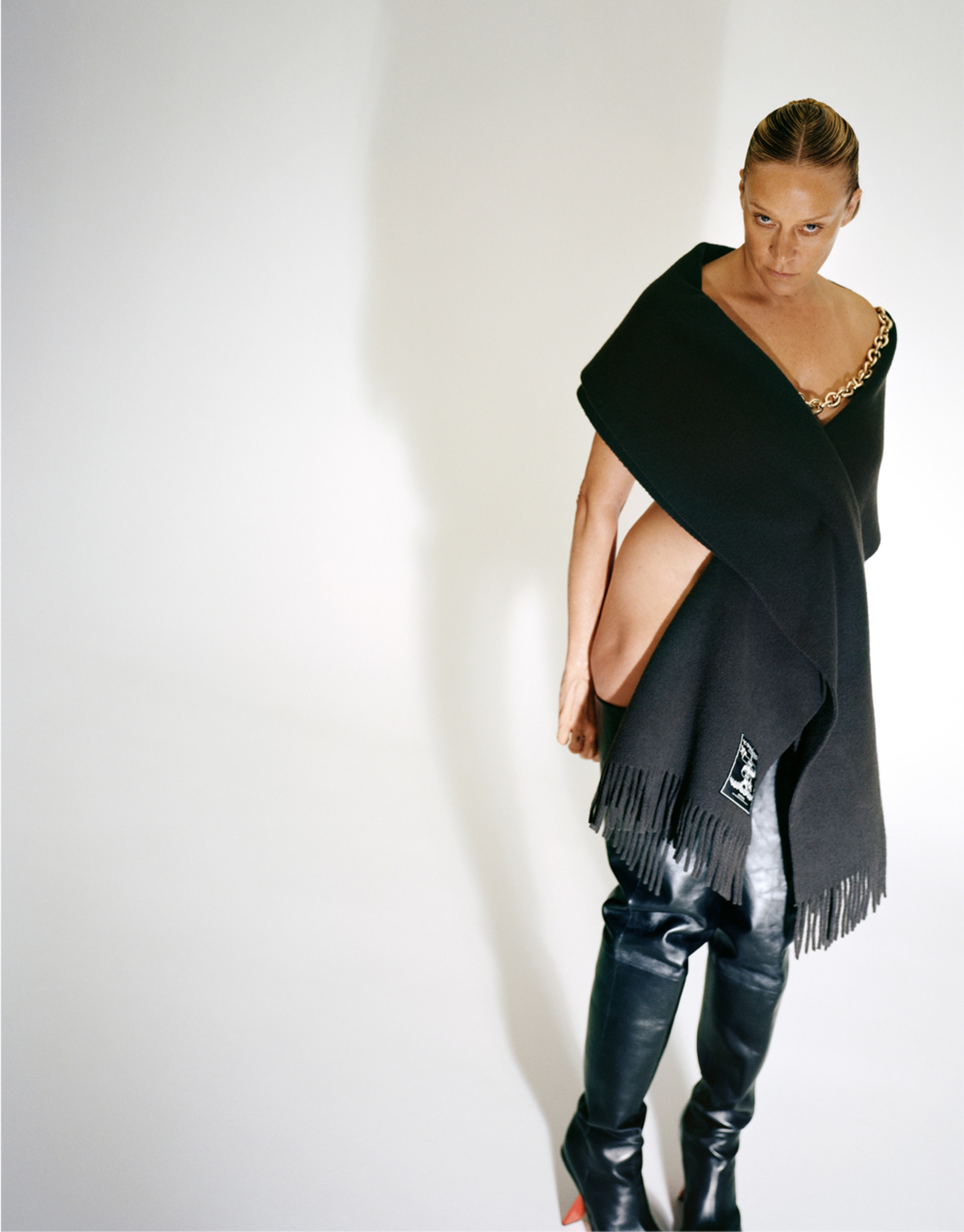
Chloë wears Y/Project scarf and ALAÏA boots. Top Image: Chloë wears ALAÏA bodysuit.
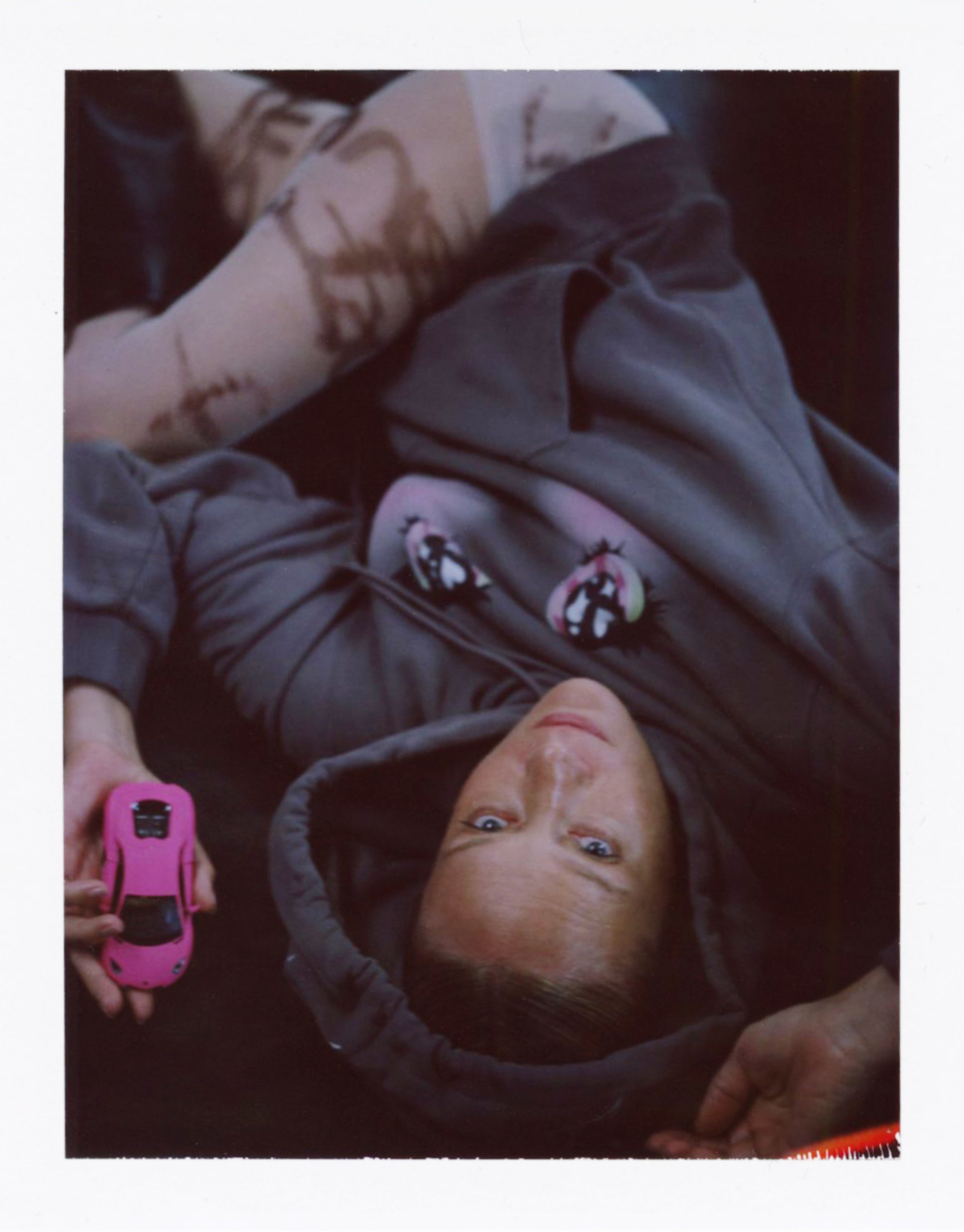
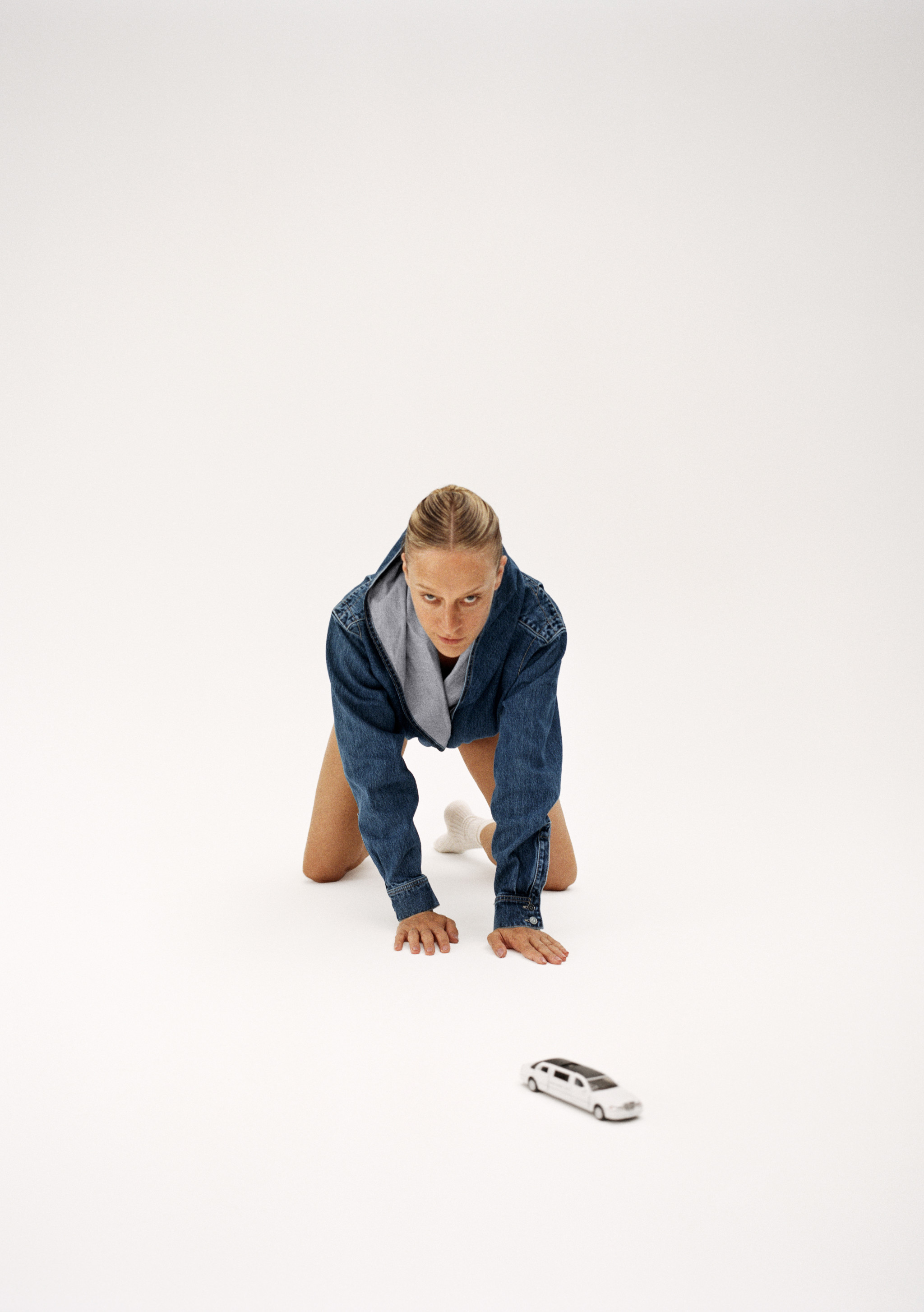
Chloë wears Nodress hoodie and TheOpen Product leggings.
In her real life, 47-year-old Sevigny can only be herself, the role she was born to play. Since rising to prominence in early ‘90s New York with her era-defining style, she has seemed chary of being a bigger movie star. She still doesn’t play the Hollywood game; makes headlines for calling Mother! star Jennifer Lawrence “annoying.” After nearly three decades of acting, Sevigny retains the aura of an indie darling. Part of it has to do with her choice of projects and part of it has to do with the dim view she takes of Los Angeles, where she has stayed intermittently over the years while filming television shows like American Horror Story and Big Love. The girl from Darien, Connecticut has chosen instead to stay on in New York where she is known for flourishing on the downtown scene and forgoing scenery chewing on the big screen.
There is a generosity to the way Sevigny works; she possesses a special ability to showcase other actors. She’s worked with some of the most beloved art house auteurs under the sun—Olivier Assayas, Werner Herzog, Jim Jarmusch, Lars von Trier, and Whit Stillman—but above all prefers being a loyal collaborator, willing to make sacrifices, including vanity, for the projects she cares about. Soon she will swan alongside Naomi Watts for director Gus Van Sant in the recently announced show Feud: Capote’s Women. But first up, is a “small but pivotal” role in Luca Guadagnino’s road movie Bones and All, based on the novel by Camille DeAngelis, reuniting Sevigny with the director whose HBO series We Are Who We Are featured her as its complicated matriarch. Of her part in the forthcoming film, Sevigny says over the phone from Provincetown, “I can't say she was the best mother, but her decision-making is the only way she thinks she can protect her child.”
Over Zoom from Italy, Guadagnino tells me he’s always been a big fan of Sevigny: “I hope to be able to work with Chloë as much as I can. She has a wonderful sense of humor, she's sophisticated. She not only has been great in her craft but I think she’s been great in the way she’s tailored her own filmography. Chloë is very intellectual and has a savvy way of thinking of life.” He adds that in We Are Who We Are, she was “able to create a character full of contradictions, but at the same time, used those contradictions to go deeper into the humanity of the character and less into the sensational parts.”
On this year’s ripped-from-reality Hulu miniseries The Girl From Plainville, Sevigny’s performance is an aperture through which the larger story and its nuances creep into view. She plays Lynn Roy, mother of Conrad Roy, the Massachusetts teen whose death over the summer of 2014 eventually prompted an involuntary manslaughter charge against a young woman named Michelle Carter. It was watching the actual Lynn Roy on the 2019 HBO documentary, I Love You, Now Die: The Commonwealth v. Michelle Carter, that compelled Sevigny to take the part. She says of Roy: “She seemed very grounded talking about this tragedy. There was humor and spirituality in the way she spoke about what had happened to her and her family, the forgiveness she found for Michelle. If I could try and capture something of the essence of this kind of woman—when so many people are out there grappling with mental health issues and mourning and post-pandemic trauma—I thought there was something that maybe people could relate to and find comfort in.”
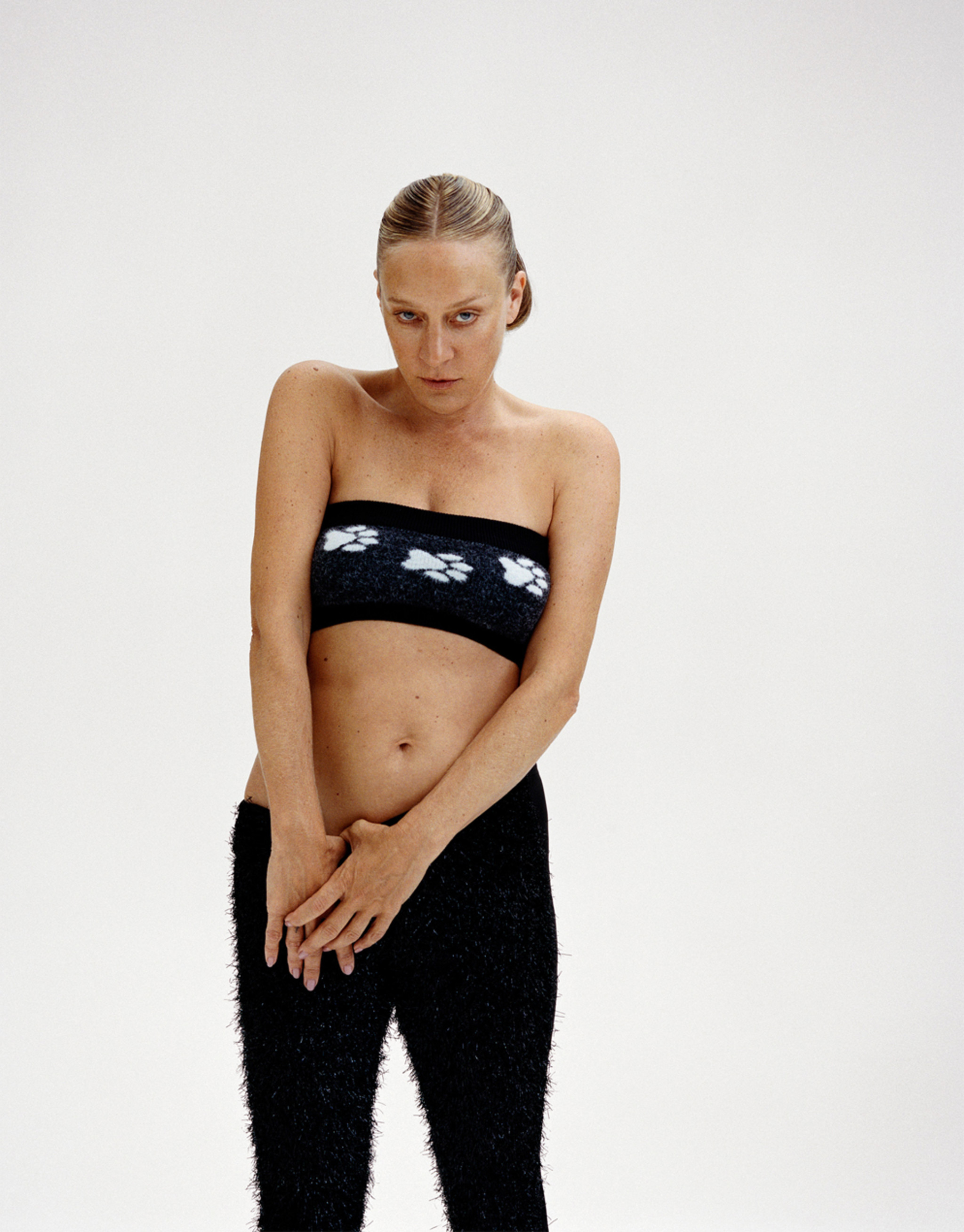
Chloë wears Nodress camisole and Vaquera leggings.

Chloë wears MM6 Maison Margiela t-shirt, ALAÏA dress and ALAÏA boots.

Chloë wears Comme Des Garçons jacket and Comme Des Garçons skirt.
Though every good actor has to be able to suspend their judgment toward the many ways people live their lives, Sevigny seems to go further and also suspend judgment toward the many ways a person can make a living. Not only does the actress strive to graciously acknowledge the labor of everyone realizing a project on set, most of her characters have jobs—they work. She can be just as lucid and believable as a publishing assistant (The Last Days of Disco) as she is a jockey (Lean on Pete). Her curiosity in her civilian life has also been a boon for the movies she’s been in. Party Monster, for example, depicted the early ‘90s NYC club kid subculture that was killed off around the time they started killing each other. Sevigny had partied with the real-life monsters. Then, she grew up. She had other phases, many of them documented publicly. She has a mother lode of personal experience to draw from.
Sevigny was pregnant at the outset of lockdown and gave birth several months in. The relative isolation combined with new parenthood prompted further reflection on her own upbringing. Sevigny’s father, who died in her early 20s, worked as a trompe l’oeil painter. He loved music and she recalls a lot of staring at record covers as a kid. “He kept very current and would buy The Flying Lizards, the new Blondie, Marianne Faithfull, Joe Jackson, Elvis Costello. That was my introduction to a bigger, broader world.” Sevigny’s mother was encouraging early on of her daughter’s edge; the actress even went back to live with her for a time in Darien (with then-boyfriend director Harmony Korine in a place of his own nearby) toward the end of the ‘90s to catch a break from the city.
When I ask which parts of her parents swirl around in her, which she embraces, and which she rejects, Sevigny admits that her mother’s discernment and sense of decorum are cropping up lately. “There’s lots of things I see in how I judge the people that are closest to me and that I love the most, like, ‘If she washed her hair she would look so much prettier.’ Oh my god, that is so my mom. She really instilled in me certain manners which I find now I appreciate a lot more than I ever thought I would, as far as navigating and respecting people and their boundaries and space. I think it’s very telling when you’re out with someone and they’re rude to a waiter or a taxi driver. I just hope my son never displays those behaviors. I hope he respects the people around him.”
Chloë wears ALAÏA bodysuit.
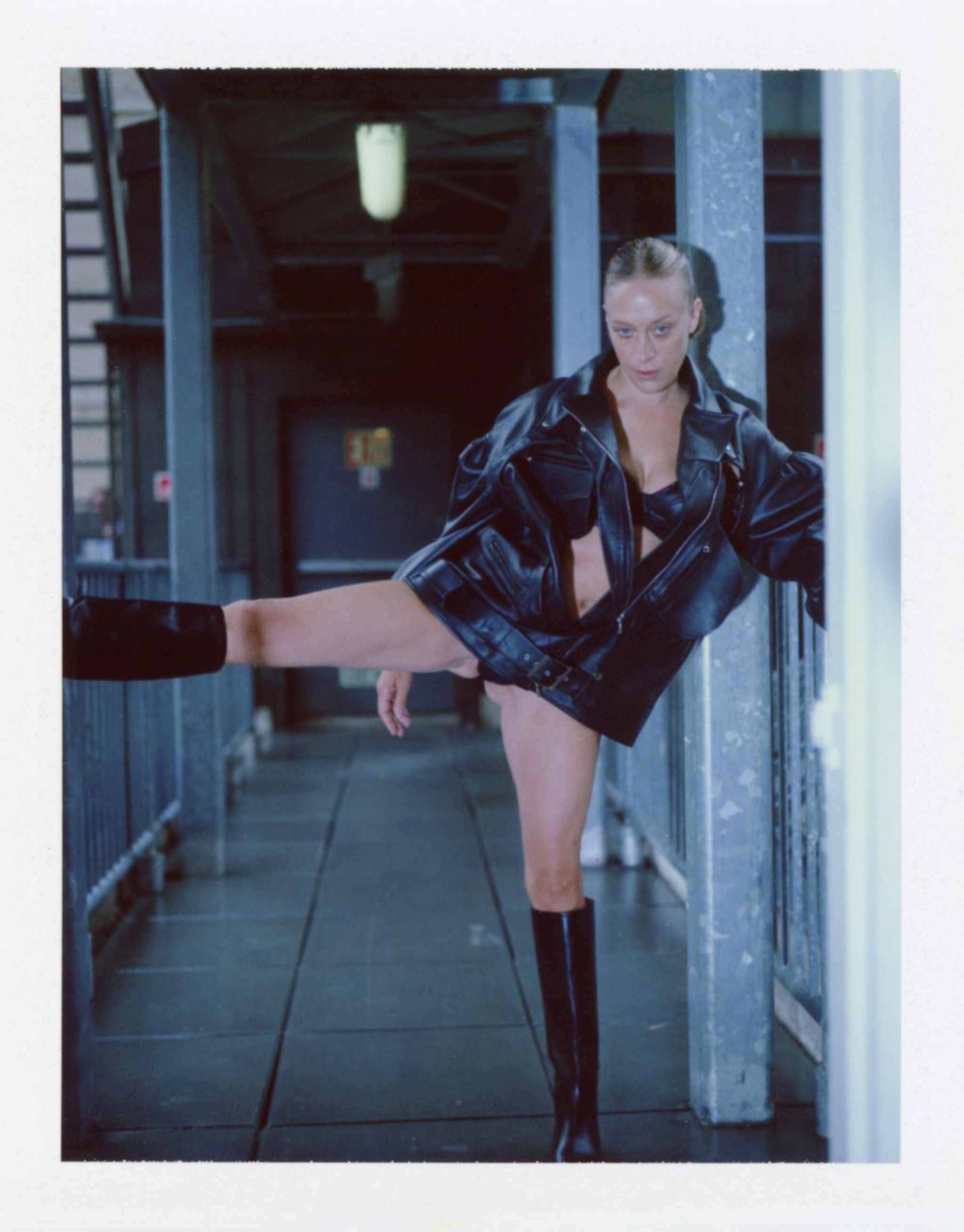
Chloë wears Simone Rocha jacket, Agent Provocateur bra and Marsèll boots.

Chloë wears MM6 Maison Margiela t-shirt, ALAÏA dress and ALAÏA boots.
Sevigny aims to set a down-to-earth example amidst fame’s hazards. “I always prided myself on operating a little outside the system,” she says. But the system’s rewards can still be a thrill. “There was a lot of [Emmy] buzz generated by The Girl From Plainville and people around me made me think that maybe it could happen. I think I got a little excited, which was really good because it got me to put myself out there and in ways I normally wouldn’t.” She’s smooth about ultimately not receiving a nomination this year; Dopesick and The White Lotus dominated her category, which Variety called a snub of Sevigny among others.
Sevigny attended the Oscars once, in 2000, the year she was nominated for Boys Don’t Cry. Her classic, red-lipped look was the culmination of a campaign she’d spent dressed by Alber Elbaz for Yves Saint Laurent: a black floor-length gown set off by a diamond Maltese cross borrowed from Asprey & Garrard. She made the night into a family event, bringing along her mom, brother, and Korine. “I remember the year before, Harmony and I had watched the Oscars. [The Academy Awards] represented everything establishment to us and then the next year we were there. I remember Russell Crowe telling me I looked really great and feeling excited by that because I thought he was so hot. There were so many great people that year: Samantha Morton, she wore a T-shirt and a tuxedo. It was the American Beauty year. It felt fun and cool. I remember when I lost, going to the bathroom and crying, because there’s so much excitement and anxiety. My brother was crying and went out for a cigarette. It was surprising that it had that much of an impact on me emotionally,” she recalls. The Oscar went to Angelina Jolie for her role in Girl, Interrupted.
Designer Marc Jacobs has known Sevigny since 1992 when she was a Sassy magazine intern starring in Sonic Youth’s “Sugar Kane” video featuring Jacobs’s grunge collection for Perry Ellis. A couple years later, Sevigny became the self-possessed subject of a New Yorker profile written by Jay McInerney while she was filming Kids. Over the phone, Jacobs tells me, “People in the know in fashion were always paying attention to what Chloë would show up in. She’s always been such an iconic fashion figure as well as an actress. She really has such great style and she’s always ahead of the game. I think with the fashion crowd, there’s a cynical way of looking at people, especially when they’re dubbed the It Girl or there’s a story in the New Yorker about their style. Our world, and I’m speaking in a general way, is condescending towards someone who is then going to be an actor. But Chloë has always proven that she goes from strength to strength.”
Never one to shy away from a challenging role, Sevigny earned a reputation for stalwart professionalism. Nowadays, there’s more on-set support for coping with what she was asked to work through by instinct at a young age. 2003’s The Brown Bunny, for instance, famously featured her performing unsimulated fellatio on director-star Vincent Gallo prior to a scene where her character is sexually assaulted at a party. “I think Luca’s We Are Who We Are was the first time I ever worked with an intimacy coordinator,” she says. “[Before] it was the director doing that, talking it through. Prior to intimacy coordinators, there were a lot of contractual things that happened with the agents and the studios, as far as how much of your body you were willing to show. It wasn’t so much about touching, but more like: left boob, right butt, three-quarter angle, no full frontal.”
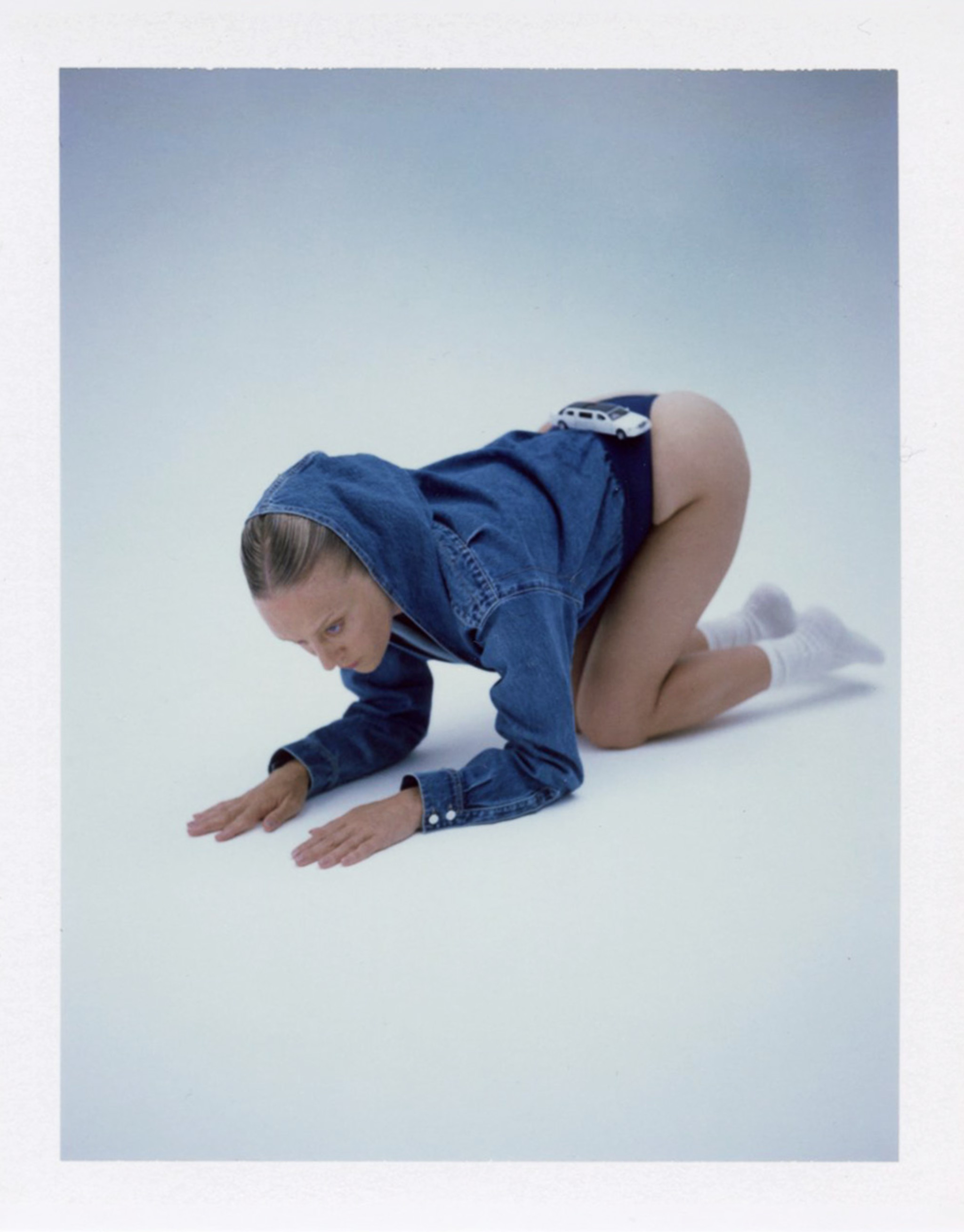
Chloë wears ALAÏA bodysuit.
Sevigny is not cloyingly attached to her past, recognizing the necessity of embracing change, but she does remember different on-set experiences with a unique respect for each. Of working with the Tulsa-born filmmaker Larry Clark on Kids she says, “I was 19 and he was really lovely with me, very sensitive. He had a young son and daughter. I actually went to his son’s bar mitzvah. After we made the film, he helped me find an agent and manager and invited me to every art opening, every dinner. We remained in each other’s lives for many years until we drifted. I had a good experience. He was asking us to do things that, at least in my part, I hadn’t experienced, wasn’t familiar with, were a stretch for a person that had never acted before. He provided a really great environment to try things, and I trusted him and the cinematographer Eric Edwards and Harmony.”
Harmony being Korine, the Kids screenwriter she once called her university (she moved to New York two days after graduating from high school). He cast her in some of her most indelible roles in his confrontational late ‘90s films Gummo and Julien Donkey-Boy—Supreme’s Spring/Summer 2022 drop featured her face and bottle blonde hair in Gummo on a football jersey. “You’re making my life difficult, I’m sweating,” she demurs amiably when I bring up Korine. “He was one of the more wild directors. Of course that was a certain time and a certain place and a certain age. Gummo was his first movie and he just had so much passion. He wanted everybody else on the crew and cast to match that. He had such zest for life and filmmaking and art and wanted everybody to challenge themselves. There was a lot of enthusiasm for breaking the rules and trying new things. He’s definitely one of a kind, as far as that’s concerned. Natasha was a bit like that on Russian Doll too.”

Chloë wears Simone Rocha jacket, Agent Provocateur bra and Marsèll boots.
She remembers Lars von Trier as similarly intrepid, an energy she responded to: “After Dogville I went back to do another part for him where I had maybe one line of dialogue. That just goes to show how I felt about him. My work with him speaks for itself.”
She says Werner Herzog, who played her father in Julien Donkey-Boy, gave her less guidance on his 2009 study of matricide, My Son, My Son, What Have Ye Done. “I wanted that movie to be better than it was,” she says. “I don’t think there was a lot of direction. I remember talking to Werner about the light in Los Angeles because I always find it challenging being there, and he was very dismissive, because I guess he’s really embraced Los Angeles. I was like, alright, I’m not going to get into an argument with this man.”
If Sevigny’s early reputation was built landing the hot gig with the hot director, now she’s the one bolstering the reputations of the filmmakers who hire her. Kids was our introduction to how much the camera loves her, and the influence of that film can be glimpsed in her later projects, from the resplendent club lighting in Olivier Assayas’s Demonlover to the pile of passed out teenage bodies in We Are Who We Are. Sevigny’s industriousness from the jump, her refusal to rest on her laurels, has produced a body of work which only appreciates over time. Last year, Janus Films released a restored cut of Assayas’s prescient thriller, which reconvened Sevigny and her Palmetto costar Gina Gershon. Sevigny initially learned a part entirely in French phonetically before being recast as a bilingual executive assistant. “We were shooting [Demonlover] in Mexico when 9/11 happened and they made us film on that day in a helicopter, so certain things really stand out,” she recalls. “I haven't seen [the film] in forever. People seem to really like that movie though.”

Chloë wears ALAÏA bodysuit, The Row leggings and Marsèll boots.

Chloë wears Y/Project earrings.
Sevigny’s first big studio movie was David Fincher’s Zodiac based on the true-crime books by Robert Graysmith (played by Jake Gyllenhaal) about the pseudonymous serial killer who terrorized the California coast in the ‘60s and ‘70s. Sevigny portrayed Graysmith’s former wife Melanie Krakower who left him to protect their children, fretting over his overactive involvement in the case. “The first day we did hundreds of takes,” Sevigny says. “I was crying in the hotel room, calling a friend who had directed me before like, ‘Am I a terrible actress? What’s going on? Am I going to get fired?’ My phone rang in the hotel room and David called me and was like, ‘This is my process. I thought you did great today. I’m so happy you’re here.’ I gave over to his process.” Actresses from Jodie Foster, who starred in Panic Room, to Sevigny’s Big Love costar Amanda Seyfried (Oscar-nominated for her performance in Mank) have said that despite Fincher’s onerous number of takes, they trust his methods completely.
“He’s such a master of his craft,” Sevigny agrees. “I had to learn how to protect myself as far as the energy I expended, figure out how to have the stamina to last these many takes and to know that it’s not always about me. On the Fincher set it’s such an extreme but it’s also great that you get to do all these takes. I get to have fun and try things.”
Attending to fellow actors and their comfort level is an important prelude to Sevigny’s upcoming chapter. Next spring she hopes to direct a feature film. She’s already directed several shorts: 2016’s Kitty, based on a story by Paul Bowles, 2017’s Carmen, presented by Miu Miu, and 2019’s White Echo, which competed for the Palme d’Or at Cannes in the Best Short category. There have been novels throughout the years she was interested in adapting but was unable to secure the rights to. Finally, she found her script: “An old friend of mine who used to DJ at Gavin Brown and The Hole reached out and was like, ‘I wrote this script, I watched your short films and I think you would understand the spirit of it.’ I read it and I was really moved by it. Now we’re developing it and working on a pitch-doc to send out with it so people can understand the tone.”
Sevigny pauses. “People like things to be very spelled out for them.”
Thora Siemsen is a writer living in Colorado.
- Interview: Thora Siemsen
- Photography: Brianna Capozzi / REP
- Lighting Technician: Nigel Ho Sang
- Photography Assistant: Milton Arellano, Mike Broussard
- Styling: Emma Wyman / REP
- Styling Assistant: Szalay Miller
- Tailoring: Olga Kim / Carol Ai Studio
- Hair: Joey George / MA + World
- Makeup: Dick Page / Statement Artists
- Photography Direction: Michael Quinn
- Casting: Greg Krelenstein / gk-ld
- Production: Chloe Mina / Lolly Would (Executive Producer), Spencer Morgan Taylor / Harbinger Creative (On-Set Producer)
- Date: October 11, 2022