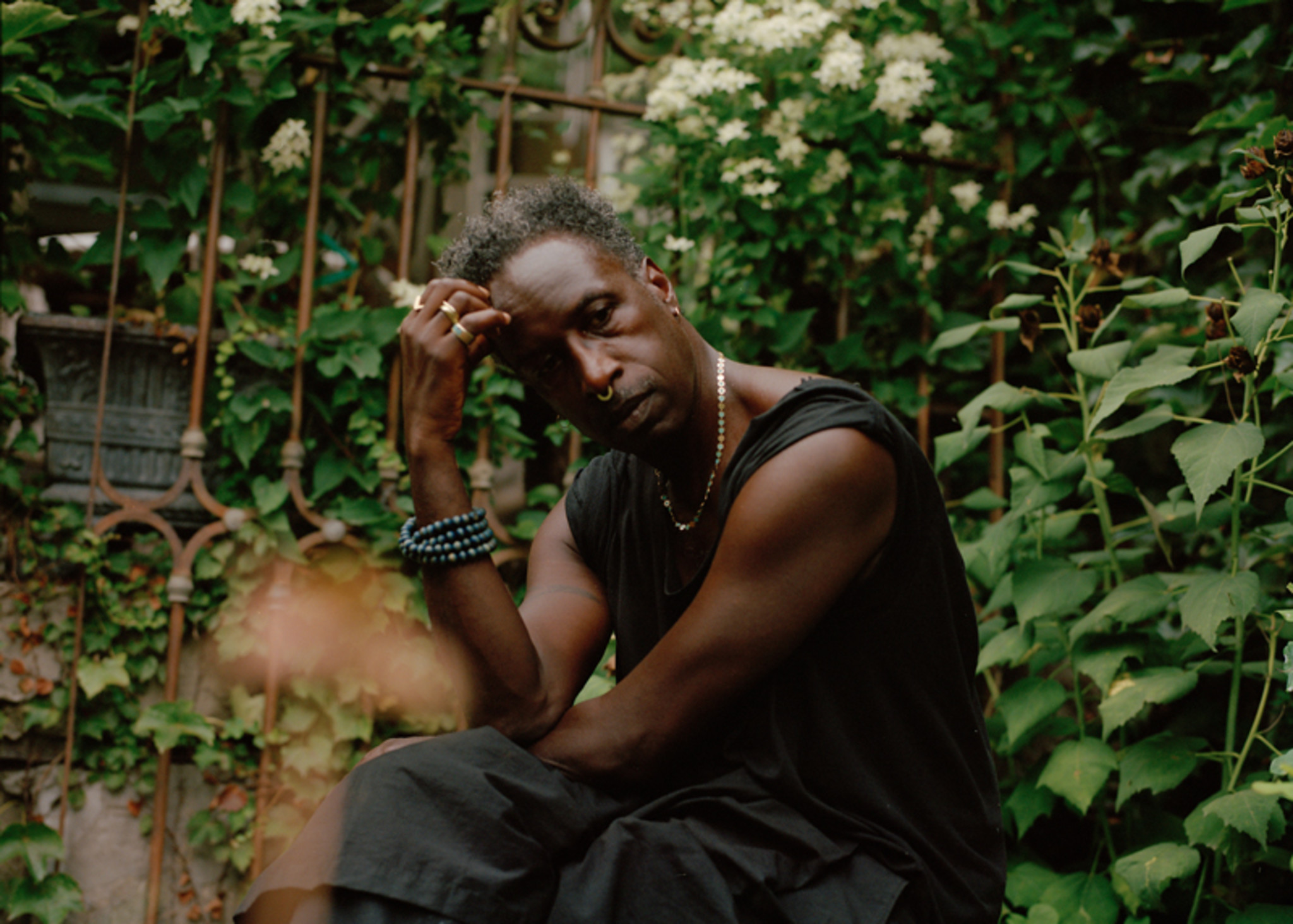
Jerry Hsu’s Empty Space
The skateboarder and photographer opens up about his new photobook ‘How About Never,’ his creative process, and living alone for the first time in years.
- Written by: Shona Sanzgiri
- Portraits by: Shona Sanzgiri and Diego Liam Heredia
- Images/Photos Courtesy Of: Jerry Hsu

For a brief and improbable stretch from the late ‘90s into the early ‘00s, one of the most influential places in the world for skateboarding was San Jose, California—a city most people, if they think of it at all, think of as the capital of the chimerical Silicon Valley, an outpost of San Francisco, or the answer to a trivia question about hockey.
Having already produced generational talent for years, the skate scene coalesced around Tilt Mode, a crew that drew worldwide attention to the bedroom community’s extremely gifted and deep pool of skaters. Most of that energy seemed to orbit around one skater in particular: Jerry Hsu, who turned pro at 17 and has ever since treated his body as an experiment, willing to annihilate himself at times in order to meet his own impossibly high standards.
Skateboarding at that level asks everything of you and leaves little room for anything else. Your livelihood—what little there is—depends on it, for a lot of risk and very little monetary reward, until eventually your body betrays you and forces you into something else. The traditional solution, observed across many skaters (and actors, and other people whose youth was mistaken for a career plan), is to extend the party and pivot into art, with results that range from fine to actively offensive.
Jerry did not do this. Jerry quit professional skateboarding and started his own company, Sci-Fi Fantasy, sponsoring himself and only the skaters he personally liked, liberating himself from anyone else’s expectations. He could darkslide a curb in a ditch for the cover of Thrasher while wearing a pair of Merrell hiking boots. Kim Kardashian could wear one of his company’s hats and skaters, famously fickle, wouldn’t turn on him.
Also, his art: it’s very good. After shooting 35mm photos for years on tour, the way many skaters of that era were sort of expected to, he also started posting cell phone photos to a Tumblr with an unfortunate name that wasn’t meant for posterity, Nazi Gold, at a moment in time when a phone wasn’t considered a "real" camera.
The two books that came out of this—The Beautiful Flower Is the World and Lonley City—indirectly immortalize a decade and a half of American urban life, where technology and capitalism don’t just encroach on common spaces, but dominate them, often to pleasingly fucked-up results, leaving a trail of glitches, loading errors, and mistranslations in their wake. The finite scroll of images both seem of this world and a parody of it.
Hsu is 44 now, and his new book, out this September from MACK, is called How About Never, and it swaps the comedy for something closer to tenderness, though "tenderness" undersells how discomfiting or ominous it can still look up close. A heart made of flower petals, stapled to a fence. Abandoned toilets on a sidewalk in communion with one another. His ex-wife, in a towel, her back turned, at a kitchen sink. She’s appeared in his photos for years, but given the timing of their divorce, her appearance carries a heightened significance the pictures couldn’t have anticipated. Though she runs through the book, her face appears only once.
"It’s not a book about marriage," Hsu is careful to say. Still, the viewer can’t be blamed for thinking that anyway: strangers and his ex-wife are held at the same distance, intimacy and anonymity starting to look like the same thing shot from slightly different angles.
I meet him at his new apartment, where he’s been living alone for the first time in years, curtains drawn against the heat, prints and binders of archives everywhere. I think of Susan Sontag’s line about how living entirely in your head is a kind of death, while being out in the world is life; Jerry’s apartment, it occurred to me, is the strange exception: a room that is, somehow, both.

Jerry Hsu, from How About Never (MACK, 2026). Courtesy of the artist and MACK.

Jerry Hsu, from How About Never (MACK, 2026). Courtesy of the artist and MACK.
Shona Sanzgiri
Jerry Hsu
How was the darkroom?
It was cool. My friend wanted to go, so I made this appointment for us, so I couldn’t cancel. I just made two prints. Prints are tough. I don’t get in there very often, but it’s nice to brush up on that skill. I’m not a very good printer, but it is fun to do it.
Nice tactile activity.
Yeah.
In the past, it sounded like the photography was this natural outgrowth of your skateboarding career, where you were traveling a lot. But now the photography is more in a fine art capacity. Has that affected your enjoyment of it? I’m wondering if there’s a parallel with skateboarding professionally, where having to do it for a living complicates your enjoyment of it.
From a fine art perspective, no. It hasn’t really taken away what I enjoy about it. But I say that now — who knows. I’ve been able to keep photography in kind of a sacred place where it’s never ever been my job. I think that’s a very important part of creative practice — sometimes keeping something a hobby will really just help you maintain a certain amount of inspiration. Any person who ends up doing what they love for a living starts to struggle with how it affects their relationship to it.
Is the shooting part instinctual?
Very. If I’m approaching someone and I start to think about how they’re going to react, should I do this, should I not — if I start thinking like that, it’s gone. Thinking is kind of…
The enemy.
The enemy of precision. Ironically, if I think too much about what I’m doing, I probably won’t be doing it the way I want.
Was the process of editing the book as instinctual as the shooting?
Shooting and editing are completely different to me. Shooting is: shoot everything, don’t think about it — if it’s garbage, it’s garbage. I realized years ago I’d look at the same photo maybe 20, 30 times over a 20-year period and it would be completely meaningless to me until one day I saw it and thought, this is actually essential to what I’m working on now. So I shoot indiscriminately based on instinct.
Editing is when the thinking comes in. One thing I do is choose ten photographs that really express what I want to express — the pillars. I print them out along with hundreds of others, spread them three or four feet apart, and fill in the gaps. I find strong pairs, and that spread tells me more about what the whole project is going to be. That’s a nice place to start for anyone who doesn’t know where to begin — find the pillars, and build the house around that foundation, because starting is the hardest part. I had maybe ten or twelve false starts to this book.
I have a maquette I made ten years ago and it’s total garbage — doesn’t work at all. You have to remember it’s like writing — the first draft, the vomit draft. Don’t think about whether it’s good, just get it on paper, and pretty soon you chisel away at it until it’s actually something.
Did you have an editor to guide you, or bounce ideas off?
I edited the entire thing myself, then started working with Michael Mack of MACK, who gave me thoughtful and important notes. When he first saw the edit, which was very close to the finished product, he told me straight up: the ending is weak, you start strong but finish soft. They sent back a revised edit with ten photos taken out. I fought for all ten to go back in — but when I tried, I couldn’t. I was like, these actually don’t work.
There was your answer.
Yeah. When you work with editors, you have to fight for what you want, but you also have to listen to them. In an earlier book, my first time working with a professional photo editor, he taught me: can you justify this? Do you just have an emotional connection to this photograph, or does it really work? Can you prove to me this should be in here? If you can’t, you have to let it go. I had to painfully remove a lot of things I loved because they didn’t serve the narrative.
What would you say, to defend a photo, beyond “it works”?
Honestly, it could be as simple as — I really feel strongly that this works. That sounds like a cop-out, but I think sometimes you just know.

You’ve described this book as more intentional, nihilistic, deliberate, and referenced noir as a theme, as a foundational aspect of LA. Can you elaborate?
First I’d say there is no nihilism in it — it’s actually very hopeful, in my opinion. When I was editing this work, I was immersing myself a lot in Scandinavian photographers, and how they portray winter in such a compassionate way — they take all this darkness and turn it into something extremely beautiful and meaningful.
I look at it and think, I wish I could make work like this, but I live in Los Angeles, there is no winter. But it really affected how I edited and chose the photos. LA is actually a pretty dark place, and this book is not in any way about LA — it just happened to be where I lived when I made this work. But I wanted to explore a style of darkness that’s here, and I felt it did turn out to be a little noirish and bleak.
Does looking at all these photos now change your relationship to the city?
No, not really. The reason I started making these photos is because this is my relationship to the city — this is what I choose to express about myself, with these tiny vignettes of living in LA. LA is not really a city, it’s kind of just a giant place — you can drive fifteen minutes and be in a completely different area. This environment did kind of change my behavior, my habits — learning how to navigate what I wanted photographically.
Your environment is really the silent architect of your behavior, it’s showing you what to do as you’re doing it, and that’s the type of photography I do. It’s good to understand when that’s happening and to surrender to it, because I don’t really have a plan. I’ll come home after five, six, seven hours of wandering around with nothing, and there could be five days in a row of that — pretty crushing. But you have to endure the cruelty of working hard and getting nothing over and over until finally something happens, and it’ll keep you going a little longer.
Do you have ways of talking about a photo to make it make sense to someone else?
I’ll give an example. There’s a photo in the book of my ex-wife in a hospital bed. At one point there was a discussion about — what is this cliché photo doing here? And I had to say: this is my ex-wife in a very vulnerable state, and in fact she probably doesn’t appreciate that this photo is in it, but she understands why. It’s about the vulnerability of your partner, which you can’t always get, and what you so desperately need. This book is about my emotional state in the last fifteen years, and that photo really hits a strong note for me — sometimes it’s so hard for your partner to be vulnerable in the way you need, and you’re just not going to get it. So maybe that photograph is a proxy for a type of hope I had.

Jerry Hsu, from How About Never (MACK, 2026). Courtesy of the artist and MACK.

Jerry Hsu, from How About Never (MACK, 2026). Courtesy of the artist and MACK.
She features so heavily in all your photos — every book has pictures of her. This book is a reflection of the last fifteen years, but the thing that bookends it is the dissolution of the marriage. Does it tell a story about marriage?
I’d say it’s not commenting on the marriage, but my relationship is sort of a secret character of the book — the spectrum of it. The complexity of marriage in general — how it’s so compassionate and so cruel, transgressive but also hopeful and playful and beautiful, so oblique and inexplicable. I didn’t initially intend for the edit to reflect all these things, but at the end I looked at it and realized, this really was about my relationship — the photos really do match the length of it.
It must have been unavoidable, since you were probably editing while it was dissolving.
I didn’t even realize it was happening simultaneously — but yeah, the final year of our relationship was while I was editing this book, which is strange to think about.
Since we’re both from San Jose, I’d be remiss not to talk about it. Do you feel like growing up there, in deep suburbia, with very little so-called culture, informed your photographs, or your desire to become a photographer?
Living in a place that’s quote-unquote comfortable, like a Northern California suburb, allows you to live without the constant distraction of growing up inside a city, so you can, without prejudice, explore your curiosity.
For some people boredom is like a warm blanket and they want to live in it forever, and that’s fine. For me it pushed me to figure out what I wanted to do creatively. I don’t believe in destiny, but I really feel my purpose was just to leave. It’s funny. Becoming a skateboarder was my dream, and San Jose couldn’t have been a more perfect incubator for that.
But simultaneously it was also the means for me to escape. I wasn’t making the type of photographs I wanted to make living there — I knew that, and it was part of my decision that nothing was really keeping me there anymore. I’m cursed with needing to constantly experience misunderstanding. I don’t do well with routine, monotony, or even consistency.
What I do here in LA is constantly search for misunderstanding, and that’s why I love it — I’m constantly confused. To tie it back to a relationship — that’s kind of what it is to fall in love, you have a total misunderstanding of each other, and that’s why you fall in love.
Do you recognize the person you were in those old skate videos? Do you miss that version of yourself?
I recognize that self, and after aging a little, I yearn for it. It’s very mixed. I don’t want to be that person anymore, but there are aspects I’d give anything to be for just a day — being 23, going out with everybody, skating some circle park, laughing all day with not a fucking care in the world. But I don’t want to be that person anymore. That’s just who I was then. When I see myself in those videos there is a sense of loss, but it’s the kind of loss anyone would feel looking at a photo of themselves from twenty years ago. And also, I’m so lucky to have had such a charmed life at that time. My only responsibility in the world was to skateboard, to film tricks. That’s an insane thing to think about.
You said you feel “uncharacteristically confident” about these photos. Is that new?
I feel really comfortable with this body of work, and it took a long time. Years. I’ve reached a point in my life, I’m 44, and I said to myself one day that it’s really time to stop allowing insecurity to make decisions for you. Insecurity is a big part of my life and what I do, and it’s an excellent way to measure whether something is good or bad, in a small amount. But I was letting it get out of control — the fear of rejection was stopping me from reaching my full potential. So I decided, just turn the dial down a little on the self-hatred. My default settings are already so high — if I just turn them down a little, it’s really going to be beneficial. I’m really up and down with it. I’ll wake up one day and feel so good about my work, and the next day be the complete opposite and can’t talk about it.


If it’s OK, I’d like to talk about Marc Johnson a little bit. In your Instagram tribute post to him, you described him as the largest creative force in your life. For people who didn’t know anything about him, could you explain how he influenced you?
I met him when I was 14, about to turn 15, and he was 19. At that point in my life I was just searching, every moment, every day — what do I do, how do I think, what do I want?
When I met him, he was so confusing and funny, and wise but young. It was kind of like meeting Willy Wonka — the Gene Wilder one — where I didn’t understand this guy at all, but there was something that drew me to him, and I really wanted to be like him. One thing that drew me to [Marc] was how he had this disdain for skateboarding a little, for being gifted — he had this very complicated relationship with being talented, and I related to that.
I’d interacted with him a bunch. He dated a friend of mine for a while too. I didn’t know him as well as you obviously, but you could sense that he was a complicated guy just by watching him in skate videos, on and off the board. Was it a burden for him to be that talented? I’ve never understood what that’s like.
I think being so gifted, a lot of times in his life he kind of collapsed under the weight of his own gifts and genius. There was a dark energy around him, and honestly I just wanted to know more about it. It was literally awe-inspiring — after going skating with him those first couple times, I had never experienced that type of mastery in my entire life. It was like the first time in my life I witnessed genius. He didn’t only have good ideas. He made them happen.
When I say he’s the largest creative force in my life, it’s because he showed me how to think a little — you don’t need to worry about this stuff, just think about this stuff — and a lot of it was just through watching him. I’d go into his room and he’d be making paintings, writing — I was like, this guy destroys himself all day long and then goes home and makes paintings and reads books. This is exactly the type of person I want to be around.
He showed me the limits of possibility on a skateboard: not just doing a trick, but the amount you had to go through to make it happen.
If I were to ask, how do I be the best skateboarder I possibly could be, the best answer you could give me is you just put that guy in front of me.
I met him when I was 13 at one of the circle parks, and he kind of scared me because he seemed so radically himself, whereas everyone else was trying to figure out who they were.
It’s funny. The impression I got after I made that post about him was that whether you spent five minutes with him or twenty years, he made a very lasting impact. People were DMing me exactly the type of story you just told. I was present for a lot of that, where he’d give someone five minutes and they’d literally never forget it. It’s always hard, because I feel like I’m never really doing him justice when I’m talking about him.
Do you ever feel like you need a break from your own photos — from living with them? Is it ever too much, or draining in any way?
Absolutely. Like any big project, you do start to hate it, and you’re anxious for it to be out of your life. I lived with these photographs, moving them around for years, and I was so sick of them — I had to stop working on this book for like three months sometimes just so I could not think about it. You do have to walk away from work like this, because when you come back it’s like, okay, I’ve missed you, and yes I want to keep on you.
I’m reminded of what my son asked you about the reason for the blank pages, and the possibility that they were for you as much as for the reader. A moment of pause.
Oh, totally. I needed a lot of blank pages to make this work bearable to me. Just like how you sequence a book, it’s an analogy for the process of making it too. You need to live in some empty space sometimes so you can continue without getting bored or burnt out, or you’ll just close the book.

Jerry Hsu, from How About Never (MACK, 2026). Courtesy of the artist and MACK.

Jerry Hsu, from How About Never (MACK, 2026). Courtesy of the artist and MACK.
Shona Sanzgiri is a writer, editor, and photographer in L.A.
- Written by: Shona Sanzgiri
- Portraits by: Shona Sanzgiri and Diego Liam Heredia
- Images/Photos Courtesy Of: Jerry Hsu
- Date: September 3, 2026