The Shape of Punk to Come
How Australia’s SPEED are spreading the hardcore gospel to the masses, one show at a time.
- Photography: Jack Rudder
- Written by: Chris Gayomali
A chilly night in Bushwick, Brooklyn.
The five members of SPEED, a hardcore band from Australia, are slunk into sofas inside a cramped green room hidden behind a DJ booth in a roller rink which, in just a few short hours, will transform into a rowdy venue for a show. Right now the band is tired, having arrived straight off a plane from Toronto, where they played the night prior. The additional presence of a film crew, who have been following SPEED around for the day, probably violates a few fire codes and has made recharging a bit of a challenge. Soulja Boy is booming through the paper-thin walls, making sidetables rattle.
Still, the guys are stoked to be here in New York City, playing one of the scene’s original meccas
“It almost feels like a different universe to be here,” says Jem Siow, the band’s primary singer and de facto leader. He’s dressed casually, wearing a Nike running hat, track pants, rimless eyeglasses, and cool Air Maxes. “When we were kids, being involved in hardcore was not seen as a cool thing outside of hardcore,” he observes. “But now, it's like everyone wants to be a fucking tough guy. Everyone wants to mosh.”
SPEED are here to perform songs from their latest EP, All My Angels, which is dedicated to three friends the band lost recently. The record deals “with themes of loss and grief and hurting a lot,” says guitarist Josh Clayton. The tenderness of the lyrics, juxtaposed with the band’s signature sound — aggressive, punishing, fast — helps explain why everyone wants to mosh now: the world is bad, and the only way to survive is to express yourself.

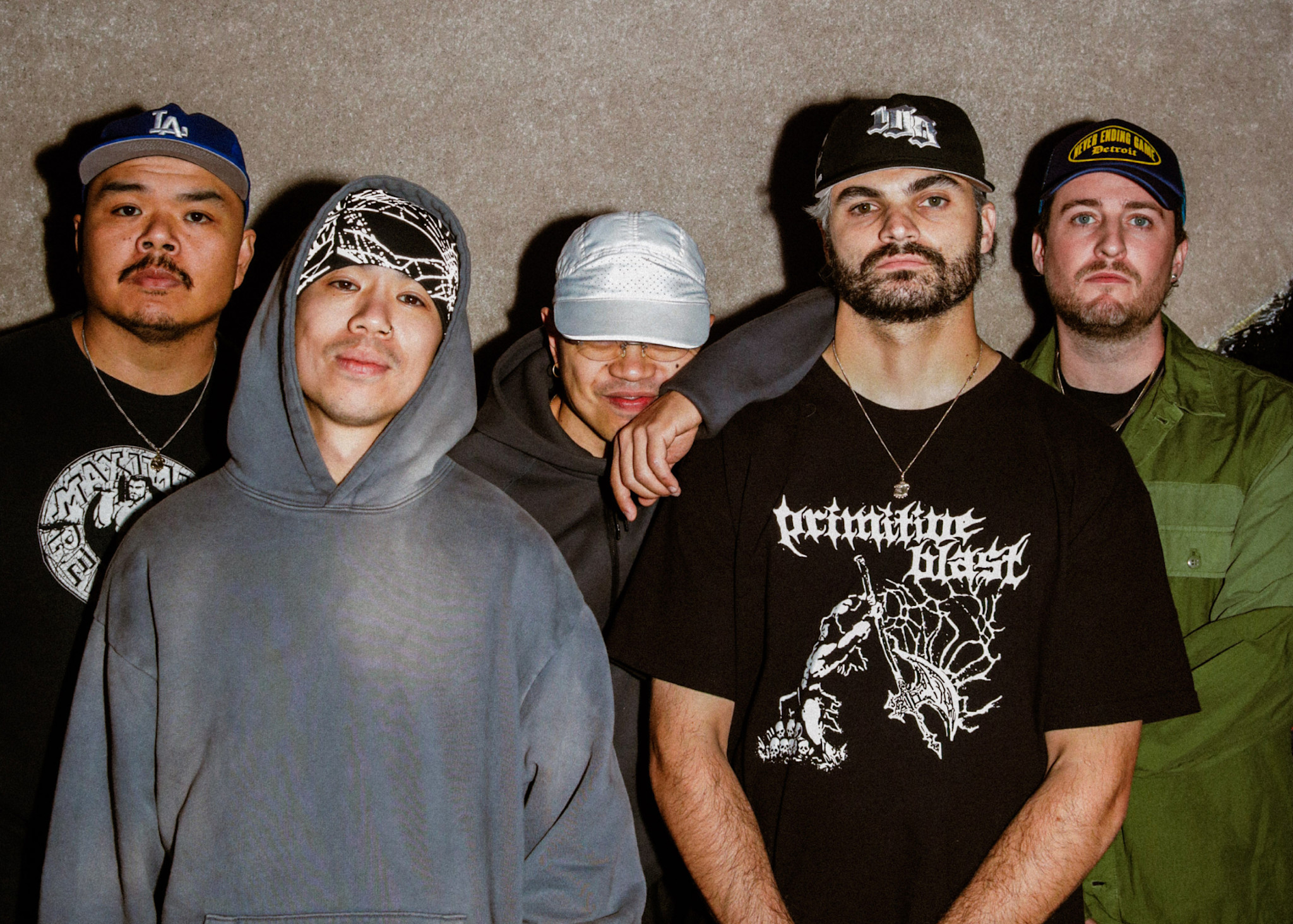
Top Image, from left: Dennis Vichidvongsa, Aaron Siow, Jem Siow, Kane Vardon, and Josh Clayton.
Their shows are, to quote Siow, “a full-contact sport,” though catharsis might actually undersell it. Watching SPEED play live is less about humdrum stress relief and more in the register of an exorcism that causes necks to snap and bodies to fly through the air in odd configurations.
SPEED formed in 2019, when the guys — who had long been best friends — were rounding the corner into their thirties, which makes them something of an outlier for a hardcore bands. (The downside of being older is that back pain and freak ankle injuries are less than occasional.) Whereas younger outfits might have fallen into infighting or hard partying,SPEED were out here getting married, lifting heavy, and working full-time jobs. Siow was a music teacher, who specialized in flute, an instrument he brings onto stage once in a while. His younger brother, Aaron, who plays bass, was a graphic designer at Incu, which is kind of like the SSENSE of down under.
Clayton worked at a marketing agency, while guitarist Dennis Vichidvongsa and drummer Kane Vardon played in another Sydney hardcore band called Relentless. “I think that a lot of the mistakes that young bands make, we'd already kind of made them with bands that we'd been in before,” says Clayton. “And so we came into it with a fully fleshed-out idea of what we wanted the band to be about.”
Those values: community, friendship, and doing it your way no matter what.


The band’s name, somewhat surprisingly, was a little trickier to agree upon. The guys went back and forth on a long list of potential names in a Notes app — one of the top contenders was World Gone Mad — before Clayton presented the idea of SPEED : clean, concise, simple.
“At first I was like, racing cars and shit?” says Vardon, laughing. “And Josh is like nah. He stretched it out in an Old English font and I was like, Oh yeah, that looks and sounds real cool now.”
“And then ‘Gang Called SPEED’ came just because we couldn’t get SPEED on Instagram,” adds Vichidvongsa, who is casually picking at an unplugged guitar.
“I mean, Gang Called SPEED sounds better than ‘SPEED 42069,’” jokes Jem. “It’s kind of the same thing as a Tribe Called Quest.”
The gang had maybe eight songs and had played just over a dozen shows total when they had their big breakthrough in 2022: the Sound and Fury Festival in Los Angeles. It was their first time in America, and the size of the crowd, the energy, the fact that the audience was already shouting every lyric, was a transformative experience, especially coming from their tiny scene in Sydney. “It's the biggest show any of us have ever played in our entire lives, and we've got 5,000 people fucking beating the shit out of each other and singing every word,” says Jem. “For us, it was like having a tent ripped off and now you're seeing the entire sky.”
If I may offer a theory as to why that set caused SPEED’s popularity to explode, it’s worth considering the context of 2022: the world was freshly vaccinated and starting to open up again post-COVID; Stop Asian Hate, where elderly Asian people were getting assaulted on the street with regularity, was all over the nightly news.
And then here, like a banshee out the gate, was this group of jacked Asian guys making menacingly hard music about friendship and chasing your dreams. (Jem, in fact, was wearing a football jersey that said “Stop Asian H8” on the back.) It was raw. It was confrontational. And it was really, really fucking good.

“As you get older, and especially when all of us have been through a period of fucking lockdown for years, where you spend so much time reflecting on where you're at in life, where you're going, What is my purpose? We are very, very conscious of how lucky we are to have the relationships we have,” Jem says. “But I actually don't even want to say that it's luck because it's not luck. This kind of shit takes work.”
After that Sound and Fury set, the guys in SPEED pretty quickly realized that they should quit their day jobs and make a run at it. If not now, then when? “It was an opportunity, and we felt that if we didn't take it, we would be doing ourselves and our scene a disservice,” says Aaron, who also runs his own clothing brand, Del Saato, and designs all of SPEED’s merch. The band’s designs are so coveted, in fact, that it isn’t unusual to see Travis Barker and Kourtney Kardashian sporting SPEED gear on Getty Images.


“A lot of times, people think it’s a clothing brand, not a band,” says Aaron.
“I think most people know it’s a band,” Jem interjects.
“When that was happening and you had celebrities wearing our stuff, all these people were saying, Oh, you need to reprint the jersey and get it back on sale right now,” adds Clayton. “And we're like, well, that's fucking weird. It felt antithetical to the point of making the merch.”
“Merch is part of the culture, man—that's how it is,” says Jem. “It’s another device for you to express yourself. And it’s a way that you can just make the whole thing sustainable. [The celebrity stuff is just] another funny little fucking thing to have under this experience. It’s like: How did we end up here?”

Here, these days, might include playing Coachella and world tours with Turnstile. But it also, for example, still includes tiny roller rinks in artsy neighborhoods where public transit can be unreliable.
SPEED take the stage a little after midnight, after End It, a Baltimore band, torch the place with their set. Any evidence that the guys of SPEED were remotely tired has evaporated. The crowd packs in tight; concentric pits open in tandem even though a note hasn’t been played yet. It smells like a men’s locker room.
Even though it’s late, the energy in the room is palpable, and part of what makes SPEED’s live show so compelling is the ferocity of Jem’s hardcore voice: It’s a low, guttural growl, seemingly summoned from the same diaphragmatic void as a doberman’s bark. Onstage he’s part frontman, part motivational speaker, pontificating about how blessed he is to be touring the world and making music with his best friends while compelling the crowd to get the fuck up and bounce. His ability to command a room makes me think he could lead a megachurch.

At one point I eat an errant elbow to the jaw — my fault, should’ve kept my guard up — and it occurs to me that this is a far healthier outlet than being sequestered online for the crowd of mostly young men, a cross section of immigrant punk kids, Brooklyn gentrifiers, menswear bros, and hardcore OGs. This is a communal experience; love expressed kinetically. (Arguably, the world would be a better place if every despondent 14-year-old had their inner-world exploded at a SPEED show.) The band might not be the cure for the male loneliness epidemic, but they are a template for something more important: centering the people you love in your life, blood-related or not.
“That to us is the meaning of hardcore,” says Jem. “Because when you fall into it at a young age, the ethics that hardcore teaches you, like DIY, loyalty, brotherhood and sisterhood, these are things that you put into practice. You feel empowered in a way that you can take on the world.”

Chris Gayomali is the editor of SSENSE.
- Photography: Jack Rudder
- Written by: Chris Gayomali

